Two Nigerian Founders Are Building Africa's Largest Drone Factory, and It's Not Just About the Drone
Nigerian startup Terra Industries is building Africa's largest drone factory in Accra, Ghana, a 34,000 sq. ft facility backed by $34 million in funding. Here's what it means for African defence sovereignty and why two founders decided the continent couldn't wait any longer.
"The empires of the future are the empires of the mind." — Winston Churchill
Not every bold move arrives with noise. Sometimes, it begins quietly, in blueprints, funding rounds, and factory floors. It begins when two young Nigerians decide, in 2024, that Africa’s defence future is too important to leave in foreign hands and then choose to build something about it.
That is the context behind the news. The headline says a drone factory is being built in Accra, Ghana. But the story, in reality, is far bigger than that.
What Terra Industries Is Building and Why It Matters Now
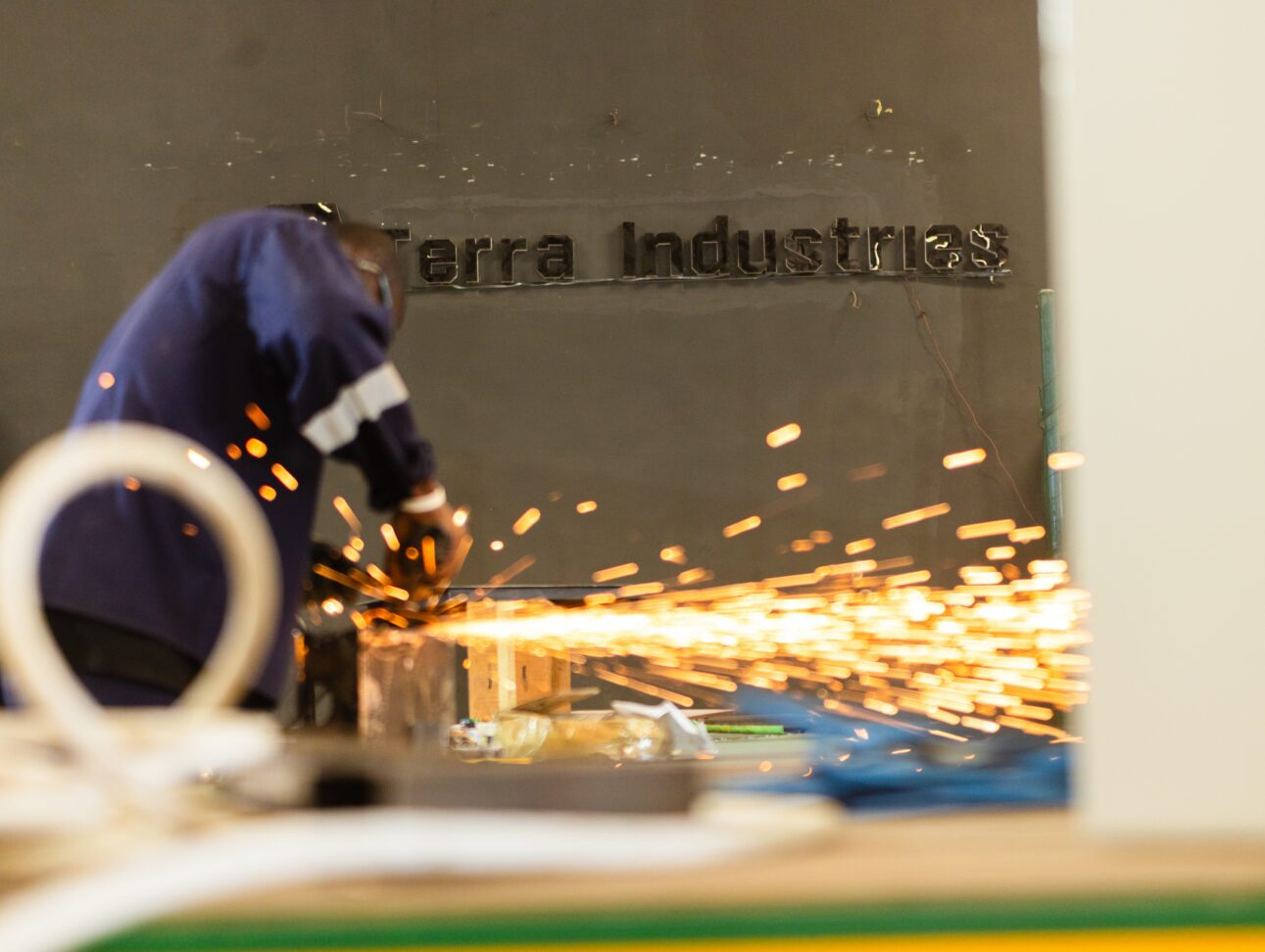
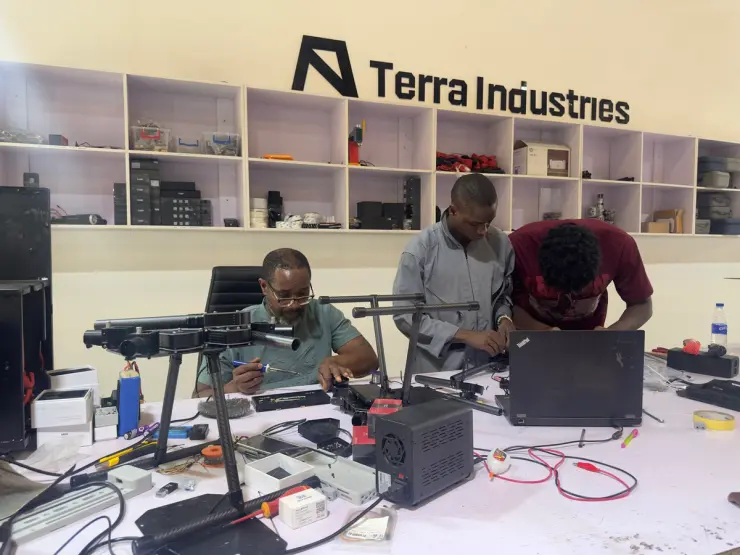
Nigerian defence technology startup Terra Industries has announced that it is constructing what will be the largest drone manufacturing facility on the African continent, a 34,000-square-foot factory in Accra, named Pax-2.
Construction is currently in its final phase, with full operations and it is expected by the end of June 2026. Once operational, the facility is projected to reach an annual production capacity of 50,000 drone units by 2028 and to create 120 engineering jobs in Ghana.
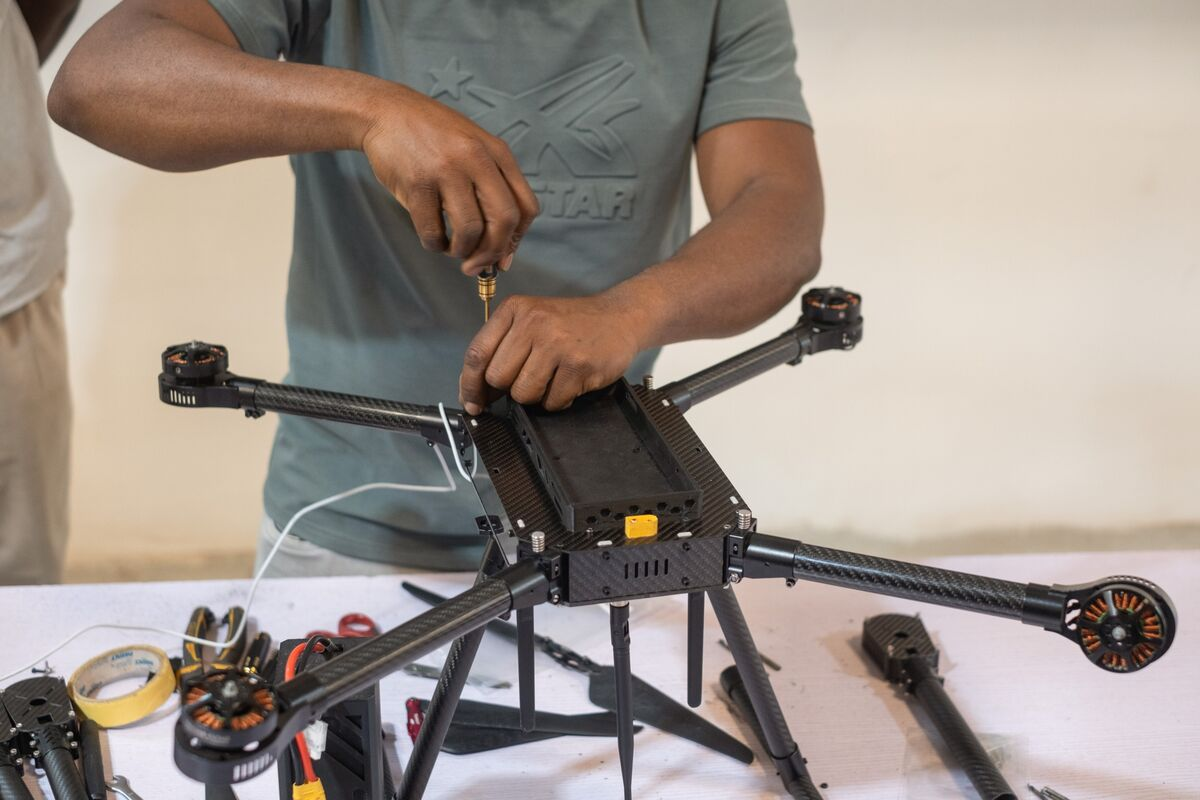
The factory will produce several of Terra's key platforms: the Archer VTOL, a long-range surveillance and strike system; the Iroko UAV, designed for rapid tactical deployment; and Kama, the company's newest and perhaps most strategically significant addition.
Kama is a high-speed interceptor drone capable of reaching 300 kilometres per hour, built specifically for counter-drone defence and engineered for high-volume production.
Pax-2 is more than twice the size of Terra's existing Pax-1 facility in Abuja, Nigeria, and follows a $34 million fundraise, comprising an $11.75 million round in January 2026 led by 8VC, the firm founded by Palantir co-founder Joe Lonsdale, and a subsequent $22 million raise led by Lux Capital.
That capital, the company stated, is directed toward scaling manufacturing capacity and growing engineering teams across Nigeria and allied African countries.
In February 2026, Nigeria's Defence Industries Corporation of Nigeria (DICON) and Terra signed a joint-venture agreement covering manufacturing, technology transfer, and supply chain integration, a formal signal that the Nigerian government sees Terra not just as a startup to watch, but as a strategic partner.
The Two Founders Who Started This in 2024
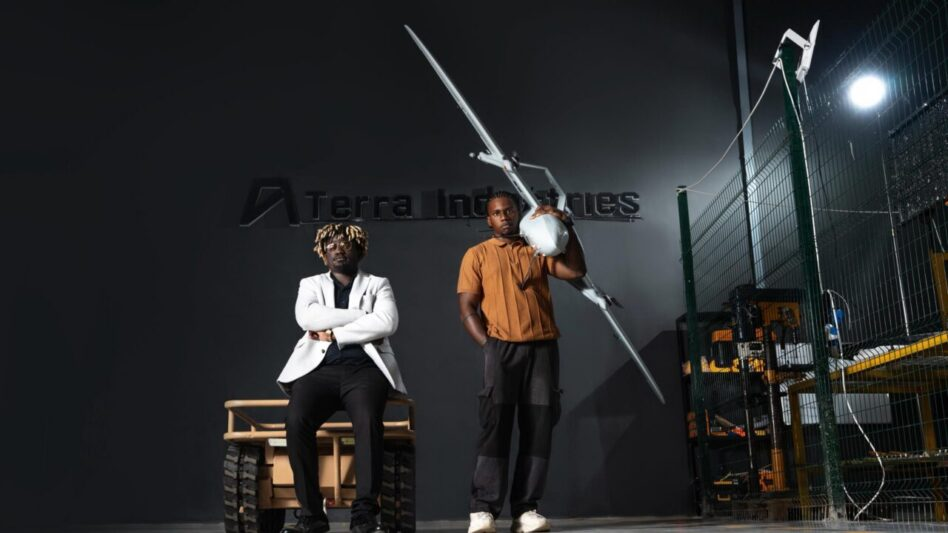
Terra Industries, formerly known as Terrahaptix, was founded in 2024 by Nathan Nwachuku and Maxwell Maduka.
The company is young by any measure, barely two years old at the time of this announcement. Yet in that window, it has raised $34 million from some of the most credible names in deep-tech venture capital, secured a government joint venture in its home country, and broken ground on a regional manufacturing base in a second African nation.
The pace of that trajectory is not typical. It reflects both the urgency of the problem Terra is building for and the clarity of the founders' conviction about what the solution needs to look like.
Their framework is built around what they call "Pax Africana", a future in which Africa builds, deploys, and controls its own defence technology rather than importing it from the countries whose geopolitical interests may not always align with Africa's own.
Nwachuku and Maduka chose Ghana for Pax-2 deliberately. "We chose Ghana for Pax-2 because of its talent, strategic position, and political will to become a serious defence exporter,"Nwachuku had explained in an interview.
That statement carries more weight when you consider that most African nations have not historically been considered viable locations for advanced defence manufacturing at all.
Africa Cannot Keep Importing the Tools It Uses to Protect Itself
Across the Sahel and sub-Saharan Africa, non-state actors are increasingly deploying modified commercial and fibre-optic drones as attack systems, a tactic that has become a defining feature of modern conflict in the Middle East and Eastern Europe and is now accelerating on the continent.
Existing African security architecture, largely built around imported equipment from Western nations, China, and Russia, was not designed with this threat in mind. It was designed elsewhere, for other contexts, and sold here as a solution.
That gap between the threat and the tool is precisely what Terra is positioning itself to close. Kama, the counter-drone interceptor, is not a product that emerged from a foreign R&D lab speculating about African security conditions.

It was built by Africans, watching what is actually happening on African soil and engineering a direct response to it.
"The only way Africa can have lasting peace is by uniting to build sovereign defence, not by relying on foreign security architecture,"Nwachuku has said. "We need to control our own destiny by building the tools and systems needed to protect ourselves. That's how this continent defeats terrorism."
That statement is not just a founder's pitch. It is a reframing of a conversation African nations have needed to have for decades, one about why a continent of 1.4 billion people, with significant engineering talent, continues to purchase the infrastructure of its own protection from the same external actors whose interests it cannot always predict or trust.
The drone factory in Accra is one answer to that question. It will not be the last one needed. But it is a credible, concrete, funded, and operational answer and in a space where most discourse remains theoretical, that distinction matters enormously.
The Test Is Still Ahead
Whether Terra's vision holds under the pressures of geopolitics, multi-jurisdictional regulation, and production complexity at scale is a question that only time and output will answer.
This is because building 50,000 units annually by 2028 is an ambition, not yet an achievement. Sustaining a joint venture with a government institution in Nigeria while simultaneously scaling a factory in Ghana requires a level of operational discipline that fundraising alone cannot guarantee.
But the pieces Terra has assembled, the capital, the government partnership, the engineering talent, the regional manufacturing footprint, and most importantly the clarity of purpose behind all of it, represent the most serious argument yet that Africa's defence industrial future does not have to be imported.
Two young Nigerians decided that in 2024. By June 2026, the factory will be running. The continent is watching and is waiting for what these young Nigerians have for them.