Is Modern Feminism Becoming the Very Thing It Used to Fight?
Feminism started with the simple aim of expanding equality and opportunity for women, but growing debates around extreme feminism are raising questions about whether parts of the movement are beginning to mirror the exclusion and intolerance they originally opposed.
Chimamanda Ngozi Adichie said everyone should be a feminist, in her influential 2012 TEDx talk and subsequent essay"We Should All Be Feminists," she argued that gender inequality remains a pressing global injustice. She defined a feminist as a man or woman who believes in, and works toward, equal social, political, and economic rights for both sexes.
She said it plainly, directly, without apology, and most people who have heard those words, or read them, agreed, myself included.
The idea at the very basis was not radical or rebellious. It is actually quite simple: women are people, and they deserve to be treated as such. Equal rights, equal dignity, equal shot at the life they want. That was and is feminism. That has always been feminism.
So why does it feel like some of the loudest voices carrying the feminist flag today are building something that looks less like equality and more like a mirror image of the thing they set out to dismantle?
This is not an attack on feminism. It is a question about what is happening to it and whether true feminists should be the first ones asking.
What Feminism Was And Is Always About
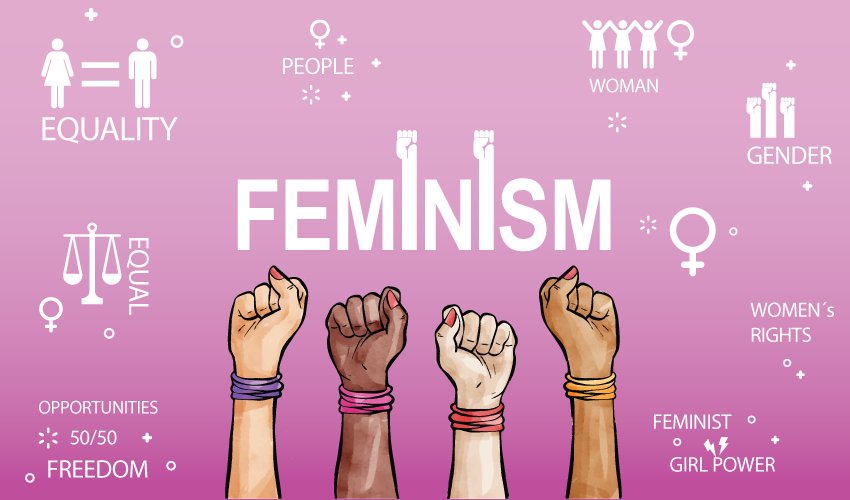
Feminism, at its ideological foundation, is the pursuit of social, political, and economic equality between men and women.
Not dominance or revenge, just “equality”. It was born from a real and documented history of suppression, women who could not vote, could not own property, could not hold office, could not be taken seriously in rooms where decisions were being made about their own lives. The movement existed to correct that. To widen the space and say: there is room at the table for everyone.
True feminism is also intersectional in its care. It does not just fight for the woman at the top of the ladder. It fights for the woman at the bottom, the one with no ladder at all.
It advocates for the domestic worker, the single mother, the girl who never got a seat in any room or even see the four walls of a school. That is the ideology and the version of feminism worth protecting.
The problem is not feminism. The problem is what happens when pain enters the conversation and starts rewriting the terms.
When Trauma Starts Driving the Ideology
There is a version of feminism circulating now that did not come from that ideology. It came from hurt. And that distinction matters because hurt, left unprocessed, does not build movements. It builds walls that breed resentment and attack.
Many women who now speak loudly under the feminist banner have genuinely been wronged. By men, by institutions, by systems that were designed to sideline them.
That experience is valid and the anger is understandable in some circumstances. But when personal trauma becomes the entire lens through which a movement sees the world, the movement stops seeking equality and starts seeking distance, or worse, superiority.
In parts of Africa, this pain has a specific address. Women who grew up watching their mothers silenced at family meetings, who were told education was a luxury their brothers deserved more, who inherited a world where their value was tied entirely to who they married and how many children they produced, these women did not invent their anger.
The continent handed it to them and that history is real, it is documented, and it deserves to be named. But a wound, even a legitimate one, does not automatically produce a healthy response. Sometimes it produces the opposite.
Extreme feminism, as it shows up today, often borrows the language of empowerment while practicing exclusion. It speaks of liberation while quietly policing what liberation is allowed to look like.
A woman who chooses marriage is seen as naive. A woman who enjoys domesticity is performing for the patriarchy. A woman who does not centre her gender in every conversation is not feminist enough.
All of this is not equality. This is a new orthodoxy and orthodoxy, regardless of its origin, tends to do to people exactly what it claimed it would protect them from.
The Contradictions Nobody Wants to Name
There is a phrase that has become almost spiritual in certain feminist circles: own the space. Sometimes it graduates to double the space and take charge.

This phrase on the surface, it sounds like confidence. Like presence. Like a woman refusing to make herself small.
But if you sit with it long enough, the arithmetic stops working. You are one person. You occupy one space. The moment you claim two, you are occupying someone else's and that someone else, by the same logic you are using to justify yourself, is now being shrunk.
The very act you built a movement to resist is the act you are now performing on another person. The packaging changed, but the behaviour seems not to.
Then there is the domestic work question. A segment of modern feminist discourse has planted a flag on the idea that cooking, cleaning, and the day-to-day running of a home are beneath a self-respecting woman.
Fair enough, no one should be forced into a role they did not choose. But the same women who refuse to cook on principle will hire a house girl to cook for them.
They will pay another woman, often younger, often from a more vulnerable economic position, to do the very tasks they have declared beneath their dignity.
If domestic work diminishes a woman as it's being by some of these feminist, then it diminishes every woman who does it. You cannot liberate yourself from something by outsourcing it to a woman with fewer options. That is not feminism. That is classism dressed up as ideology.
And somewhere in all these conversations about what real men should be, how they should show up, provide, communicate, grow, there is a curious silence about real women.
The accountability is rarely bilateral. That is not a call for men to escape scrutiny. It is an observation that movements built on fairness should at least be consistent about what fairness looks like.
The Risk of Becoming What You Fought
There is a familiar pattern in history: the oppressed, once they find power, reproduce the structures they suffered under.
This is not because they are bad people, but because unhealed wounds tend to express themselves through control, and control, regardless of who wields it, produces the same outcomes. The names change but the dynamic does not.
Extreme feminism, in some of its current expressions, is beginning to walk this path. It has started to tell women who they are allowed to be.
It has built a hierarchy of acceptable womanhood. It has made certain choices — love, submission, service, softness — into evidence of false consciousness, as if a woman cannot freely choose anything that looks traditional without having been deceived into it.
That level of paternalism, dressed in progressive language, is still paternalism. The patriarchy told women what to do. Some corners of extreme feminism are doing the same thing, just with different instructions.
True feminism does not need to control women to prove a point. It gives them options and respects whichever one they take.
The woman who runs a boardroom and the woman who runs a home are both exercising agency, and feminism is supposed to protect both of them, not rank them or question their choices.
So is modern feminism becoming the very thing it used to fight? Well I wouldn't say entirely. The movement is too wide and too varied for that verdict to apply cleanly.
But in certain vocal corners of it, something is curdling. The ideology is being diluted by ego, performance, and unresolved pain and if it continues unchecked, the movement will not need enemies. It will dismantle itself by its own “army”.
And the people who should be most worried about that are the true feminists. The ones who remember what this was always supposed to be about.