The Title Earned vs. The One They're Giving Away: Nigeria Finally Draws a Line
Emeka spent three years and every ounce of himself earning the title "Dr." Then one morning, he watched someone get the same prefix for showing up at a convocation. Nigeria just decided that can't keep happening.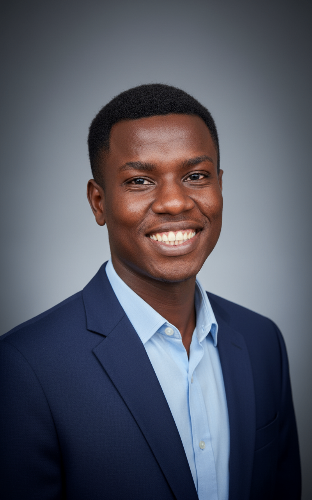

Emeka knew exactly what he gave up for that title and the sacrifices that were not visible on his face.
Three years of his life. A relationship that didn't survive the second year. A meal plan that wasn't always balanced, and the stress of managing his time. He remembers the night before his viva, sitting in his room in Coventry at 2 a.m., reading his own thesis out loud to catch the parts that didn't hold.
He had read it so many times that the words had stopped making sense. He submitted, although the supervising professor gave him a hard time during the course of his programme. He defended anyway, was successful at his defence of his thesis and still managed to pass all those hurdles.
When his certificate arrived — Doctor of Philosophy, Materials Engineering — he didn't just frame it immediately or even jump for joy. He just sat with it for a while, holding it with both hands, thinking about everything that piece of paper cost him.
That was four years ago. He's back in Lagos now, working at a mid-sized engineering consultancy in Victoria Island. He goes by Dr. Emeka Okafor on his email signature, on his business cards, and on his LinkedIn profile, which his company made him update.
It wasn't just arrogance or pride. It was just what the title meant — it was the cost, what it signalled, and what it actually separated him from, in a field where credentials determine contracts.
So when he opened his phone one Thursday morning and saw that a local politician had just been conferred with a doctorate by a university that had been open for four years, and was now answering "Dr" on every platform, in every interview, in every official communication, Emeka stared at the screen for a long time.
Not with anger exactly, if that is what you're thinking. It was more like the quiet disorientation of watching something that meant everything to you get handed to someone who didn't pay the same price.
The Problem With a Title Everyone Can Have
Honorary degrees are not new, and the argument for them isn't entirely without merit. Recognising people who have made meaningful contributions to society, through philanthropy, public service, and the arts, is something universities around the world do. It's a legitimate academic tradition.
Nigeria's version of that tradition, however, had been sliding for years into something else entirely.
Universities were conferring honorary doctorates on wealthy donors who had funded a building. On politicians who had approved a budget line. On celebrities whose proximity to the institution made for good press at convocation.
The degree wasn't recognised anymore. It became more like a transaction. Pay the right amount, show up in the right robe, give the right vibe and leave with "Dr" in front of your name on every document for the rest of your life.
For people like Emeka, this wasn't abstract. When you're pitching to a client and two CVs land on the desk, one with a research PhD from a recognised institution and one with an honorary doctorate from a university that began awarding postgraduate degrees two years ago, the visual distinction used to do work. It told a story about what the credential meant and that the distinction was eroding.
And the damage? Well, it isn't only just professional. Nigeria's crisis of credential inflation, fake certificates, bought admissions, and ghost students has been quietly bleeding into the honorary degree space, too. When a title can be conferred for the right fee or the right political connection, the question of what any title actually means starts to matter.
What the Federal Government Actually Did
Social Insight
Navigate the Rhythms of African Communities
Bold Conversations. Real Impact. True Narratives.
On May 7, 2026, the Federal Executive Council approved a uniform policy governing the award and use of honorary degrees by Nigerian universities. Education Minister Tunji Alausa announced it at the Presidential Villa alongside Minister of State for Education Prof. Suwaiba Ahmad.
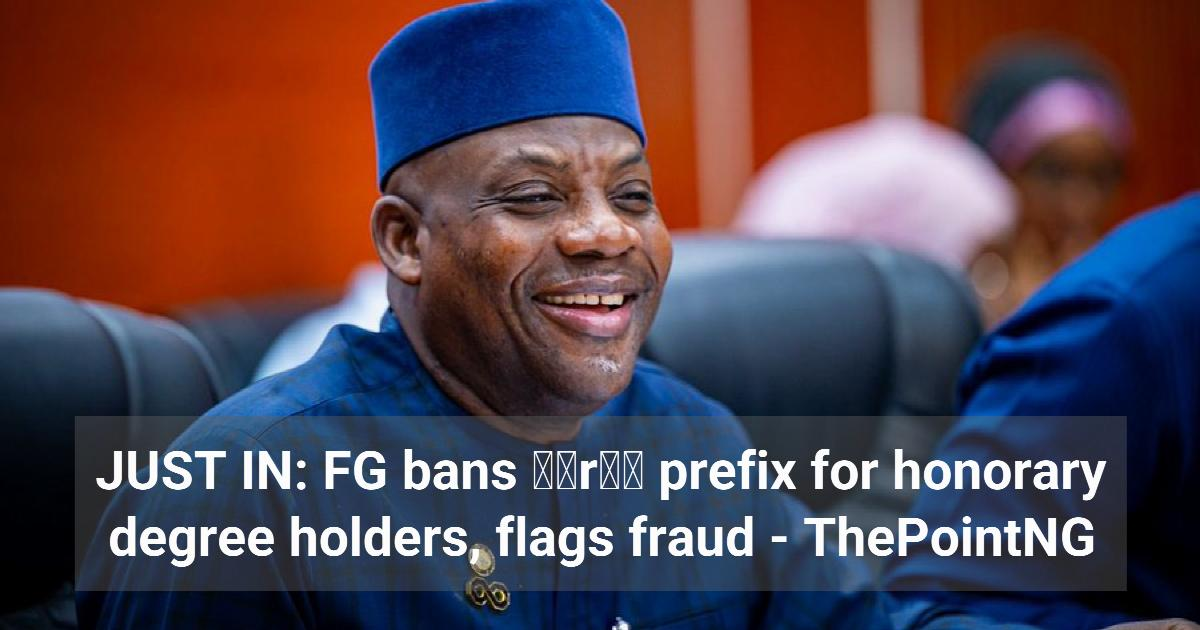
SIMILAR ARTICLE: FG Bans ‘Dr’ for Honorary Degree Holders, But Titles Remain Nigeria’s Favourite Status Symbol
The policy does several things at once. First, it prohibits honorary degree recipients from prefixing "Dr" to their names in official, academic, or professional settings.
Instead, the full honorary designation must follow the name so that a recipient would be listed as "Chief Louis Louis, D.Lit. (Doctor of Literature, Honoris Causa)" rather than "Dr. Louis Louis."
Also, it restricts which honorary degrees Nigerian universities can confer. Only four types are permitted: Doctor of Laws (LL.D), Doctor of Letters (D.Lit), Doctor of Science (D.Sc), and Doctor of Humanities (D.Arts). The days of universities inventing bespoke honorary titles to fit whoever is being honoured are over.

Another important point, and this is the one that catches attention, universities without active PhD-awarding programmes can no longer confer honorary degrees at all. That clause directly addresses the pattern of newer, smaller institutions using honorary conferrals to punch above their weight in public perception. If you're not training doctoral researchers, you cannot hand out doctoral-level recognition.
All honorary degrees must now carry the words "Honorary" or "Honoris Causa" on the certificate and in all references. Misrepresentation of an honorary degree as an earned credential will be treated as academic fraud, carrying legal and reputational consequences.
The National Universities Commission (NUC) has the statutory backing to enforce it. Convocation programmes will be monitored. An annual list of legitimate honorary recipients will be published. The ministry will work with media to discourage improper attribution of honorary titles.
Alausa was direct about why earlier attempts hadn't worked, the 2012 Keffi Declaration by the Association of Vice-Chancellors had outlined similar principles but had no legal force behind it. This policy does.
The Deeper Fear Behind All of This

The government's stated concern is academic fraud and the integrity of educational credentials. Both are real problems. But there's an anxiety underneath the policy, one that nobody in the FEC briefing room is saying out loud.
If an honorary doctorate is socially interchangeable with an earned one, the incentive to pursue the earned one weakens. Why spend three to five years in a PhD programme, destroying your sleep and your social life and your savings, when a well-timed donation, celebrity-themed life or a politically strategic relationship can get you to the same place on a business card?
Nigeria needs people who have actually done the research. Who have sat with problems long enough to understand them. Who have been trained to distinguish what they know from what they think they know. That kind of formation takes time and rigor, and it cannot be purchased at a convocation ceremony.
The policy, at its basis, is trying to protect the signal. To make sure that when someone leads with "Dr" in a professional or academic context, that title still means something. That the person behind it has been tested in a way that a certificate alone cannot fake.
Where Emeka Is Now

Emeka heard about the policy from a colleague who sent him the news link on WhatsApp with a simple message: "Finally."
He didn't respond immediately. He sat with it the way he'd sat with his PhD certificate four years ago, quietly, turning it over in his head.
Social Insight
Navigate the Rhythms of African Communities
Bold Conversations. Real Impact. True Narratives.
He's not celebrating. He knows the policy won't undo what's already been distributed. The politician whose doctorate prompted his original spiral of irritation still has the degree. The universities that built their brand on celebrity conferments won't vanish overnight. And enforcement, in Nigeria, with all its institutional complexities, is always the harder half of any policy.
But there's something. A formal acknowledgment, at the federal level, backed by executive authority, that the titles are not the same thing. That an honorary designation is recognition of contribution, not certification of expertise.
The man who sat in Coventry at 2 a.m., reading his own thesis out loud to the empty room, holds something different from a degree that was handed over at a ceremony.
He updated his email signature this week. Nothing changed in it. His name. His title. His role. It just feels less contested now.