10 Startups Just Secured $560,000 to Combat The Heat Crisis In Nigeria
Ten Nigerian startups secure $560,000 to develop solutions tackling extreme heat across agriculture, healthcare, and infrastructure, highlighting a growing climate innovation economy.
Nigeria’s increasing temperature wave is no longer just a seasonal inconvenience, it's gradually becoming a structural challenge that is actively shaping how people live and work.
Across the country, extreme heat is beginning to affect ordinary Nigerians, strain food systems, healthcare delivery, and energy infrastructure in ways that demand more than temporary fixes.
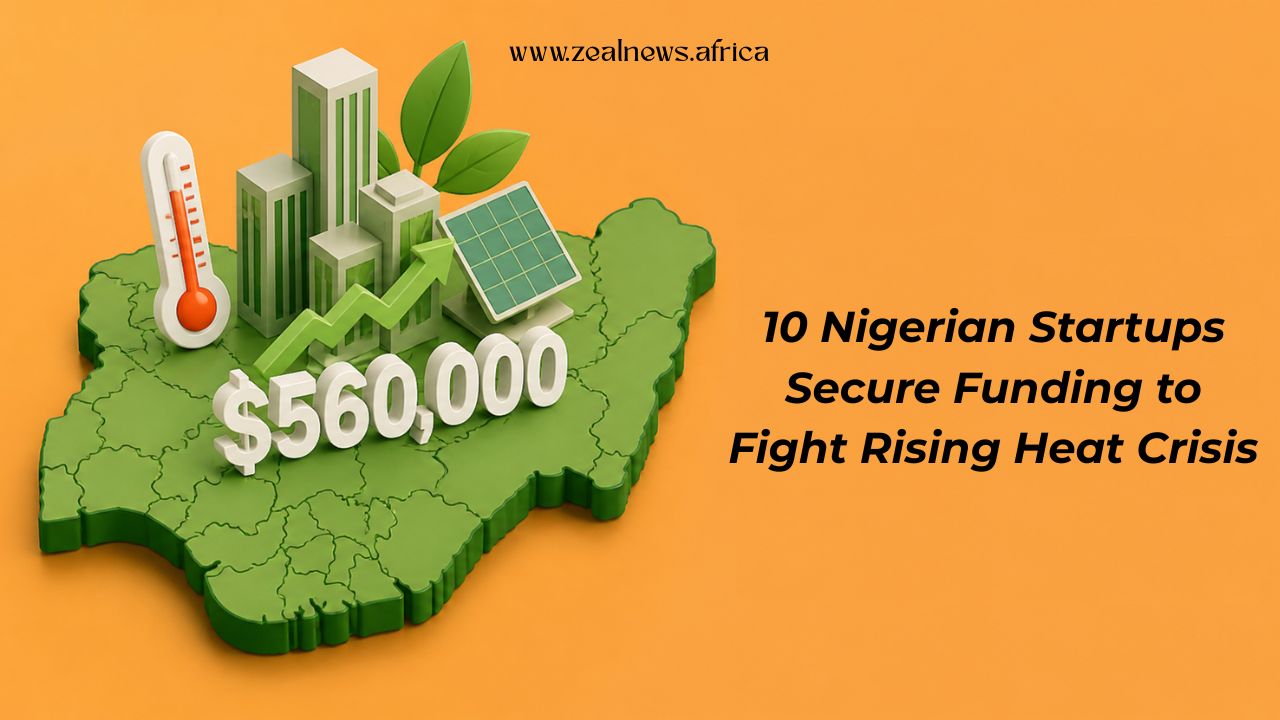
In response, a new wave of innovation and idea incubation is emerging. Ten Nigerian startups have secured a combined $560,000 in funding to build solutions designed to help individuals, businesses, and institutions adapt to worsening heat conditions.
Each startup received $56,000, alongside technical and business support, under the TECA Heat Action Wave (THAW) programme.
Backed by global development and climate-focused organisations, the initiative signals a shift in how climate challenges are being approached, not just as environmental concerns, but as opportunities for scalable, locally driven solutions.
Where the Pressure Is Showing and What Is Being Built

The impact of extreme heat is already visible across critical sectors. In agriculture, farmers are dealing with faster spoilage of produce, declining soil quality, and increased livestock mortality.
In healthcare, rising temperatures are intensifying heat-related illnesses while also putting pressure on power-dependent medical systems.
The ten startups—Ofemini Global Limited, Agiletech Operations Consulting Limited, Emplaris, Doorcas Africa, Farmxic, Farm Fresh Grocery Ltd, Farmslate Technologies Limited, Let-It-Cold, Pod, and TheHyWing Ltd—span multiple sectors already affected by rising heat conditions.
The selected startups are targeting these pressure points with practical, sector-specific innovations. Some are focused on agriculture, using data-driven tools to help farmers respond to heat-induced crop stress, improve soil management, and reduce losses.

Others are building logistics solutions to preserve perishable goods during transportation, especially in regions where high temperatures and unreliable electricity accelerate spoilage.
In healthcare, emerging technologies are currently being developed to anticipate heat-related disruptions, including power outages that can affect critical equipment. There are also efforts to integrate artificial intelligence and remote healthcare tools to support vulnerable populations, particularly outdoor workers exposed to prolonged heat conditions.
Beyond these sectors, infrastructure gaps are also being addressed. Solutions such as solar-powered cooling systems and climate-resilient sanitation technologies are being introduced to function effectively in high-temperature and low-power environments. Together, these innovations reflect a broader attempt to adapt everyday systems to a hotter, less predictable climate.
The Bigger Picture: Heat as an Economic and Policy Challenge

While the funding marks an important step, it also reveals the scale of the problem. Nigeria is entering what analysts describe as a “heat economy,” where adaptation technologies and services become essential for maintaining productivity and stability.
Globally, the urgency is clear. Over 70% of workers worldwide are already at risk of dangerous heat exposure, a figure that shows how climate pressures are increasingly tied to economic performance.
For countries like Nigeria, where large segments of the population work in outdoor or informal sectors, the risks are even more pronounced.
The selected startups will undergo a structured acceleration programme through 2026, focusing on product development, user testing, and investor readiness. The goal is not only to refine their solutions but also to position them for larger-scale funding and deployment.
However, the long-term question remains: can innovation scale fast enough to match the pace of climate change? While early-stage solutions are emerging, adoption will depend on investment, policy support, and infrastructure development.
What is clear, though, is that extreme heat is no longer just an environmental issue. It is an economic reality, one that is beginning to reshape how Nigeria builds, invests, and prepares for the future.