Rewriting the Female Biological Clock: A Chinese Biologist's Thinks Women Should Only Have Four Periods A Year Aiding Longer Fertility
Chinese biologist Hongmei Wang wants to reduce menstruation to once every three months to extend women's fertility. Here's what the science says, what's at risk, and what women actually think about it.
Science doesn't just challenge what we know, it challenges how we feel about what we know. Chinese biologist Hongmei Wang is doing exactly that.
Her ongoing research seeks to extend women's fertile years by reducing the frequency of menstruation to once every three months has pulled reproductive biology into a conversation that is equal parts fascinating and unsettling.
The question isn't just whether it can be done. It's whether it should be, who benefits, and at what cost.
The Science: What Wang Is Actually Proposing
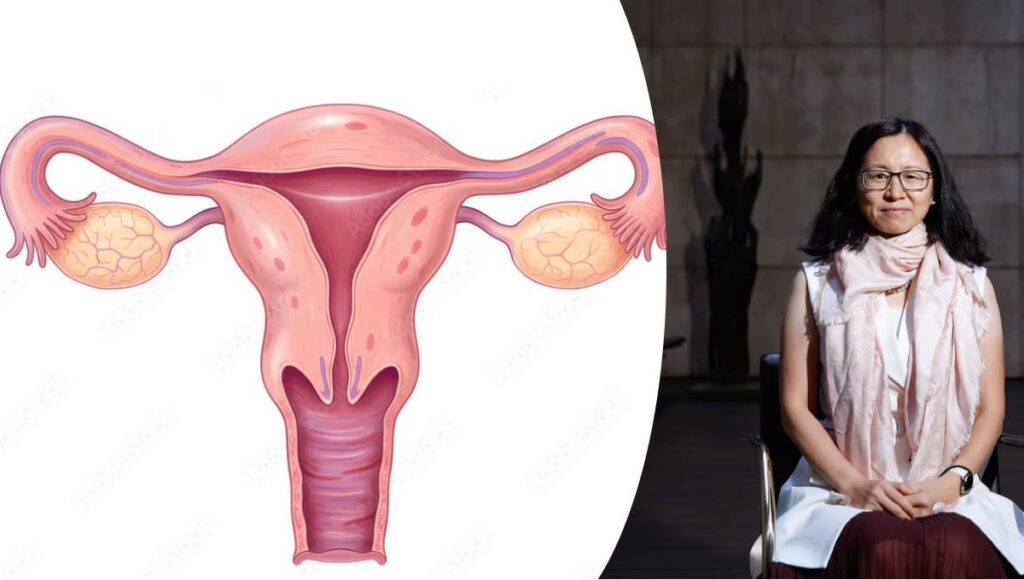
To understand what Wang is proposing, you need a quick primer on how female fertility actually works.
Unlike men, who produce sperm throughout life, women are born with a finite, non-renewable reserve of oocytes — eggs — which usually matures during fetal development and that reserve declines with each cycle until menopause. Every time a woman ovulates, she loses an egg permanently.
At approximately 20 weeks of gestation, women possess approximately 7 million follicles, which decline to 1–2 million at birth and further decrease to 300,000–400,000 by the time of menarche, the first menstrual period in a female adolescent. By the time menopause arrives, typically in the early fifties, roughly 1,000 follicles remain.
Wang's logic follows from this: if fewer cycles mean fewer eggs lost, then slowing ovulation could preserve that reserve longer, pushing back menopause and extending the window in which a woman can conceive.
By reducing the number of cycles from roughly a dozen per year to only four, Wang hypothesizes there might be a way to preserve that reserve of ovarian follicle and delay the onset of reproductive aging and the reality of menopause.
Wang works at the State Key Laboratory of Stem Cell and Reproductive Biology in Beijing, an institution historically linked to family planning research but now focused on understanding human fertility at its most fundamental levels.
Her work is being hypothesized at a time when China, like many nations, is facing a sharp decline in birth rates and an aging population, pressures that have made fertility extension a hot topic in scientific and policy circles.
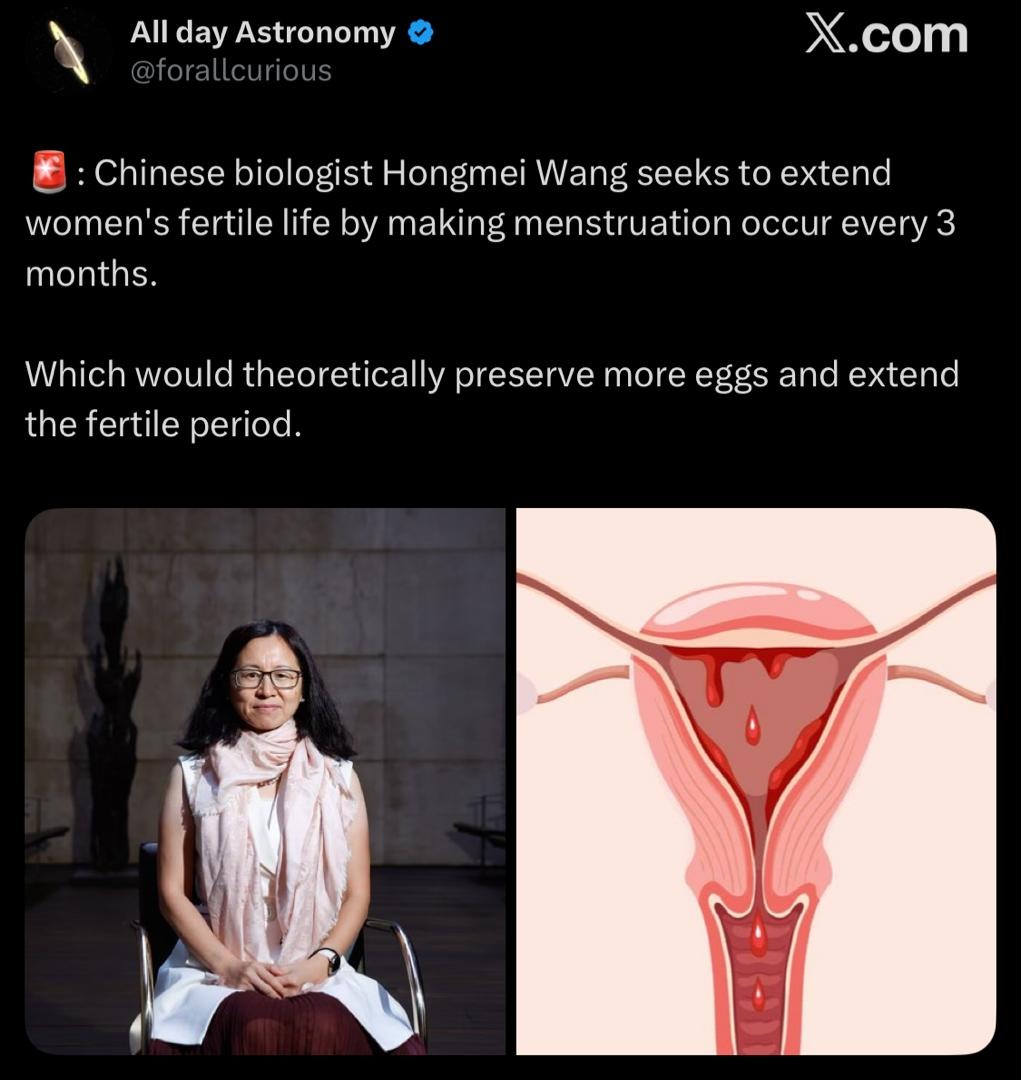
Her team has produced results that are hard to dismiss. Scientists ran a small clinical trial with 63 women dealing with premature ovarian failure, a condition that causes infertility far earlier than expected.
With stem cell transplants, four of these women went on to have healthy children, according to Wang. Her group has even patented their methods and licensed them to a private company.
Wang herself is candid about the risks. "When we stop ovulation, we save more eggs, but we also stop the body from making estrogen, and that molecule is absolutely vital for health," she told EL PAÍS.
Estrogen isn't just a reproductive hormone, it regulates bone density, cardiovascular health, and mood. Long-term reduction of estrogen could lead to bone density loss and cardiovascular effects, and these consequences are not fully understood.
The Reaction: Three Women, Three Perspectives

Science rarely lands in a vacuum, and this research is no exception. When it reached everyday women, the responses were as varied as the women themselves.
Blessing, a penultimate optometry student, was straightforward: "I think they should leave the normal biology as it is."
Her position is worth taking seriously, altering something as foundational as a woman's menstrual cycle, a biological rhythm that has existed for tens of thousands of years, isn't a minor adjustment. For many women, the menstrual cycle is not just biology; it's bodily autonomy.
Divine, a registered nurse, had a contrary opinion: "It is a welcome development. Based on the fact that period pains will be reduced, the cost of buying menstrual pads will be reduced, and fertile life extended."
Her view carries clinical weight. Dysmenorrhea — painful menstruation — affects a significant portion of women globally and is often undertreated. Fewer cycles means less pain, less expense, and potentially more years to conceive without the pressure of a ticking biological clock.

Oghenefejiro, a medical professional in training, split the difference: "For comfort, yes. The implications on the other hand might result in babies with more congenital anomalies."
A congenital anomaly refers to a structural or functional defect present at birth. Her concern aligns with real scientific uncertainty, manipulating ovulation cycles and hormonal environments during conception could, in theory, affect embryonic development in ways not yet studied at scale.
The Ethical Weight of Rewriting Biology
What makes this research genuinely complex is that it sits at the junction of both liberation and risk. Wang acknowledges that some of these experiments step outside the usual boundaries of science, noting: "It's one thing to prove something possible in the lab, like slowing menstruation or making reproductive life longer. It's another thing entirely for people to actually want such things in practice."
That sentence deserves to sit with everyone for a moment. Scientific possibility and human desirability are not the same thing. A woman who has structured her life, career, and relationships around a natural biological timeline may not want that timeline renegotiated by researchers responding to a country's birth rate crisis.
The context matters, Wang's work is happening inside a Chinese institution with deep ties to national population policy. That doesn't invalidate the science, but it does raise questions about whose interests are truly being served.
There's also the question of access. Interventions like this, if they ever reach clinical application, will not be equally available. They will be expensive, regulated differently across countries, and likely accessible first to women with resources. The promise of extended fertility could, in practice, become another privilege of the wealthy.
Wang's research is real, her breakthroughs are being documented, and the questions she's raising are ones reproductive science can't afford to ignore.
But altering the biological clock of half the world's population is not a small ambition, and the women it's meant to help deserve to be at the centre of every decision it produces.