Some People Can Thrive on Less Sleep: The Rare Genes Behind Natural Short Sleepers
Rare genetic variations in DEC2, ADRB1, NPSR1, and GRM1 help explain why a small number of people naturally need far less sleep and why sleep duration varies among humans.
Most people need around seven to nine hours of sleep to function properly.
But a small number of individuals consistently operate on far less, sometimes four to six hours without the usual signs of fatigue.
For years, this was dismissed as habit or discipline.
Sleep science now points to something more precise: rare genetic variations linked to naturally short sleep duration.
These cases are uncommon, but they reveal something important: sleep needs are not identical across all humans.
Instead, in a small number of people, it may be shaped by specific genes.
DEC2: The First Gene Linked to Natural Short Sleep
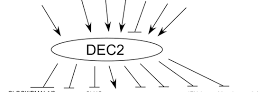
The clearest starting point came from a gene called DEC2 (BHLHE41).
In a family study led by sleep researcher Ying-Hui Fu, there are individuals who naturally slept around four to six hours and still functioned normally during the day.
What made this discovery significant was the pattern across generations. The trait appeared inherited, not accidental or lifestyle-driven.
To test the finding, researchers also studied animals carrying the same mutation.Mice with the DEC2 variant showed reduced sleep duration compared to normal mice.
This was one of the first strong indications that sleep duration can, in rare cases, be influenced by genetics rather than environment alone.
ADRB1: A Gene Linked to Wakefulness Control
After DEC2, attention shifted to other genes involved in brain activity and alertness.
One of these isADRB1, which is active in brain regions responsible for maintaining wakefulness.
Variations in this gene may increase activity in wake-promoting neural circuits. This could help explain why some individuals remain alert longer without experiencing the typical buildup of sleep pressure.

Unlike DEC2, which is more directly linked to sleep duration, ADRB1 is associated with how strongly the brain sustains wakefulness over time.
NPSR1 and GRM1: Additional Genetic Links to Sleep Regulation
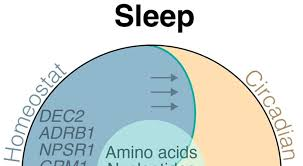
Other genes have also been associated with natural short sleep patterns, includingNPSR1 andGRM1.
NPSR1 plays a role in neuropeptide signaling, which helps regulate transitions between sleep and wake states. Variations in this gene have been linked in studies to differences in sleep behavior and alertness regulation.
GRM1, a gene involved in glutamate signaling, is also thought to influence neural communication pathways connected to sleep regulation.
While its role is still being studied, it adds to the growing evidence that multiple biological systems contribute to sleep duration.
Taken together, these findings point away from a single explanation. Natural short sleep does not appear to be controlled by one gene, but rather by a combination of rare genetic variations affecting different parts of the sleep-wake system.
What These Genes Suggest About Sleep Biology
Across DEC2, ADRB1, NPSR1, and GRM1, a clearer picture begins to form.
These genes do not eliminate the need for sleep. Instead, they appear to subtly influence how sleep is regulated, how quickly sleep pressure builds, how alertness is maintained, and how efficiently the brain transitions through sleep cycles.
Sleep itself remains a structured biological process involving deep sleep, light sleep, and REM stages. What may differ in natural short sleepers is not the existence of these stages, but how efficiently the body completes them.
Why Most People Are Not Natural Short Sleepers

Outside of genetic cases, most people who believe they function well on very little sleep are likely experiencing sleep restriction rather than biological adaptation.
A key complication is perception.Sleep-deprived individuals are often not accurate judges of their own performance. The brain can adapt to fatigue subjectively, creating a false sense of normal functioning.
This is why true natural short sleepers are considered rare and they do not show the same pattern of cognitive decline seen in sleep-deprived individuals.
Conclusion
The idea that some people can thrive on very little sleep is not just cultural myth, it has a biological basis in rare cases.
However, these are exceptions, not the norm.
For most people, sleep remains a biological requirement that cannot be significantly reduced without consequence.
The brain still depends on adequate rest for memory, focus, emotional balance, and overall health.