Nigeria’s Oil Revenue Is Rising—But Who Is Really Benefiting?
Nigeria is earning more from oil due to Middle East geopolitical tensions pushing global prices higher but rising living costs raise a deeper question about who actually benefits from the gains
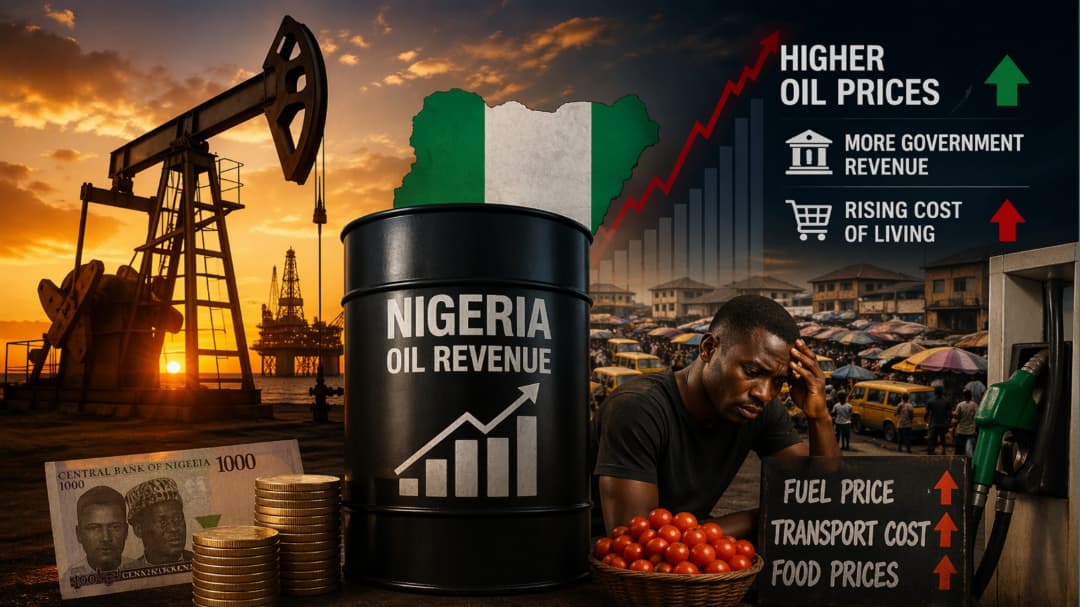
Nigeria’s oil earnings have risen in recent weeks, following a spike in global crude prices triggered by ongoing Middle East geopolitical tensions affecting global energy markets.
At first glance, the impact looks positive.
Higher prices usually mean stronger export earnings, and government accounts are already reflecting that shift.
But this improvement is not coming from domestic strength or reform, but from a global shock.
And that creates an uncomfortable reality: Nigeria is benefiting from a crisis it did not create, while also absorbing its consequences.
So the real question is not whether revenue is rising but whether that kind of growth can actually be called stability.
Dangote and the Limits of Local Strength
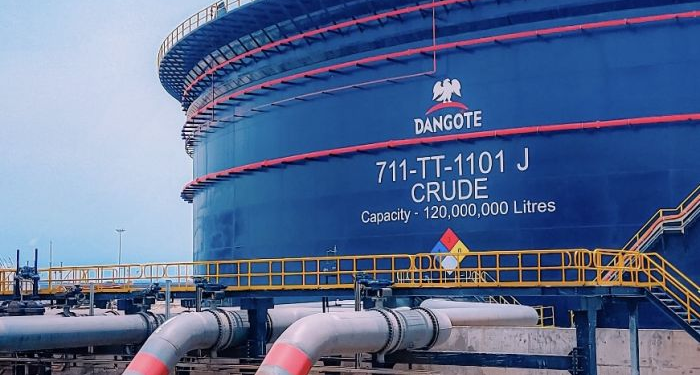
While oil dominates the national picture, Nigeria’s private sector is trying to respond in its own way.
The Dangote Group is expanding deeper into energy-linked industries, including refining and petrochemicals, as part of its push to reduce import dependence and strengthen local supply chains.
This reflects a broader attempt to build resilience within the economy, especially at a time when global energy markets remain unstable.
But even this progress exposes a limit.
One company can scale. One industrial group can expand. But the wider economy is still heavily tied to oil cycles and external shocks.
So the question remains: can isolated industrial growth really balance a system still driven by global commodity swings?
More Revenue, But Rising Pressure on Daily Life
Higher oil prices have strengthened government revenue, supported by improved export earnings.
But that improvement is not translating into relief for households.
Fuel remains expensive, transport costs are still elevated and food prices continue to rise.
Businesses are paying more to operate, and those costs are passed directly to consumers.

This is the contradiction.
The same global conditions boosting national earnings are also increasing the cost of living.
Nigeria is earning more from oil, but Nigerians are also spending more just to get by.
That raises a simple question: what does economic improvement mean if it does not improve everyday life?
Still Stuck in the Oil Pattern
Nigeria’s economy remains deeply dependent on oil.
When prices rise, revenue increases, when they fall, pressure returns.
This is not a new pattern, but it is one that has not been broken.
Other sectors have not expanded enough to absorb shocks. Manufacturing remains limited, while agriculture continues to struggle with productivity and infrastructure gaps.
Even with diversification efforts, oil still dominates fiscal earnings and foreign exchange inflows.
As a result, oil gains do not spread evenly across the economy. They remain concentrated in government accounts and export figures.
So another question becomes unavoidable: how long can an economy rely on something it cannot control?
A Boost That Raises Bigger Questions
There is no doubt that higher oil prices are giving Nigeria more fiscal breathing room.
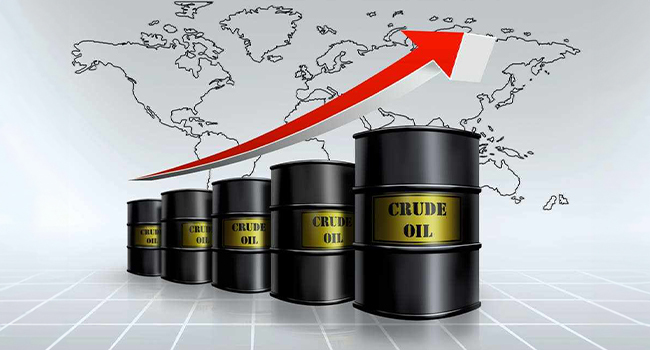
But this moment also reveals something deeper.
It shows how quickly Nigeria responds to global shocks and how exposed it still is to them.
The same crisis boosting revenue is also increasing domestic costs.
Growth and pressure are happening at the same time.
Conclusion
Nigeria is earning more from oil, but the benefits are uneven.
The global price surge has improved government revenue, yet households are still under pressure from rising costs. The economy is moving, but not evenly.
And that is the core issue.
Growth exists but it does not fully reach the people who need it most.
So the final question remains: is this real progress, or just another cycle Nigeria has learned to live with?