Who Profits From the African Migration Dream?
The African migration dream has become a marketplace of fees, agents, recruiters and online promises. But who gets paid before migrants are protected?
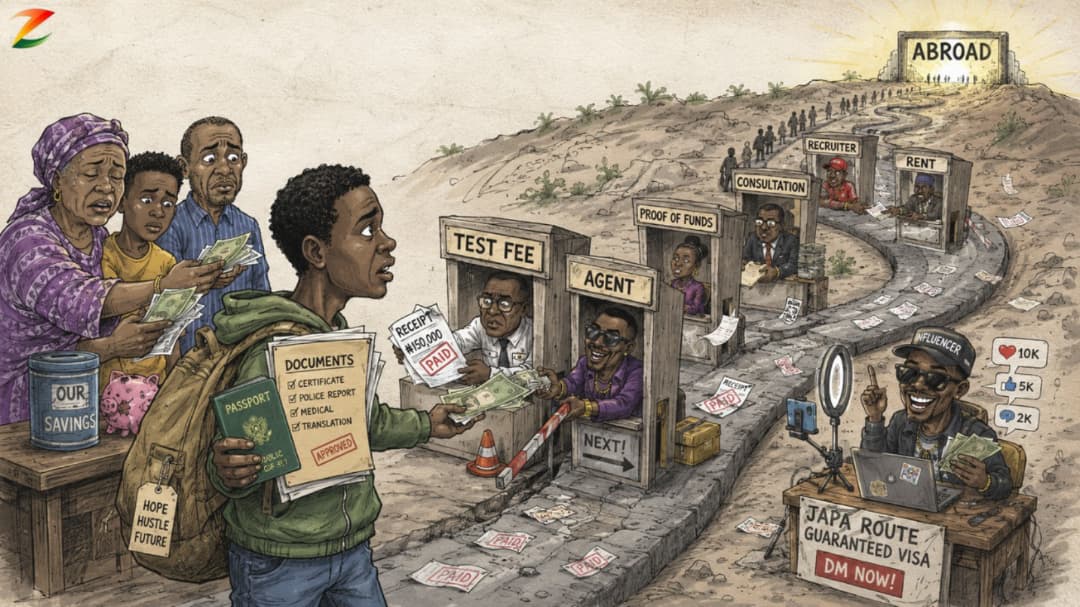
Amara had been planning the move for two years.
She had saved carefully, researched the process, and paid a consultant her sister recommended. The consultant seemed legitimate — a website, testimonials, a WhatsApp group of people who had "made it."
She paid the consultation fee, then the document review fee, the processing fee and then something called an application support fee.
Eight months later, her visa was refused. The consultant stopped responding. The money was gone.
Amara is not a cautionary tale about someone who was careless or foolish. She did most things right. But the system she was navigating was designed to collect from her at every turn and to protect almost everyone except her.
And this is the story of many Africans trying to migrate to study, work or settle abroad, in hope of a better life.
That is where the question begins: who gets paid before the migrant is protected?
Why People Still Take the Risk
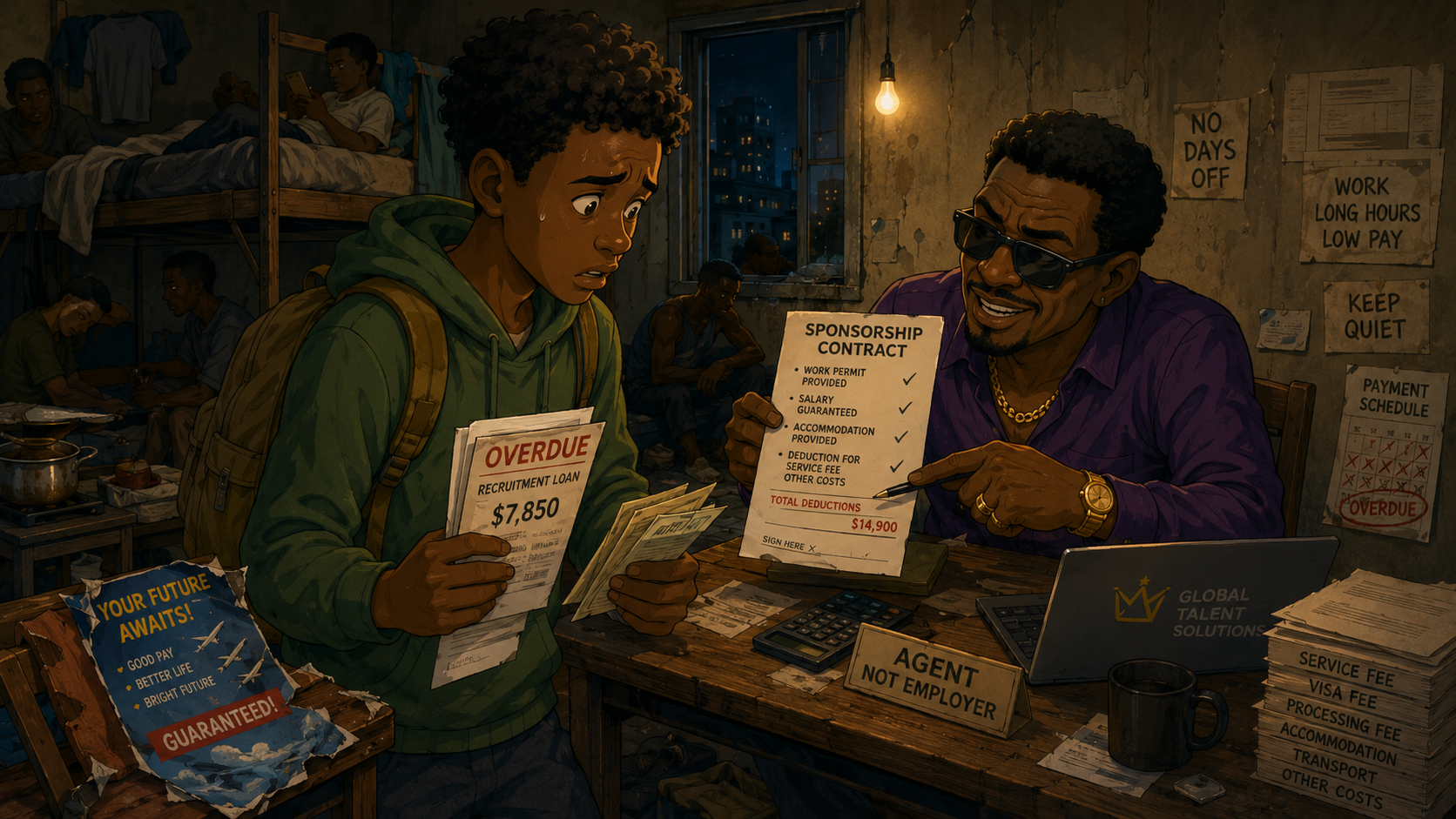
People do not try to leave home for no reason. Many are looking for better education, safer work, stronger income, career growth, family stability or a future that feels less uncertain.
That is why I would say that money is not just money, it is hope turned into payments, it is a family betting that one person’s move could change many lives.
This is what makes the migration business so powerful, it is selling access to possibility.
And when possibility feels scarce at home, people are more willing to pay for anyone who claims to know the way out.
The Marketplace Around Leaving
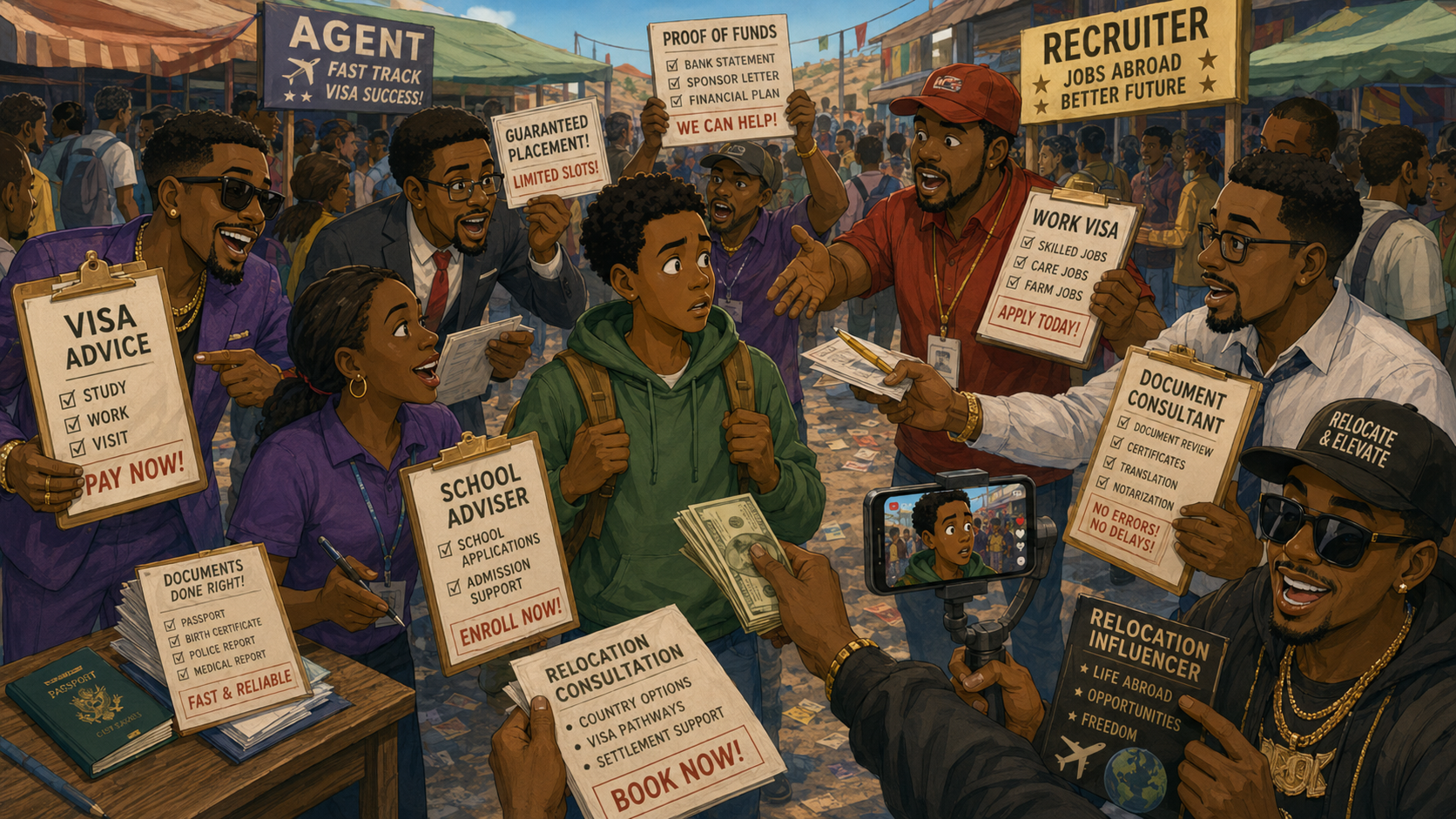
Because migration systems are confusing, people naturally look for help and this is where the dream becomes a marketplace.
Diaspora Connect
Stay Connected to Home
From Lagos to London, Accra to Atlanta - We Cover It All.
Someone charges to explain the process, another charges to review your documents. Someone charges to help with school applications, another charges to “connect” you to a recruiter. Someone sells a template, a webinar, a private group, a relocation guide, or a list of countries supposedly looking for workers.
Many people genuinely need guidance. Immigration systems can be difficult, and one missing document can spoil an application. A good consultant, recruiter or adviser can save people from costly mistakes.
But useful help is different from selling guarantees.
Social media has made this marketplace louder. Migration advice is now content, and content can quickly become a sales funnel. A video titled “Five countries you can move to this year” will usually travel faster than a careful explanation of cost, rejection risk, legal limits or emotional strain.
When advice becomes a sales funnel, the person trying to leave can become the product.
When the Dream Turns Risky

The worst cases are not always the obvious scams, sometimes the route is real, the job exists, and the visa is legal but the person still ends up trapped.
The UK care-worker route has shown how this can happen. UNISON reported in 2025 that some migrant care workers faced illegal recruitment fees, poor housing conditions and threats tied to visa sponsorship.
The danger is not only fake visas or fake jobs. It is also the legal-looking pathway that leaves people in debt, dependent on one employer, afraid to complain, or stuck in a country where the reality is nothing like what they were sold.
Visa scams add another layer. As immigration rules become tougher, people become more desperate for guidance, that desperation creates room for quick approvals, easy routes and insider access that may not exist.
The migrant carries the risk, the seller often keeps the money.
Protect the Migrant, Not the Middleman
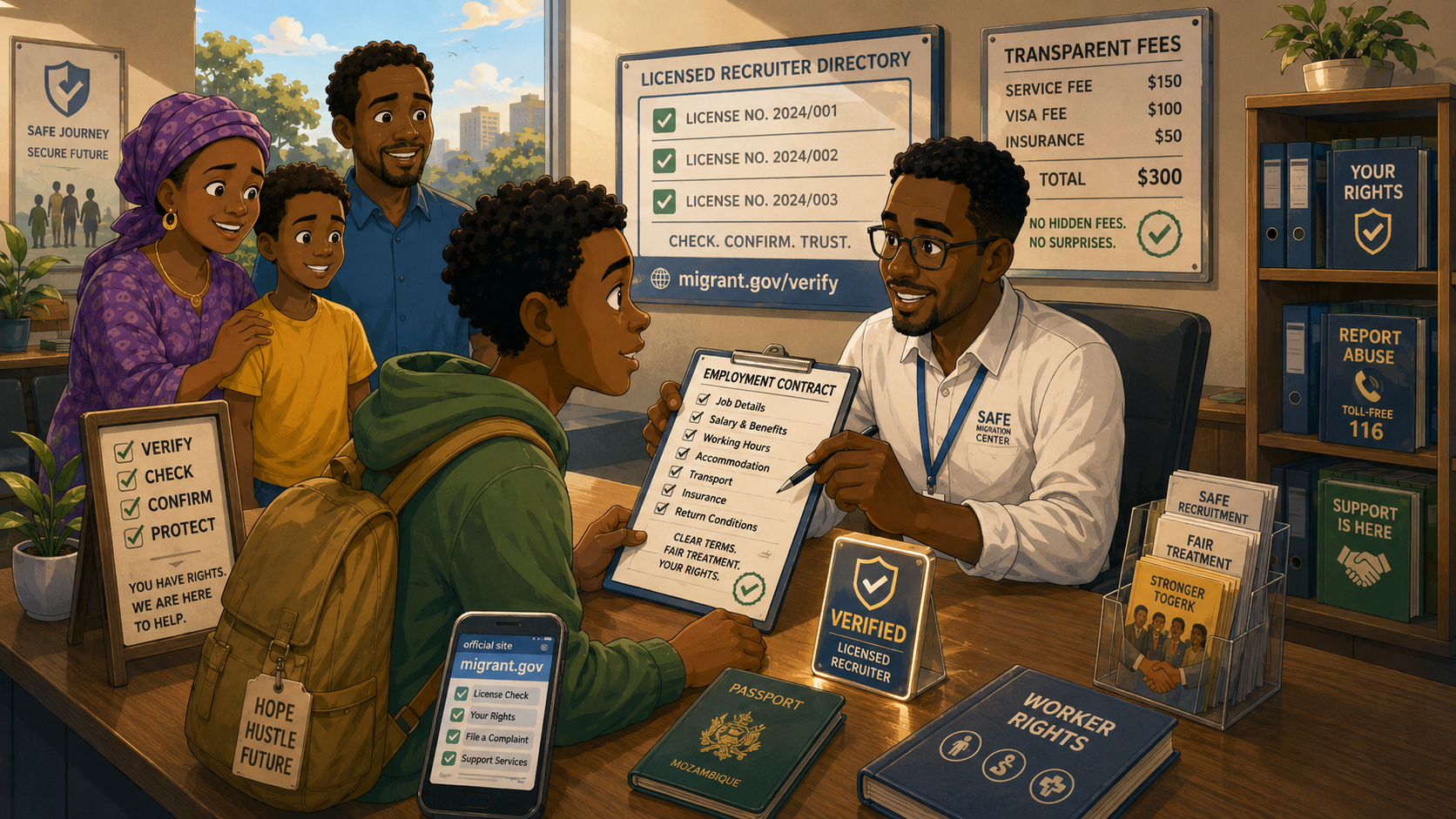
Migration will remain part of African life as people will continue to move for school, work, safety, family and opportunity. The dream itself is not the problem.
The problem is the weak protection around the people chasing it.
Agents and recruiters should be licensed and easy to verify in public databases, fees should be written down before payment, job offers should be traceable through official employer channels.
Schools should publish realistic total costs, not just tuition, destination countries should punish employers who use visa sponsorship to trap workers, migration influencers should be clearer when advice is paid, sponsored or affiliate-linked.
Diaspora Connect
Stay Connected to Home
From Lagos to London, Accra to Atlanta - We Cover It All.
Migrants also need a culture of verification: check recruiters, confirm licences, read contracts, question guaranteed offers, and ask what happens if the visa is refused, the job fails, or the rules change.
You are not wrong for wanting to leave or for seeking help. But the dream of leaving should belong first to the person taking the risk, not to the people collecting fees along the way.
Leaving home is already hard enough, it should not begin with being sold a dream that protects everyone except the person chasing it.