Nigeria Joins the Data Sovereignty Race: Can It Compete with AWS and Azure?
Nigeria is pushing into data sovereignty with subsidised local cloud services, but can homegrown providers realistically compete with global giants like AWS and Microsoft Azure?

Nigeria spends roughly $850 million annually on foreign cloud services. That number alone is enough to tell you everything about where the country's data currently lives and who controls it.
As global conversations around data sovereignty intensify, Nigeria is making deliberate, if still early, moves to change that equation.
What Data Sovereignty Actually Means for Nigeria
Data sovereignty is the idea that a country's data should be subject to its own laws, stored within its own borders, and not subject to the surveillance or monetisation decisions of foreign governments or corporations.
For Nigeria, with over 107 million internet users generating enormous volumes of data daily, this is more of a pressing economic and security concern.
NITDA Director General Kashifu Inuwa Abdullahi rightly stated at the GITEX Africa 2026 summit: "We are generating data, but we are not in control of how and where that data is stored, processed or monetised."
That is the problem in a sentence. Nigerian businesses, government agencies and startups have long relied on AWS, Microsoft Azure and Google Cloud that are efficient, globally trusted and priced in dollars.
And, this creates real problems in a market where the naira is under constant pressure.

What Nigeria Has Put in Place
The most recent and concrete move is the partnership between NITDA and Galaxy Backbone Limited (GBB), Nigeria's foremost government-backed ICT infrastructure provider.
Through NITDA's Office for Nigerian Digital Innovation, the two have launched a subsidised sovereign cloud programme for startups in the iHatch initiative.
Participating startups are being onboarded to the Galaxy Cloud Platform (GxCP) which is built on Uptime-certified Tier III and Tier IV data centres, a nationwide fibre network and advanced cybersecurity infrastructure.
The programme uses a tiered, milestone-based model. It also releases cloud credits across three startup phases: Build, Validate, and Scale.
Credits are valid for 12 months before startups transition to standard billing and crucially, all billing after the credit period is in Nigerian naira, shielding founders from volatility of the currency in the dollar market.
The iHatch programme has already trained over 160 startups across 37 hub partners nationwide, and this new cloud layer is designed to give those startups the infrastructure backbone to actually scale.
Beyond GBB, Nigeria's local cloud ecosystem includes players like Nobus, Layer3,Suburban Cloud, and MTN Cloud which launched in June 2025 and backed by a 4.5 MW Tier III data centre in Lagos.
Latest Tech News
Decode Africa's Digital Transformation
From Startups to Fintech Hubs - We Cover It All.
These providers offer naira-based pricing and are built to ensure compliance with Nigeria's Data Protection Regulation, which mandates local storage for sensitive data, particularly in finance and government.
The regulatory framework is also evolving. Nigeria's Data Protection Act 2023 and its General Application and Implementation Directive, which took effect in September 2025, now set stricter, more actionable compliance standards, replacing the older NDPR and putting real pressure on organisations to localise sensitive data.
The Honest Pros
The case for Nigeria's sovereign cloud push is legitimate and very multifaceted. For Nigerian startups already navigating a volatile currency environment, paying in naira is the difference between predictable costs and budget chaos.
Local hosting also reduces latency, which matters more than people admit. Suburban Cloud's Abuja data centre already serves global clients like Netflix and Google with reduced lag for Nigerian users.
There is also the compliance argument. The NDPA makes data localisation legally necessary for many categories of sensitive data. Local providers are, by design, built around these requirements.
The Real Challenges

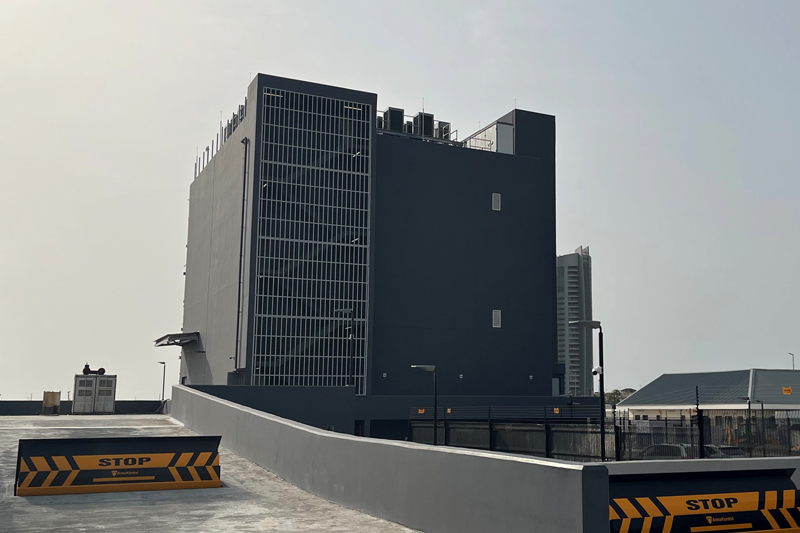
Nigeria has only 17 data centres, 14 of which are concentrated in Lagos, compared to South Africa's 56.
Power remains the most persistent problem. Data centres in Nigeria require around 137 MW of power capacity, but the national grid delivers an average of roughly four hours of electricity per day.
The gap is filled by diesel generators, which drive up operating costs and emissions.
There is also the scale gap. AWS and Azure operate at a scope that no Nigerian provider can match today, in terms of global reach, service breadth, AI integration, developer tooling and reliability guarantees.
For startups with global ambitions or multinational clients, the difficulty between choosing sovereignty and capability is very real.
Talent and awareness are factors too. Hybrid cloud deployments that balance local compliance with global services require deep technical expertise, something that remains scarce.
Conclusion
Nigeria is not trying to replace AWS. What it is trying to do is build enough local infrastructure that its data economy does not remain permanently dependent on foreign systems.
The NITDA-GBB collaboration is a policy bet that subsidising local access early creates the ecosystem conditions for a more sovereign digital future.
Whether that bet pays off will depend on execution and on whether Nigeria can solve its power problem before the data problem solves itself.