What Tiwa Savage's Scholarship Program Reveals About Who Gets Access in Nigerian Music
What do 2,100 applicants and 18 scholarships really tell us? Tiwa Savage's Berklee programme just exposed the access crisis at the heart of Nigerian music.
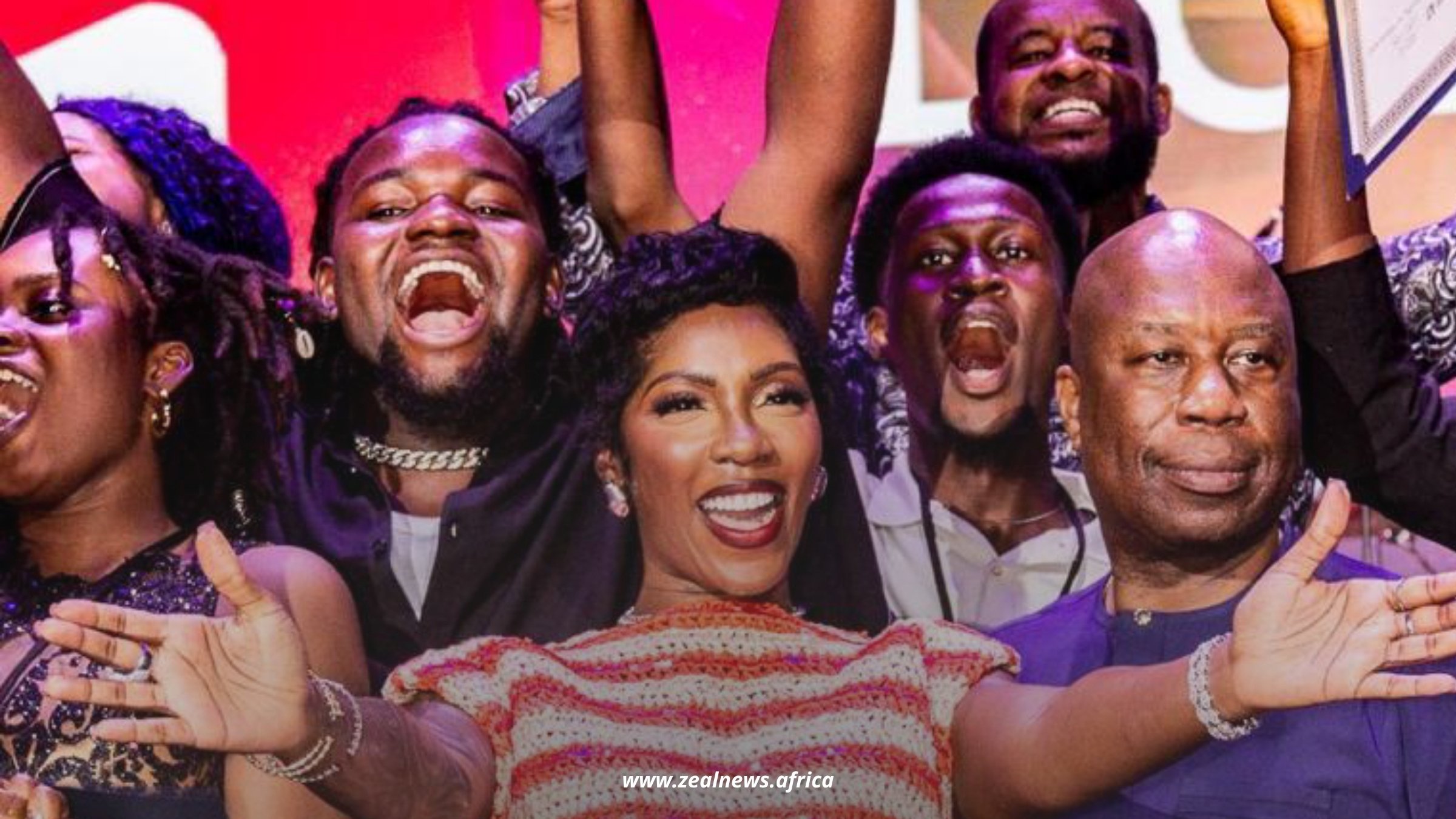
Over 2,100 Nigerians applied. 120 made the cut for training. 18 got the scholarships. Those numbers are telling us something, loudly.
The gap between 2,100 people and 18 spots does not just entirely show how competitive the programme was. It also reveals how many talented Nigerians are out there with nowhere to go.
That is the story underneath the Tiwa Savage Music Foundation's historic Berklee partnership. Yes, it is a celebration.

Source: The Cable Ng
But if you look closer, it also shows the lack of infrastructure that Nigerian musicians are forced to navigate every single day.
Nigeria Has a Music Industry. It Does Not Have Enough Music Schools
Afrobeats is a global phenomenon. Nigerian artists are filling arenas in London, New York, Paris and many other major cities around the world.
The industry generates hundreds of millions of dollars annually. And yet, when you ask how many world-class dedicated music institutions exist in Nigeria, the answer is almost a no.
Source: Google
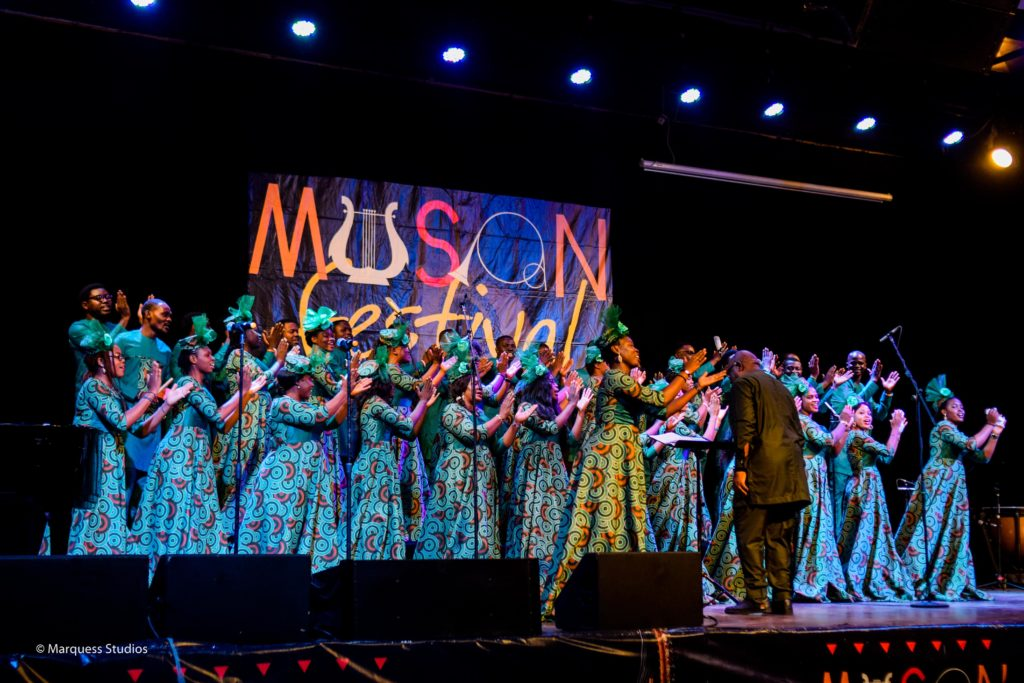
The most prominent name on any list is MUSON, the Musical Society of Nigeria, founded in 1983, with its School of Music established in 1989. It is Lagos-based, classically focused and has produced just over 300 diploma alumni in its entire existence.
After MUSON, the options are almost non-existent. Just a handful of private schools scattered across Lagos, a few university departments with outdated curricula and plenty of self-taught musicians figuring it out on their own.
For a country of over 220 million people, a country literally exporting culture to the world, such a scale of infrastructure is almost embarrassing.
The institutions that do exist are concentrated in Lagos, making them inaccessible to anyone who cannot afford to relocate or travel. University music departments, where they exist, have largely been criticised for curricula that do not reflect the realities of the contemporary Nigerian music industry.
You can study music at Obafemi Awolowo University or the University of Nigeria, Nsukka, and still graduate without the practical skills needed to compete in 2026's music economy.
The Berklee programme was held at the MUSON Centre. That is the only venue equipped to host a world-class music intensive in Nigeria is a classical music hall that most aspiring Afrobeats artists have never set foot in.
The Problem Starts Before the Schools
Even before you get to the question of which schools exist, there is a more foundational problem. The Nigerian society does not take music education seriously.
This is not just a stereotype. It is an actual lived experience.
Ask any musician in Nigeria about their parents' reaction to their career choice and the story is almost always the same.
CKay ran away from home in Kaduna at 19 because his parents refused to support his music. Wizkid was sneaking into studios as a teenager while his family expected a different future. Davido faced opposition from his father who expected him to join the family business.
These are now global superstars, but their paths to success were built on defiance, not support.

The attitude runs deeper than individual families. In Nigerian schools, music is bundled into a subject called Cultural and Creative Arts. It competes for time and resources with "real" subjects.
Teachers are often undertrained, instruments are barely functional and the message students receive, implicitly and explicitly, is that music is a hobby, not a future.
This creates a vicious cycle. Because music is not taken seriously as education, institutions do not invest in it.
Because institutions do not invest in it, aspiring musicians have no formal pathway. Because there is no formal pathway, most people assume you either blow by luck or you do not blow at all.
What 2,100 Applications Actually Mean
When the Tiwa Savage Music Foundation put out the call,2,100 people responded. Two thousand, one hundred Nigerians who are singers, songwriters, producers, music professionals, raised their hands and said: I want this. I am ready for this.
That number reflects the demand that the system has never met.
Those 2,100 people existed before Tiwa Savage started her foundation. They were practicing in bedrooms, recording on phones, learning by watching YouTube tutorials and studying artists they loved.
They built skill without structure because structure was never built for them.
Only 18 got the scholarships. The other 2,082 went home with nothing but the knowledge that they were not among the chosen few — not because they lacked talent, but because there was only room for 18.
Access Is the Actual Product
What Tiwa Savage built is proof of concept and it shows that when you create a legitimate, structured pathway, Nigerians will show up in their thousands.
The talent was never the problem. It has never been the problem.
The question now is what happens next — not just for the 18 headed to Boston, but for the 2,082 who were not, and for the thousands more who did not even know to apply.
Meta description:
Tags:
, #NigerianMusicIndustry, #MusicEducation, #Afrobeats