Moniepoint Cannot Find Nigerians for 500 Roles. Before We Agree With Him, Let Us Ask Some Questions
Moniepoint's CEO cannot find Nigerians for 500 roles and blames laziness and a broken education system. But his own bootcamp got 9,000 applicants and took 20. The talent is there, but the question is who failed it first.

Moniepoint CEO,Tosin Eniolorunda, said something recently that the internet decided to agree with very quickly. Over 500 vacancies, yet he cannot find Nigerians to fill them.
His competitors are global so he needs people who meet global standards, and Nigerians keep falling short. He blamed the broken education system, social media distraction, the hookup lifestyle, Yahoo Yahoo culture, and what he called a creeping culture of laziness.
The comments were flooded with Nigerians nodding along, sharing the clip, tagging friends, saying yes finally someone is saying it.

And I sat with it for a while because something about the framing bothered me. Not because he is wrong. Parts of what he said are true and worth saying out loud.
But because a billionaire CEO pointing at broke 22-year-olds and saying the problem is their character is the kind of thing that sounds like wisdom until you start asking the uncomfortable questions underneath it.
The Education System He Is Blaming Did Not Collapse By Itself
Let us be honest about what Nigerian youth are navigating right now. The education system has been in crisis for so long that the crisis feels normal. ASUU strikes have stolen entire academic years from a generation of students.

Universities are chronically underfunded. Lecturers who should be building the next generation of engineers are leaving for better opportunities abroad.
The curriculum in most Nigerian institutions has not kept pace with what the global tech industry actually needs, which means graduates are emerging with degrees that do not translate to employable skills at companies competing at a global level.
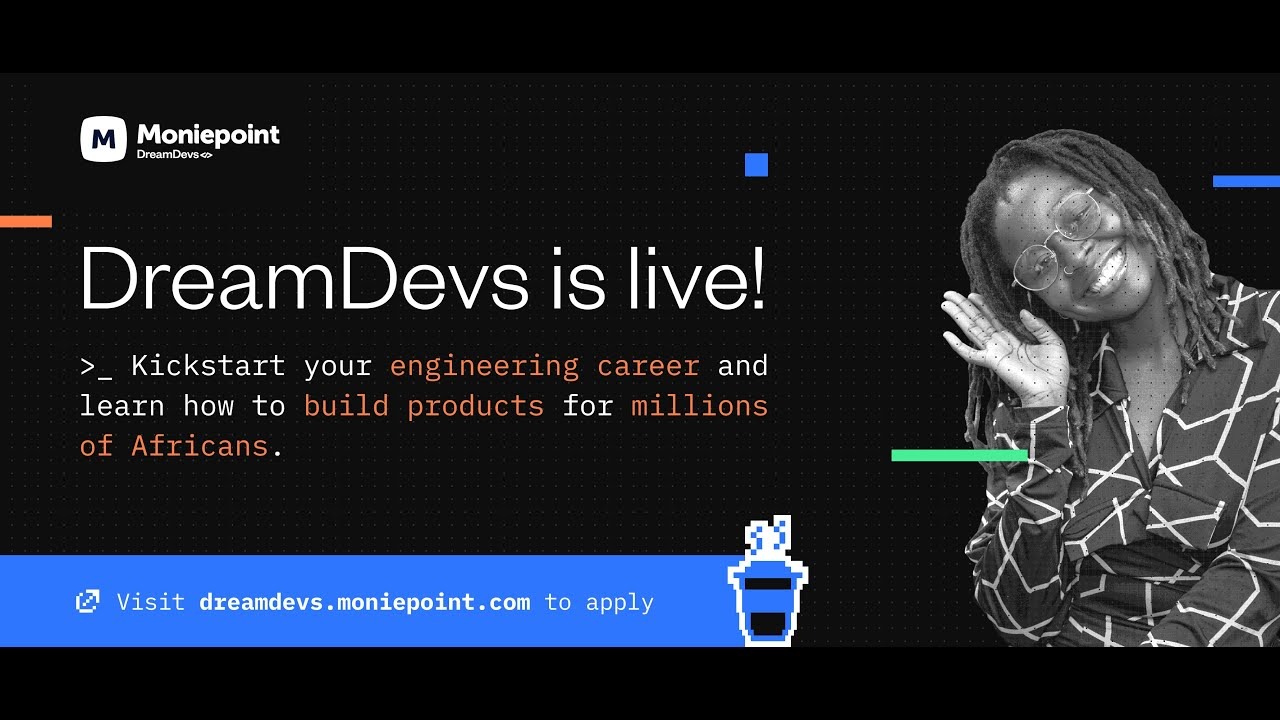
Moniepoint itself selected just 20 engineers from over 9,000 applicants for its DreamDevs bootcamp, a nine-week programme designed to fast-track participants into professional software engineering roles.
Read that again. 9,000 people applied. 20 made it. That is not laziness. That is a pipeline problem that starts long before any individual Nigerian decides how to spend their afternoon.

So when the CEO says the education system is broken, he is right. But broken by whom and for whose benefit is a question he did not answer.
Moniepoint Picked 20 People From 9,000 Applications. Where Was This Energy Before?
This is the number that nobody is talking about loudly enough.
Moniepoint selected just 20 engineers from over 9,000 applicants for its DreamDevs bootcamp, a programme designed to fast-track participants into professional engineering roles.
9,000 Nigerians applied to a programme at his own company. 9,000 people who clearly want to work, want to learn, want to build careers in tech. And 20 were selected. Which means 8,980 were turned away, presumably because they did not yet meet the standard.
Now here is my question. Moniepoint has been operating since 2015. It has raised hundreds of millions of dollars. It processes $12 billion monthly.
It has been watching the Nigerian talent gap from the inside for a decade. Where was the sustained, funded, multi-year investment in building the pipeline before it became a crisis?
Where were the university partnerships, the apprenticeship schemes, the engineering programmes that could have been turning those 9,000 applicants into exactly the kind of talent he now says he cannot find?

Where was the sustained, funded, multi-year commitment to building the workforce that a globally competitive Nigerian fintech company requires? Where was the partnerships with universities to redesign curricula around what the industry actually needs?
The DreamDevs programme exists now. It is a good initiative and it deserves credit. But it started recently, it takes 20 people at a time, and it arrives after years of operating in a market whose talent gap was always visible to anyone paying attention.
You do not get to build a billion-dollar company on Nigerian users, Nigerian merchants, and Nigerian transaction volume, and then express surprise that the educational infrastructure serving those same Nigerians has not produced enough world-class engineers.
The gap was always there. It was always visible. The question is why solving it only became urgent when the vacancy list hit 500.
The Nigerians Who Meet His Standard Are Already in London
This is the part of this conversation that stings the most and that nobody in the Nigerian tech industry wants to say plainly.
Nigeria is not short of talented people. It is short of talented people who are still in Nigeria.
The engineers who meet global standards that Moniepoint is struggling to find are, in very large numbers, currently employed at companies in the UK, Canada, Germany, and the Netherlands.
They left because the offer to stay was not competitive with the offer to go. Not just in salary, which matters enormously when the naira is collapsing, but in career development, working conditions, equity, stability, and the basic dignity of being paid what your skills are worth in an environment that actually functions.
Brain drain is not a character flaw. It is a rational decision made by people who worked hard enough to have options and chose the option that made more sense for their lives.

Nigerian tech companies, including the successful ones, have been slow to build the compensation structures , and retention strategies that would make staying genuinely competitive with leaving. And then when the talent is gone, the conversation somehow circles back to blaming the people who left rather than examining why leaving kept being the smarter choice.
So Who Is Actually Responsible for This?
The Yahoo Yahoo culture is real. The hookup economy is real. When a system fails young people consistently and visibly, some of them will find faster routes to survival and those routes will not always involve building skills that take years to develop.
You cannot create an environment where hustle is the only thing that reliably works and then express moral disappointment when people hustle in directions you do not approve of.
But here is what is also real. A CEO who built a company worth billions on Nigerian infrastructure is standing to speak about Nigerian talent gaps only if he has also been doing the work to close them.
Not a bootcamp that takes 20 people. Real, sustained, industry-level investment in the educational and talent pipeline that his company and others like it depend on.
500 empty seats is a real problem. But it is not a problem that started with Nigerian youth deciding to scroll Instagram instead of learning to code.
It started with thirty years of educational neglect, a brain drain crisis that stripped the talent pool, and an industry that benefited from the Nigerian market without investing adequately in the Nigerian people who make that market possible.
The CEO is not wrong to raise the alarm. He is wrong to raise it as if he was standing outside the problem looking in.
He has been inside it the whole time.