Africa Has 416 Million Internet Users, But Only 12% Are on 5G. What Does This Mean?
Only 12% of Africa's 416 million internet users are on 5G. South Africa leads the continent while Ghana's 3G still dominates at 71%. What does the telecom market look like across these four African countries?
Everyone is talking about 5G in Africa like it is already here. The press releases are confident, the government targets are ambitious, and the telcos are marketing hard.
The reality is quieter and more complicated than that.
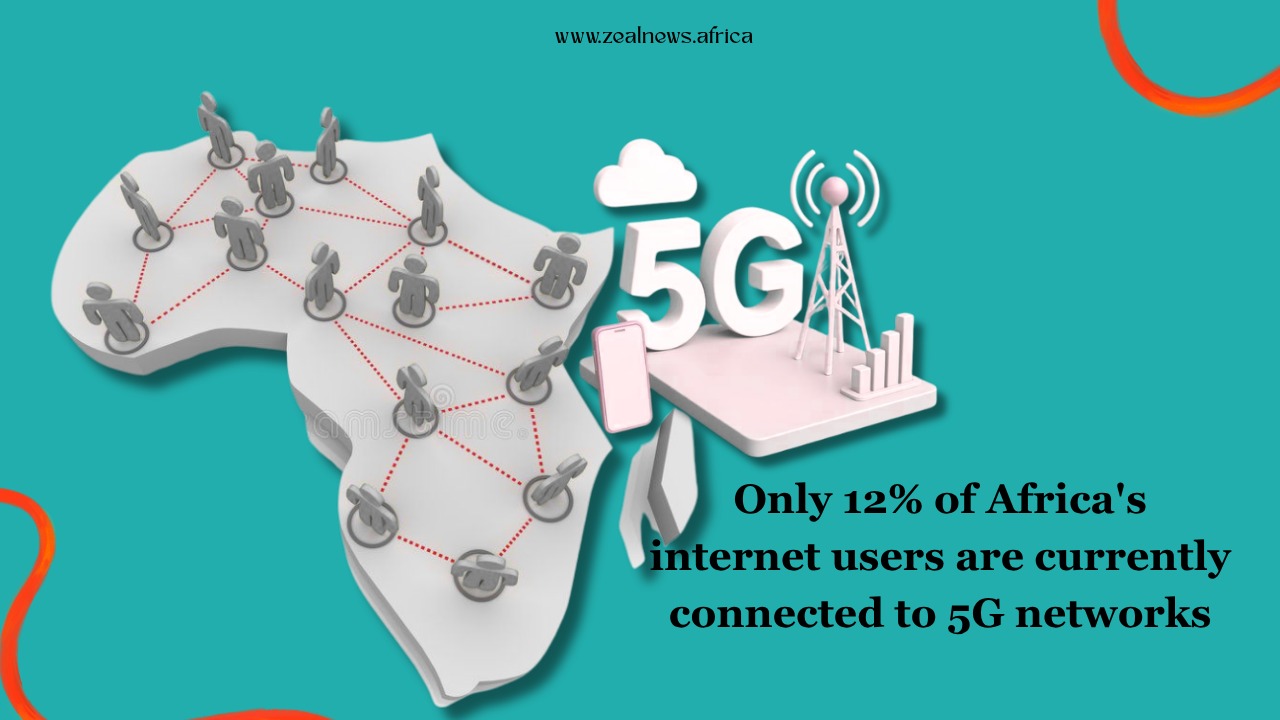
Only 12% of Africa's 416 million internet users are currently connected to 5G networks. The vast majority are still on 4G, and in some countries, 3G is still winning.
The infrastructure gap between what African governments are promising and what people are actually connecting to is significant, and it looks different depending on which country you are standing in.
Here is a list ofwhere five of Africa's biggest telecoms markets actually are in 2026.
1. Kenya
Kenya has 62 million internet users and a population that is increasingly online for everything from mobile money to digital services. As of December 2025, about 79.1% of Kenya's 78.39 million telecom subscribers are connected to the internet. Roughly 8 in every 10 phone users in the country are online.
4G and 5G together account for 45.9 million internet subscribers, a 65.5% combined market share. But the split inside that number tells the real story. 44.2 million users are on 4G, only 1.7 million are on 5G, and that is 63.1% vs. 2.4%.
The 5G number is small but the network is punching above its weight. 4G and 5G together fuelled 93.4% of the 755,095.1 terabytes of data consumed in Kenya in the fourth quarter of 2025. Safaricom is leading the charge, alongside Airtel Kenya, Telkom, Finserve, and Jamil.
Kenya's internet story is essentially a 4G story. 5G is present but it has not yet moved the needle for most users.
2. Ghana
Ghana is at a genuinely transitional moment and it shows in the data.
3G still dominates at 71% market share, even though 4G has been available in the country for nearly a decade. That penetration gap , a decade of 4G availability and 3G still winning, points to a coverage and affordability problem that no number of press releases about 5G will fix on its own.
According to DataReportal, about 26.3 million Ghanaians are connected to the internet, with a 74.6% internet penetration rate. Active telecom subscribers stand at 41.8 million, meaning roughly 6 in every 10 subscribers are actually online.
Ghana launched its 5G network in March, operated by Next Gen Infraco. The government's target is 70% 5G population density coverage by 2027, timed to coincide with Ghana's 70th independence anniversary.
MTN dominates the market with a 78.88% share, with Telecel Ghana and AT Ghana as the other significant players.
Latest Tech News
Decode Africa's Digital Transformation
From Startups to Fintech Hubs - We Cover It All.
The 5G ambition is real. But a country where 3G is still the majority network in 2026 has a significant amount of infrastructure work to complete before 2027 targets become credible.
3. Nigeria
For a long time, 3G led Nigeria's mobile internet market. That has now changed.
In May 2024, 3G held 44.86% market share while 4G sat at 42.63%. By February 2026, those positions had fully flipped. 4G now holds the largest share at 53.59%, with 2G dropping to 36.87%. Together, 4G and 5G account for 59% of Nigeria's internet market.
5G though is still at 5.06%. For a country of over 200 million people with one of Africa's most active tech sectors, that number is modest. Current 5G coverage sits at 13% of the population.
The Nigerian Communications Commission's spectrum roadmap is targeting 50% 5G coverage by 2030, partly through direct-to-cell satellite services.

Project Bridge, a planned 90,000km fibre backbone, is expected to be central to that ambition. The infrastructure is being built. It is just being built slowly against a very large demand problem.
4. Egypt: 5G Is There. It Just Does Not Work Yet.
Egypt launched 5G in June 2025. The launch happened. The coverage did not quite follow.
According to Egypt's National Telecom Regulatory Authority, 5G users spent about 95% of their time on non-5G networks in the third quarter of 2025. Only 5% of their connected time was actually spent on 5G. The users are ready. The network is not.
Egypt had almost 82 million internet users as of January 2024. 4G continues to dominate the actual user experience while telcos including Vodafone Egypt, Orange Egypt, Telecom Egypt, and e& work through 5G licence acquisitions from 2024 and 2025 and invest nearly $2 billion in building out coverage.
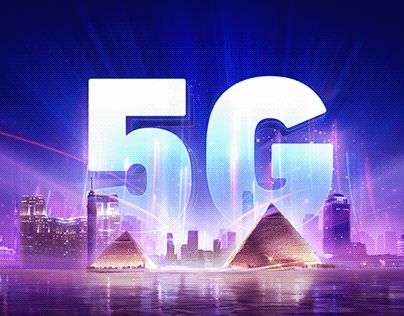
Egypt's 5G story is essentially a 2027 story, not a 2025 one. The foundation is being laid. The experience is not yet there.
What the Continent Is Actually Building Toward
The GSMA has projected that approximately 382 million African telecom subscribers, about 21% of the total, will be connected to 5G by 2030. That number represents genuine progress from where the continent sits today.
But progress toward a target and arriving at the target are two different things. The countries in this analysis are all moving in the right direction. Kenya and Nigeria are building credible 4G foundations that 5G can eventually grow from. Ghana and Egypt are earlier in the journey with ambitious timelines that will require significant infrastructure investment to meet.
The honest summary of Africa's 4G and 5G story in 2026 is this: the network is coming. For most people on the continent, it is just not here yet.