Smarter AI, Weaker Grid: The Energy Crisis Behind the Data Center Boom
The race to build smarter AI is colliding with a harsh reality: data centers are consuming electricity faster than power grids can supply, threatening infrastructure, sustainability, and the pace of innovation. This is why AI growth depends on physical energy limits.
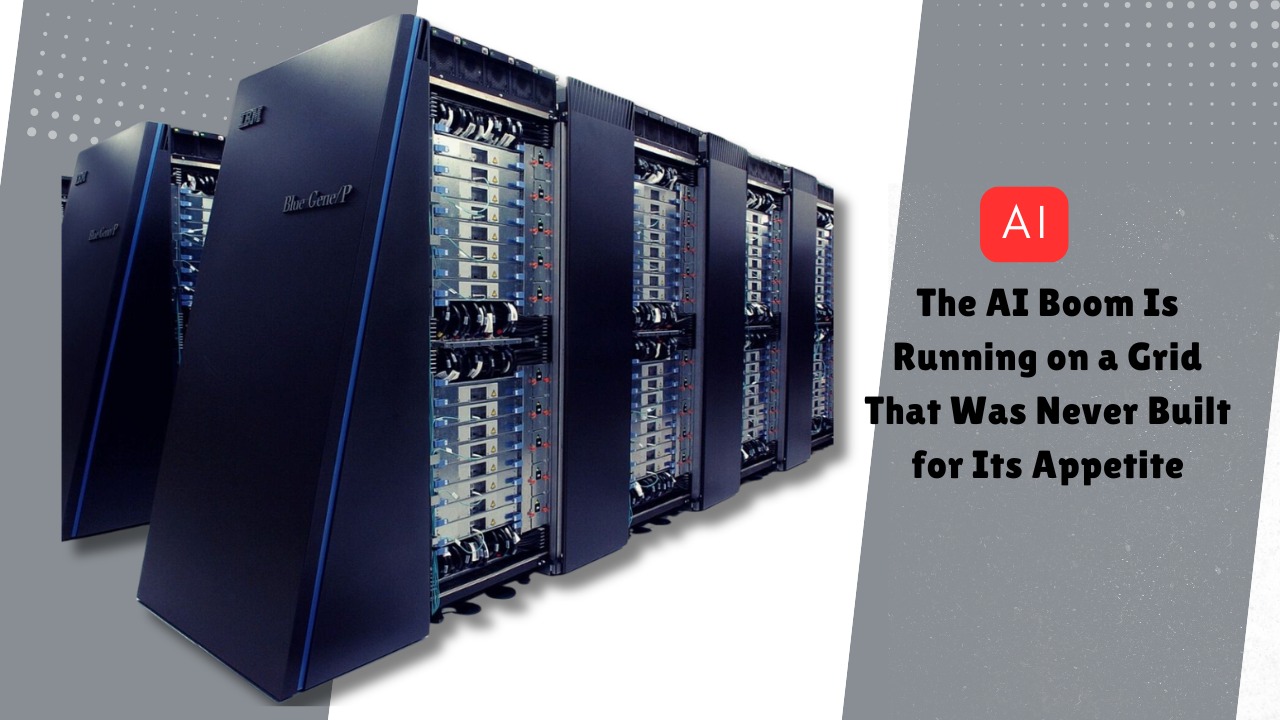
What Data Centers Are and Why They Are Being Built at Record Speed
Before we talk about artificial intelligence exhausting national power grids, we need to understand the quiet industrial giants making all of this possible.
A data center is not a mysterious cloud in the sky. It is a physical facility filled with servers, storage systems, networking equipment, and cooling infrastructure that processes, stores, and distributes digital information.
Every Google search, every streamed movie, every cloud document, every cryptocurrency transaction, and increasingly every AI query runs through these facilities.
Companies such as Google, Microsoft, Amazon, and Meta operate hyperscale data centers across the United States, Europe, and Asia, and they are building more at a pace that would have been unimaginable a decade ago.
Why are they expanding so aggressively? Because the digital economy has shifted from simple storage and web hosting to something far more computationally intense.
Artificial intelligence systems, especially large language models and generative tools, require enormous computing power both during training and during everyday use.
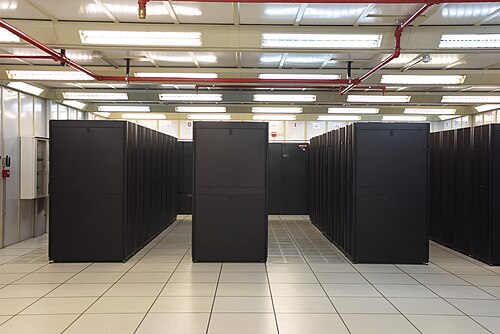
Training a frontier AI model involves processing vast datasets through thousands of specialized chips running continuously for weeks or months. Even after training, every user interaction requires inference, which still consumes significant energy at scale.
In 2023, global data centers consumed an estimated 1 to 1.5 percent of total global electricity,according to assessments from the International Energy Agency.
That figure may sound modest until you consider that electricity demand in many advanced economies had been relatively flat for years. Suddenly, utilities that were planning for stable growth are facing explosive new demand from clusters of AI facilities that require hundreds of megawatts each.
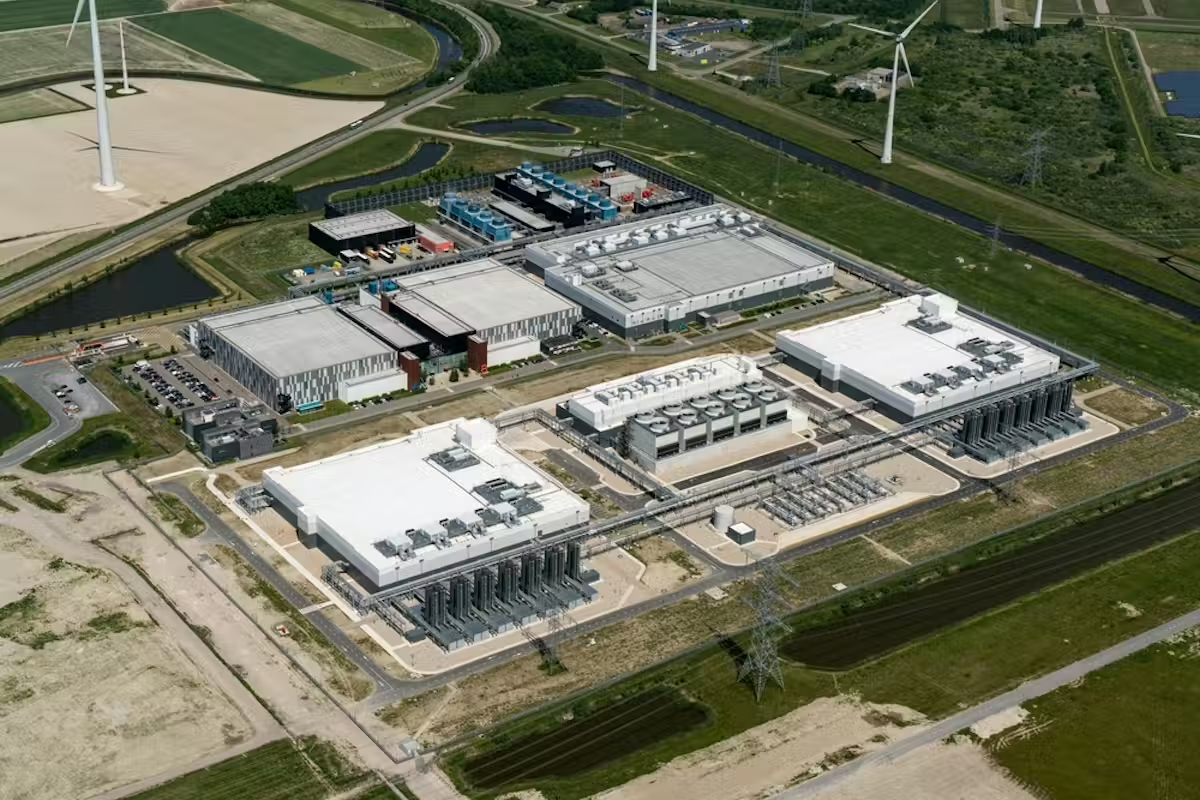
To put that into perspective, a single hyperscale data center campus can consume as much electricity as a mid sized city.
The AI boom is not happening in the abstract. It is being built out of steel, silicon, water, copper, and vast quantities of electricity. And this is where the friction begins.
The Power Hunger of Artificial Intelligence
Artificial intelligence workloads are different from traditional cloud computing. Training large AI models depends heavily on advanced graphics processing units, particularly those manufactured by Nvidia.
These chips are optimized for parallel processing, which makes them exceptionally powerful but also energy intensive. A modern AI server rack can draw several times more power than a conventional server rack from a decade ago.
The surge in AI infrastructure is already reshaping electricity markets. In the United States, utilities in states like Virginia, Texas, and Arizona have reported unprecedented requests for new grid connections from data center developers.
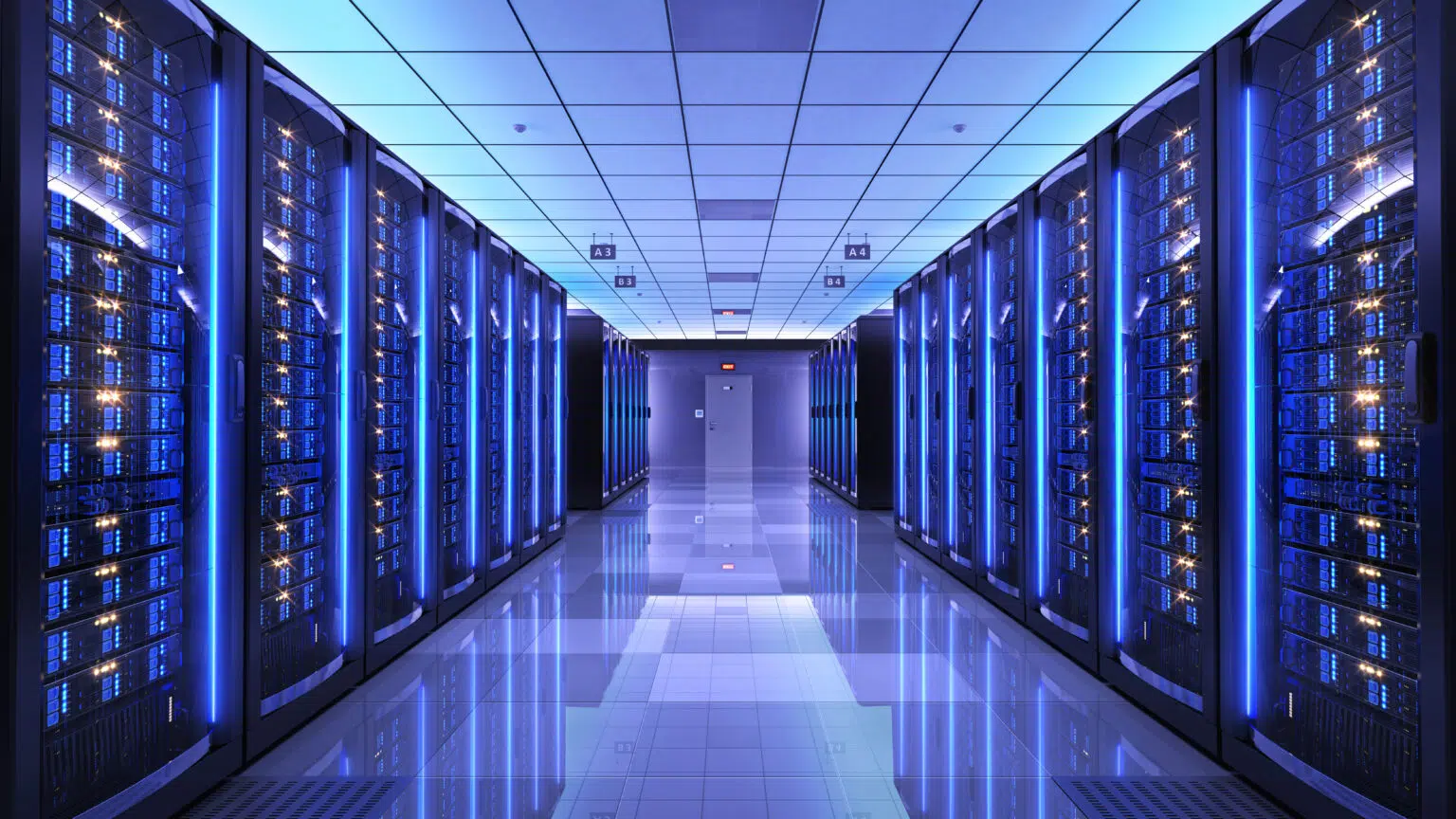
Northern Virginia, often described as the largest data center market in the world, has seen demand projections rise so sharply that local utilities are reassessing long term capacity planning.
The same pattern is emerging in parts of Ireland and the Netherlands, where data center growth has triggered political debate about grid stability and sustainability.
According to the International Energy Agency (IEA), global electricity consumption from data centers is projected to more than double by 2030, rising from 415 TWh in 2024 to approximately 945 TWh.
Driven heavily by AI, this surge means data centers could account for 3% of global electricity demand by 2030, equivalent to the current electricity consumption of Japan.

The challenge is not only the total amount of energy consumed but also how and where it is consumed. Data centers require reliable, uninterrupted power. Even short outages can cause severe disruptions.
As a result, they are often backed by diesel generators or large battery systems. Utilities must build not only generation capacity but also transmission lines and substations to deliver massive quantities of power to specific geographic clusters.
Permitting, construction timelines, and regulatory approvals often lag far behind the speed at which AI companies want to deploy new computing capacity.
We are witnessing a collision between two growth curves. On one side is the exponential ambition of AI developers racing to build smarter systems.
On the other side is the physical reality of power grids that require years of planning, billions in investment, and complex regulatory coordination to expand. Electricity infrastructure does not scale at the speed of software.
The Grid Bottleneck and the Climate Question
The strain on power grids raises a deeper question about sustainability. Many technology companies have made public commitments to carbon neutrality or even carbon negativity.
Microsoft has pledged to be carbon negative by 2030. Google has committed to operating on 24 hour carbon free energy by 2030. These goals were formulated before the full scale acceleration of generative AI.
If AI demand drives electricity consumption sharply upward, maintaining those climate commitments becomes more complicated.
In regions where renewable energy deployment is slow, new data center demand may be met with natural gas or other fossil fuel generation.
Some utilities have already delayed the retirement of coal plants in response to surging industrial demand tied partly to data center expansion.
There are technological efforts underway to address this. Companies are investing in more efficient chip designs, advanced cooling techniques such as liquid cooling, and siting facilities near renewable energy resources.
There is also renewed discussion about nuclear energy, including small modular reactors, as a potential long term power source for large data center campuses.
But these solutions require time, regulatory approval, and massive capital investment.
Meanwhile, communities hosting data centers are grappling with local impacts. Beyond electricity, data centers often require significant water for cooling, especially in hotter climates.
In drought prone regions, this raises legitimate concerns about resource allocation. Policymakers are increasingly asking whether the economic benefits of hosting AI infrastructure justify the strain on public utilities and natural resources.
The most striking reality is this: the digital revolution is not weightless. It rests on physical systems that obey the laws of thermodynamics, engineering, and economics. The narrative of limitless AI progress collides with transformers that overheat, transmission lines that take years to permit, and generation plants that cannot be built overnight.
Conclusion: Intelligence Cannot Outrun Infrastructure
The race to build smarter AI systems is not slowing down. Venture capital continues to flow into model development and chip manufacturing.
Governments see AI as a strategic asset with implications for economic growth and national security. But ambition does not generate electricity.
If data center demand continues to rise at its current trajectory, energy infrastructure will become a defining constraint on the future of AI. That constraint may reshape where facilities are built, how models are trained, and how frequently they are updated.
It may also force a more honest public conversation about the tradeoffs between technological advancement and environmental responsibility.
What we are confronting is not a temporary hiccup but a structural tension. Artificial intelligence depends on physical power, and physical power has limits.
The power grid cannot be scaled with a software update. It requires land, materials, labour, capital, and political agreement.
The next chapter of the AI revolution will not be written solely in code. It will be negotiated in utility commissions, energy ministries, and construction sites.
If we fail to align technological ambition with infrastructural reality, the smartest machines humanity has ever built may find themselves constrained not by imagination, but by megawatts.