He Started Coding at 13, Dropped Out of Medical School, And Now Builds a Global Developer Tool
Sampson Ovuoba started coding at 13, dropped out of medical school, and quietly built Windframe, a developer tool now used by thousands globally, including engineers at a16z.

The first time someone paid for Sampson Ovuoba’s software, he could barely believe it.
It was sometime in the evening in Lagos. He had spent hours nervously pushing his product, Windframe, across platforms like Product Hunt and Reddit, hoping strangers somewhere on the internet would care enough to try it. Then his phone lit up.
A new subscription had just come in.
Someone he had never met before had paid $25 to use something he built from Nigeria.
“I literally jumped out of my chair,”Ovuoba recalled in an interview with Technext.“It felt surreal that someone who didn’t know me or what I looked like actually paid for it.”
For many startup founders, that first payment is more than revenue. It is proof that an idea can survive outside your own head. Five years later, Windframe has grown far beyond that moment of validation. The visual builder for Tailwind CSS has now been tested by more than 100,000 developers globally, with over 17,000 active users currently using the platform.
What started as one Nigerian developer’s frustration with building user interfaces is quietly becoming part of the workflow for engineers across the global tech ecosystem, including developers working at Silicon Valley venture capital giant Andreessen Horowitz, better known as a16z.
Before Windframe, there was a 13-year-old boy learning QBasic in Nigeria
Ovuoba’s story did not begin in Silicon Valley or inside some glamorous accelerator programme. It started inside a classroom at Marist Brothers High School in Nigeria when he was just 13 years old.
While many teenagers were still figuring out what subjects they even liked, Ovuoba had already discovered programming through QBasic. More importantly, he had a teacher who pushed students beyond the standard curriculum and exposed them to more advanced computer science concepts early.
That early exposure changed everything.
“I don’t think I would be where I am today without being introduced to coding that early,” he explained. “When you are young, you don’t really have a lot going on, so I was basically coding morning to night.”
But like many Nigerian children interested in unconventional careers, his path into tech was interrupted by traditional expectations. Instead of immediately pursuing software engineering, Ovuoba enrolled at Ebonyi State University to study medicine.
He stayed there for almost three years before making a decision many people around him probably considered reckless at the time.
He dropped out.
Eventually, he relocated to Lagos and switched to computer science at the University of Lagos. But even that path became unstable due to repeated academic strikes and disruptions caused by the COVID-19 pandemic.
Rather than waiting indefinitely inside an educational system he could no longer depend on, Ovuoba pivoted again and completed his degree through the British Computer Society’s online programme.
That willingness to keep moving despite uncertainty would later become central to how he approached building products.
Windframe was built out of frustration, not ambition
Before Windframe became a globally used developer tool, it was simply a personal frustration.
As Ovuoba worked as a freelance developer, he became increasingly irritated by how unnecessarily difficult building user interfaces felt. Writing heavy frontend logic for visual design tasks felt repetitive and mentally exhausting.

He did not necessarily want to become a designer. He simply wanted developers to have more visual control without sacrificing clean code.
Around that same period, he discovered the growing global “indie hacker” movement, a community of independent founders building profitable software products without relying on venture capital funding.
That changed how he thought about what was possible.
“Most people don’t really care whether you built something in Nigeria or San Francisco,” he explained. “The important thing is whether it actually works.”
So he started building Windframe.
For nearly eight months, long before AI coding tools became mainstream, Ovuoba worked obsessively on a custom rendering engine for the platform. It was technically exhausting work filled with trial, error and long nights debugging problems that refused to cooperate.
But for him, the process itself became addictive.
“There are few things as interesting as learning deeply and figuring things out,” he said. “It felt exciting making mistakes, researching for hours and getting into that flow state.”
That persistence eventually paid off.

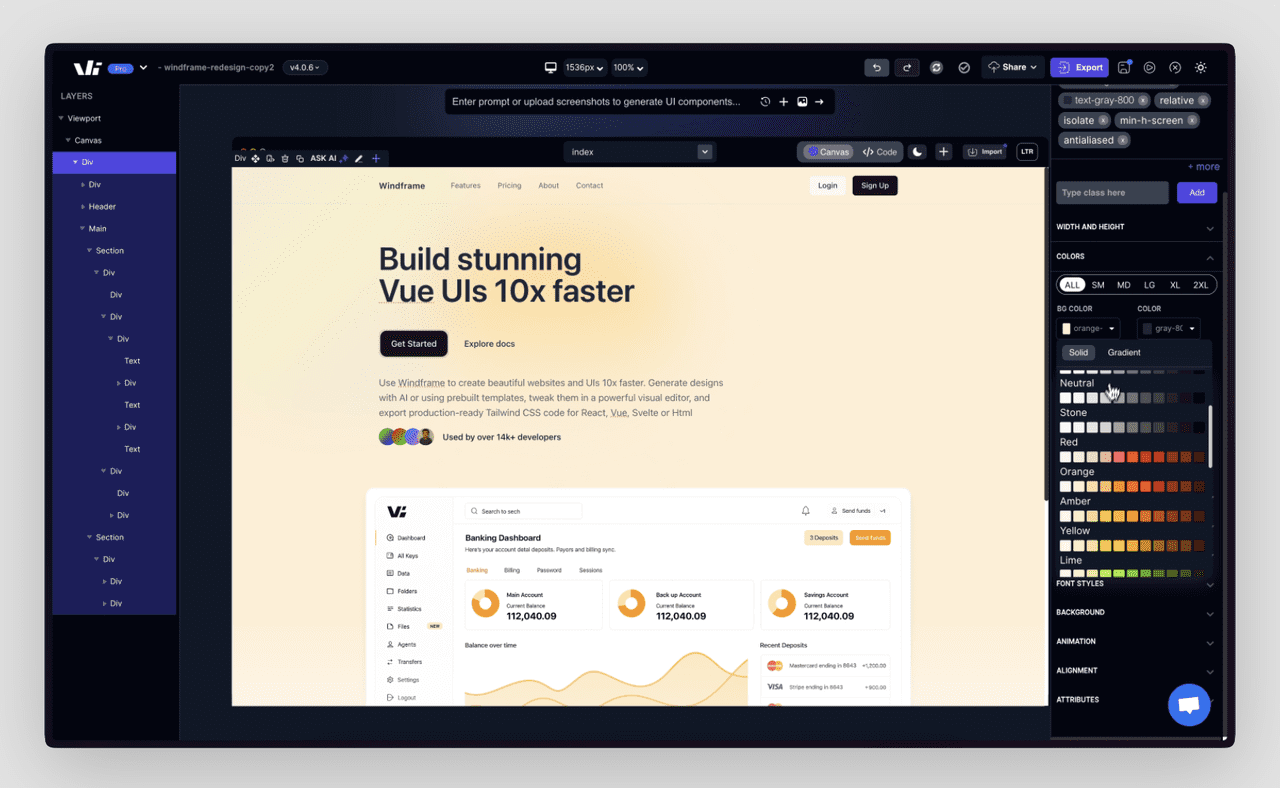
Today, Windframe allows developers using Tailwind CSS to visually build interfaces far faster than traditional workflows would normally allow. Instead of spending hours manually writing UI code, developers can drastically reduce the amount of repetitive frontend work required.
While Many Founders Chase Funding, Ovuoba Chose Independence
In today’s startup ecosystem, especially within African tech, success is often measured by how much venture capital a founder raises.
Ovuoba deliberately chose a different path.
Windframe remains bootstrapped, meaning the company has grown without external investment from venture capital firms. According to him, that independence matters because it protects the product from the pressure many funded startups eventually face.
“Once you are bootstrapped, you don’t necessarily have that external pressure,” he explained. “If you are growing steadily, you are fine. My guiding star has always been building something people genuinely love.”
That philosophy has shaped how Windframe competes in a market dominated by some of the world’s biggest technology companies.
Instead of trying to build a broad tool for everyone, Windframe focused aggressively on one niche: developers working specifically with Tailwind CSS.
That specificity became one of the company’s biggest strengths.
At a time when major tech companies are releasing increasingly general AI-powered coding products, Windframe positioned itself as a highly specialized solution for a very particular workflow problem.
The strategy worked.
At one point, Ovuoba received an email from someone at a16z saying the firm’s developers were actively using the product to build internal tools.
For a founder building quietly from Nigeria, the moment felt surreal.
“When I got that email, it was huge motivation to keep going,” he said.
Windframe Is Trying To reduce Developer Burnout, Not Replace Developers
As conversations around artificial intelligence continue reshaping software engineering, many developers are increasingly worried about automation replacing human creativity.
Ovuoba sees the future differently.
Rather than replacing developers, he believes tools like Windframe should remove unnecessary friction from the creative process itself. In his view, the exhausting part of frontend development is often not the creativity, but the repetitive implementation work surrounding it.
By simplifying that process, developers can spend more time thinking creatively and less time wrestling with tedious interface construction.
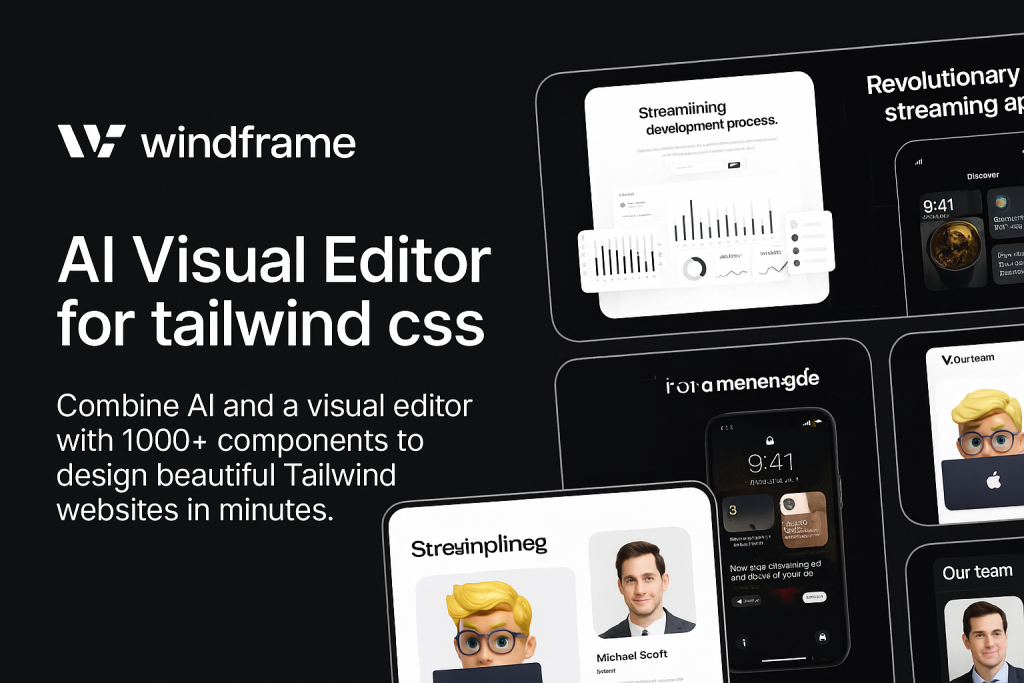
Windframe has already started integrating AI features into its ecosystem through tools like its MCP server, which allows developers to connect coding agents directly into their workflow while still maintaining creative control over the final output.
For Ovuoba, the goal is not to eliminate coding altogether. It is to make building software feel less mechanically exhausting and more creatively fulfilling.
From a teenager experimenting with QBasic in a Nigerian secondary school classroom to a founder building tools now used by developers globally, Sampson Ovuoba’s journey reflects something increasingly important about modern technology: world-class products no longer need to come from Silicon Valley to matter.
Sometimes they start in Lagos, built quietly by someone who simply refused to stop learning.