New US Green Card Policy 2026: 5 Things Every Nigerian in America Must Know Right Now
USCIS just announced that most green card applicants must now leave the US and apply from home. For Nigerians on student visas, work permits, and tourist visas, note these five things down.

If you are Nigerian and living in the United States on any form of temporary visa, the announcement that dropped on May 22, 2026 is not background noise. It is a direct disruption to how millions of immigrants have been planning their futures in America, and it requires your full attention right now.
USCIS announced a sweeping new policy directing that foreign nationals seeking to adjust their status to permanent residence must generally do so through consular processing via the Department of State outside the United States, rather than completing the process while remaining in the country. This is what you need to note.
1. The Process You Were Counting On No Longer Exists the Way You Knew It
For decades, immigrants on temporary visas including students, workers, and tourists could apply for a green card from inside the United States through a process called adjustment of status. You stayed in the country, filed your paperwork, attended your appointments, and waited. That path is now the exception, not the rule.
USCIS framed the change as a return to the ordinary immigrant visa process, saying adjustment of status will be granted only when extraordinary relief is warranted. The agency said officers should review cases individually and determine whether an exception is justified.
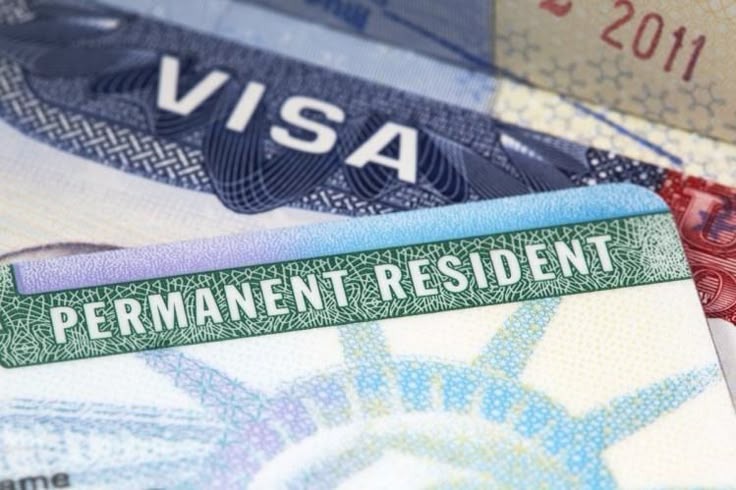
Extraordinary relief: those two words are doing enormous work. What used to be standard processing is now described as a special circumstance requiring individual justification. If you were planning your green card timeline around the adjustment of status process, that timeline needs to be rebuilt from the ground up.
2. Leaving the US Could Cost You Everything Mid-Process
This is the most urgent thing to understand and the one most people are getting wrong in the early days of this announcement.
USCIS did not specify whether individuals would be required to remain abroad throughout the entire process, whether the policy impacts foreigners whose green card applications are already underway, or how long consular processing would take for applicants who comply.
If you are currently mid-process on an adjustment of status application, do not leave the United States until you have spoken to an immigration attorney about what your departure would mean for your specific case.
The policy's treatment of pending applications is genuinely unclear. Leaving could close a door that was still technically open for you. Stay put and get legal advice first.
3. H-1B and L-1 Holders Are in a Different Position but Not a Safe One
Not everyone is affected equally and the policy carves out some space for certain visa categories.
The new USCIS guidance suggests the policy may be less applicable to dual-intent nonimmigrant categories such as H-1B and L-1 holders and their dependents, where applying for adjustment of status is not inconsistent with maintaining temporary status.
Dual intent means a person can legally intend to reside temporarily in the US and simultaneously intend to apply for future permanent residence.
Diaspora Connect
Stay Connected to Home
From Lagos to London, Accra to Atlanta - We Cover It All.
If you are on one of these visas, you are in a better position than someone on an F-1 or tourist visa, but you are not outside the reach of this policy. Get specific legal advice for your situation rather than assuming you are safe.
4. The Nigerian Embassy Processing Reality Makes This Worse
The policy tells people to go home and apply through their local consulate. For Nigerians, that instruction runs directly into one of the most consistently backlogged visa processing environments in the world.
Michael Clemens, a professor and economist at Johns Hopkins University saidthat for high-skill workers, this change will usually mean years of waiting overseas for consular processing, and that many will give up, with the US permanently losing their talents as a result.
For Nigerians specifically, years of waiting is not a worst-case projection. It is a realistic baseline for how consular processing at the Lagos embassy has historically functioned.

Add to this the fact that in January 2026, the US Department of State announced an indefinite pause in immigrant visa processing for nationals of 75 countries at US embassies abroad.
The same administration directing people to apply from home has simultaneously made applying from home significantly harder. These two policies are running in the same direction and Nigerians are caught in the middle of both
5. The Exceptions Are Real but Vague Enough to Be Unreliable
After the initial backlash to the announcement, USCIS moved quickly to clarify that some people would still be allowed to stay and complete their process inside the country.
A USCIS spokesman released a statement saying that people who present applications providing an economic benefit or otherwise in the national interest will likely be able to continue on their current path while others may be asked to apply abroad depending on individualised circumstances.
There is no published standard for what constitutes sufficient economic benefit to qualify for an exception. There is no checklist for national interest. The exceptions exist but they are administered through officer discretion, which means the same application could be approved under one officer and denied under another.
Do not plan your life around an exception you cannot quantify. Get a lawyer who can assess your specific profile against whatever guidance emerges in the coming weeks as real cases begin moving through the system.
What Next?
Immigration lawyers say the change could impact a wide swath of people and marks an escalation in the administration's efforts to curtail legal migration. The American Immigration Lawyers Association described it as an attempt to upend decades of established practice.
The Nigerian community in the United States is one of the most credentialed immigrant communities in the country. The people this policy disrupts most directly are not people gaming a system.
They are doctors, engineers, researchers, and technology professionals who came to the US through legitimate pathways and built legitimate lives. This policy changes the rules on them mid-journey and the consequences are real.
Stay informed. Move carefully. Get legal counsel. And do not make any irreversible decisions about travel or applications until the picture becomes clearer. It is still moving.