Economic Boom: Tinubu Applauds NGX's Monumental N100 Trillion Capital Market Milestone
President Bola Tinubu has commended the Nigerian Exchange (NGX) for surpassing the N100 trillion market capitalization mark, hailing it as a new economic reality. He highlighted the NGX's remarkable 51.19% return in 2025, global outperformance, and ongoing macroeconomic reforms leading to moderating inflation and increased foreign reserves. Tinubu urged Nigerians to deepen investments, pledging continued efforts towards an egalitarian, high-growth economy.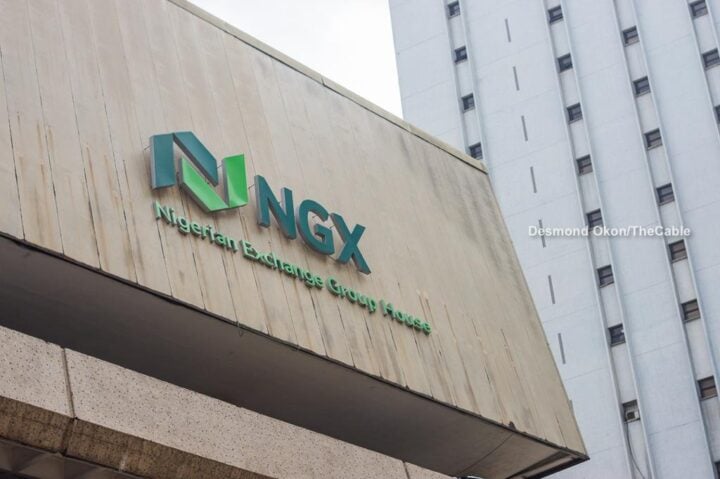
President Bola Tinubu has lauded corporate Nigeria, investors, and other stakeholders in the capital market for pushing the Nigerian Exchange (NGX) beyond the historic N100 trillion market capitalization mark. This significant achievement, which saw the NGX hit N100 trillion on January 5th—a N1.87 trillion increase from January 2nd—was described by the President as a defining moment for the nation’s economy. He emphasized that this feat should instill greater confidence among participants in both the money and capital markets, urging Nigerians to increase their investments in the domestic economy. President Tinubu further assured that the year 2026 promises even stronger returns as his administration’s economic reforms are expected to yield more robust and sustainable outcomes.
Tinubu declared that Nigeria is witnessing “the birth of a new economic reality and rejuvenation” with the NGX crossing this monumental threshold. He highlighted the remarkable growth of the NGX All-Share Index, which recorded a 51.19 percent return in 2025, significantly higher than the 37.65 percent achieved in 2024. This performance, he noted, ranks among the highest globally, significantly outpacing major international indices like the S&P 500, the FTSE 100, and even many emerging-market peers within the BRICS+ group. According to the President, Nigeria can no longer be dismissed as merely a frontier market but is now recognized as “a compelling destination where value is being discovered,” with the stock market’s stellar performance serving as a strong indicator of the nation’s economic health and robust investor confidence.
The President also pointed to strong performances across various sectors on the NGX, citing industrial firms that have successfully localized supply chains and a resilient banking sector driven by technological innovation. He revealed a robust pipeline for new listings, with indigenous energy firms, technology companies, telecommunications operators, and infrastructure-heavy entities preparing to access the public market to finance their expansion. These upcoming listings are expected to further boost market capitalization and deepen the democratic ownership of the Nigerian economy.
Beyond the capital market’s impressive growth, President Tinubu linked it to broader macroeconomic improvements. He noted that inflation has begun to moderate following initial reform-related headwinds. This improvement is attributed to decisive monetary tightening, the elimination of distortionary “Ways and Means” financing, and increased investment in the agriculture sector. Inflation, which peaked at a 24-month high of 34.8 percent in December 2024, decelerated to 14.45 percent by November 2025, with projections indicating a further drop to 12 percent in 2026 and potentially falling below 10 percent before the end of 2026. This trajectory is expected to lead to improved living standards and accelerated GDP growth, with 2026 being an epochal year for delivering prosperity to all Nigerians.
Furthermore, Nigeria’s current account position remains strong, recording a $16 billion surplus in 2024. Projections from the Central Bank of Nigeria (CBN) indicate this surplus is expected to rise to $16.94 billion in 2025 and $18.81 billion in 2026. On the trade front, Nigeria is exporting more and importing less of what can be produced locally. Non-oil exports surged by 48 percent by the third quarter of 2025, totaling N9.2 trillion, while exports to Africa alone jumped by 97 percent to N4.9 trillion. Manufacturing exports also saw a significant increase of 67 percent year-on-year in the second quarter of 2025.
President Tinubu also disclosed that foreign reserves have surpassed the $45 billion mark, providing the CBN with greater capacity to maintain stability, and are projected to cross the $50 billion threshold in the first quarter of 2026. The Naira has also shown signs of stabilization, moving away from previous volatility. In terms of infrastructure development, significant progress includes the expansion of rail networks, the completion of major arterial roads, the revitalization of ports, and the ongoing development of transformative projects such as the Lagos-Calabar and Sokoto-Badagry superhighways.
Improvements extend to social services, with healthcare facilities enhancing, leading to a decline in medical tourism costs. Nigerian students are benefiting from the Nigeria Education Loan Fund (NELFUND), and universities are receiving increased research grants. Reiterating that nation-building is a continuous process requiring hard work, sacrifice, and citizen commitment, President Tinubu stated that the N100 trillion market capitalization milestone is a clear signal to the world that the Nigerian economy is robust and productive. He pledged to continue working tirelessly to build an egalitarian, transparent, and high-growth economy, further catalyzed by the historic tax and fiscal reforms that came into full effect from January 1st.