The Gumi Question: Why Nigeria Negotiates With Some Militants but Brands Others Terrorists
A critical analysis of Nigeria’s inconsistent response to armed groups, examining why figures like Ahmad Gumi can advocate amnesty for bandits while separatist movements are labeled terrorists, comparing banditry in the North, IPOB in the South-East, and Niger Delta militancy to expose the political logic behind Nigeria’s security decisions.
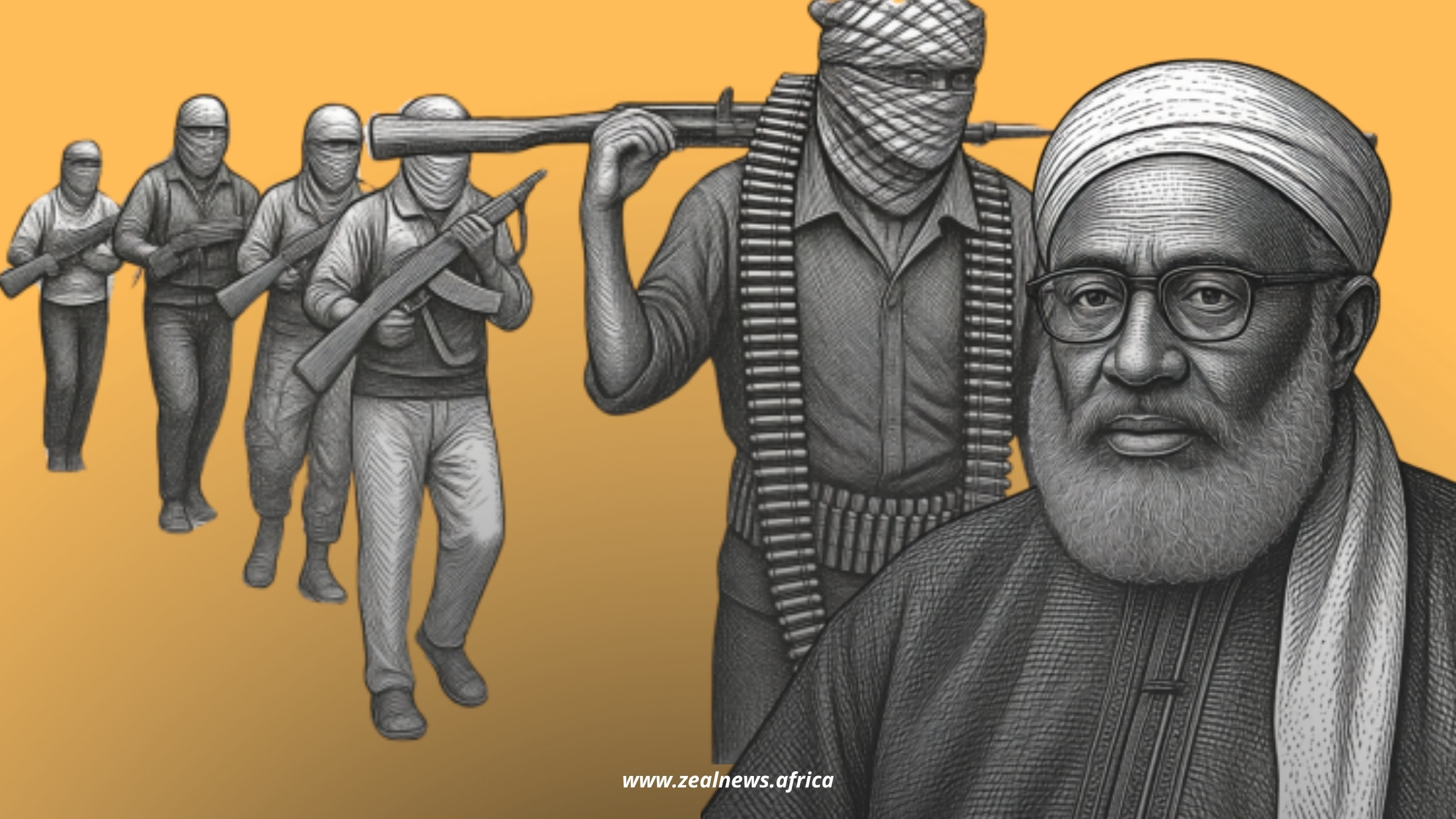
"Ahmad Gumi still walks freely?" — that was the first thought that crossed my mind when I saw the news that the Islamic cleric had begun clamouring, once again, for the federal government to grant amnesty to bandits who never seem to negotiate when they enter villages to kill, abduct and extort.
The same men who only release victims when cash is dumped on them or the armed forces intervene. This man who has made a career of humanising armed criminals is back at his podium, and nobody is arresting him for it.
That should mean something. It, in fact, means everything.
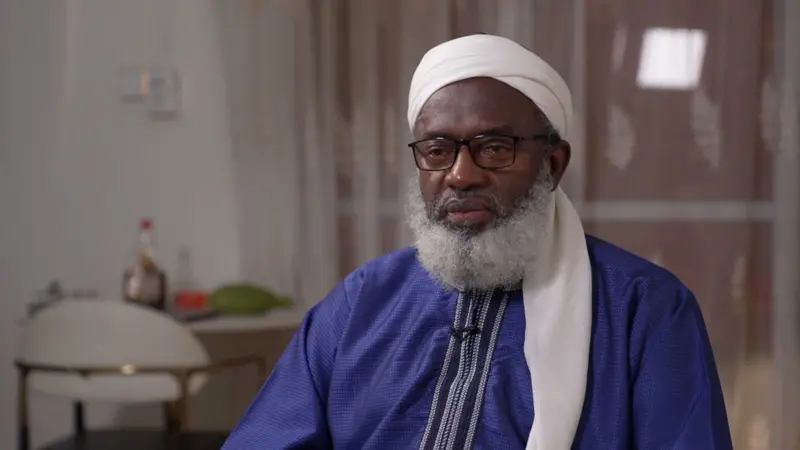
The Gumi Archive
Ahmad Gumi is not a figure in the shadows operating on the margins of Nigeria's security conversation. Since 2021, the Kaduna-based Islamic cleric has made repeated, documented trips into bandit territory alongside cameras, governors' envoys and police commissioners.
In January 2021, he entered Sabon Garin Yadi forest in Giwa Local Government Area of Kaduna State, accompanied by the then Kaduna State Commissioner of Police, who represented the Inspector-General of Police.
By Gumi's own account, the meeting drew over 600 armed bandits and their commanders, who agreed, in principle, to lay down their weapons in exchange for security guarantees and basic amenities.
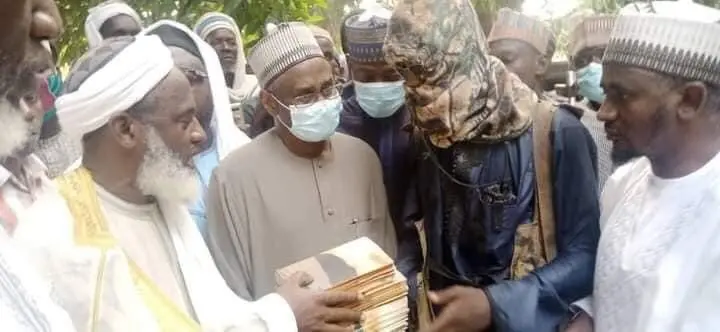
In February of that same year, photos emerged of Gumi meeting with bandits in forests in Niger State, after which he visited Governor Abubakar Sani Bello to brief him on the "positive" outcome.
These were not underground operations. They were visible, state-adjacent and treated as legitimate peace efforts.
As recently as late 2025, as banditry's death toll worsened across northern Nigeria and public frustration mounted, Gumi stepped up his advocacyonce more, recasting bandits as aggrieved "revenge seekers" and pressing for amnesty and dialogue over military action.
In May 2026, at a press conference in Kaduna, he urged the federal government to consider the same rehabilitation model adopted for repentant Boko Haram fighters, questioning whether 17 years of military operations have produced any lasting peace.
"If the kinetic approach is not working for 17 years, why don't you change the approach?" he asked.
That is a reasonable question but brutally stripped out of its context. With context, it becomes a very dangerous one.

Between July 2024 and June 2025, approximately 4,722 people, including school children, were abducted across 997 separate raids, and more than N2.57 billion was paid in ransom. In the first half of 2025 alone, about 2,266 Nigerians died from banditry attacks, according to the National Human Rights Commission. Yet, Gumi's solution is amnesty.
The same amnesty that, as Nigeria's army chief noted in 2023, had previously backfired, allowing bandits to regroup before returning to target civilians.

Meanwhile, In The South
The Indigenous People of Biafra (IPOB) was designated a proscribed terrorist group by the Nigerian government in 2017. IPOB began as a movement advocating for Igbo self-determination, largely through nonviolent agitation.
Its members held rallies, staged protests and demanded a referendum. The Nigerian state's response was to send in the military and brand the entire movement a terrorist organisation.
Academic and legal scholars have since argued that IPOB's original mission does not meet the criteria for terrorism under Nigeria's own Terrorism Prevention Act.
In October 2023, an Enugu State High Court ruling headed by Justice A.O. Onovo declared the proscription of IPOB unconstitutional, declaring that the executive actions of the federal government and Southeast Governors which led to the terrorist designation were a violation of the rights of Nigerian citizens professing the political opinion of self-determination.

The federal government has not acted on that ruling in any meaningful way.
Nnamdi Kanu, IPOB's leader, has been handed life imprisonment after being taken from Kenya in June 2021 in what the Court of Appeal later described as an illegal extraordinary rendition which is a violation of his fundamental rights.
He remains detained despite court orders for his release.
Now hold both pictures in your head at once. A cleric who openly enters armed bandit camps, advocates for their amnesty, and addresses press conferences without consequence; and a separatist leader, seized from a foreign country, held for years in solitary confinement and sentenced to life imprisonment, whose group was ruled unconstitutionally designated. Who is the state afraid of, really?
The Niger Delta Precedent That Exposes Everything
Nigeria has done this before — the negotiation, the amnesty, the monthly stipend. In 2009, under President Umaru Yar'Adua, the government offered militants in the Niger Delta a general amnesty with jobs and stipends in exchange for surrendering their weapons.

The amnesty programme covered armed groups including the Movement for the Emancipation of the Niger Delta, the Niger Delta People's Volunteer Force and the Niger Delta Vigilante. These are groups that had emerged partly in response to decades of neglect, persistent poverty, and environmental damage caused by oil extraction in their communities.
These were militants fighting, in part, for the communities whose land was being drilled for the oil that funded the Nigerian state. They got amnesty and monthly stipends.
IPOB, whose people come from the same south and whose grievances include marginalisation from the very same state, got proscription and military operations.
The pattern is clear. Nigeria negotiates when the disruption threatens oil revenue. It negotiates when the armed group has ethnic and religious proximity to power. It calls something terrorism when the group is southern and seeking autonomy, even when courts say the label is legally wrong.
The Gumi Question, Answered
Gumi walks freely not because the Nigerian state is confused, but rather, selective.
Banditry in the north is a security problem to be managed through dialogue when it suits the political moment. Separatism in the southeast is an existential threat to be crushed, regardless of how peaceful its origins were. Militancy in the Niger Delta was a revenue problem, solved with cash.
This might seem like a counterterrorism strategy, but it is not. It is more like a political geography.
Until Nigeria is honest about why Ahmad Gumi gets a police escort into bandit camps while Nnamdi Kanu rots in a cell, every conversation about national security will remain a performance, convincing no one who is paying attention.