The Story Behind Elon Musk’s Record-Breaking xAI–SpaceX Merger
Elon Musk’s $1.25 trillion xAI–SpaceX merger reshapes AI, space, and global tech. Here’s what it means for investors, users, and the future of infrastructure.
On Monday, February 2, 2026, Elon Musk confirmed a deal that instantly reset the scale of global technology ambition.
SpaceX, the world’s most valuable private rocket company, has acquired xAI, Musk’s artificial intelligence startup and creator of the Grok chatbot, in a transaction that unites two of the most capital-intensive frontiers of modern innovation: space infrastructure and artificial intelligence.
Valued at a combined $1.25 trillion, the merger overtakes the $203 billion Vodafone–Mannesmann deal of 2000 to become the largest merger ever recorded.
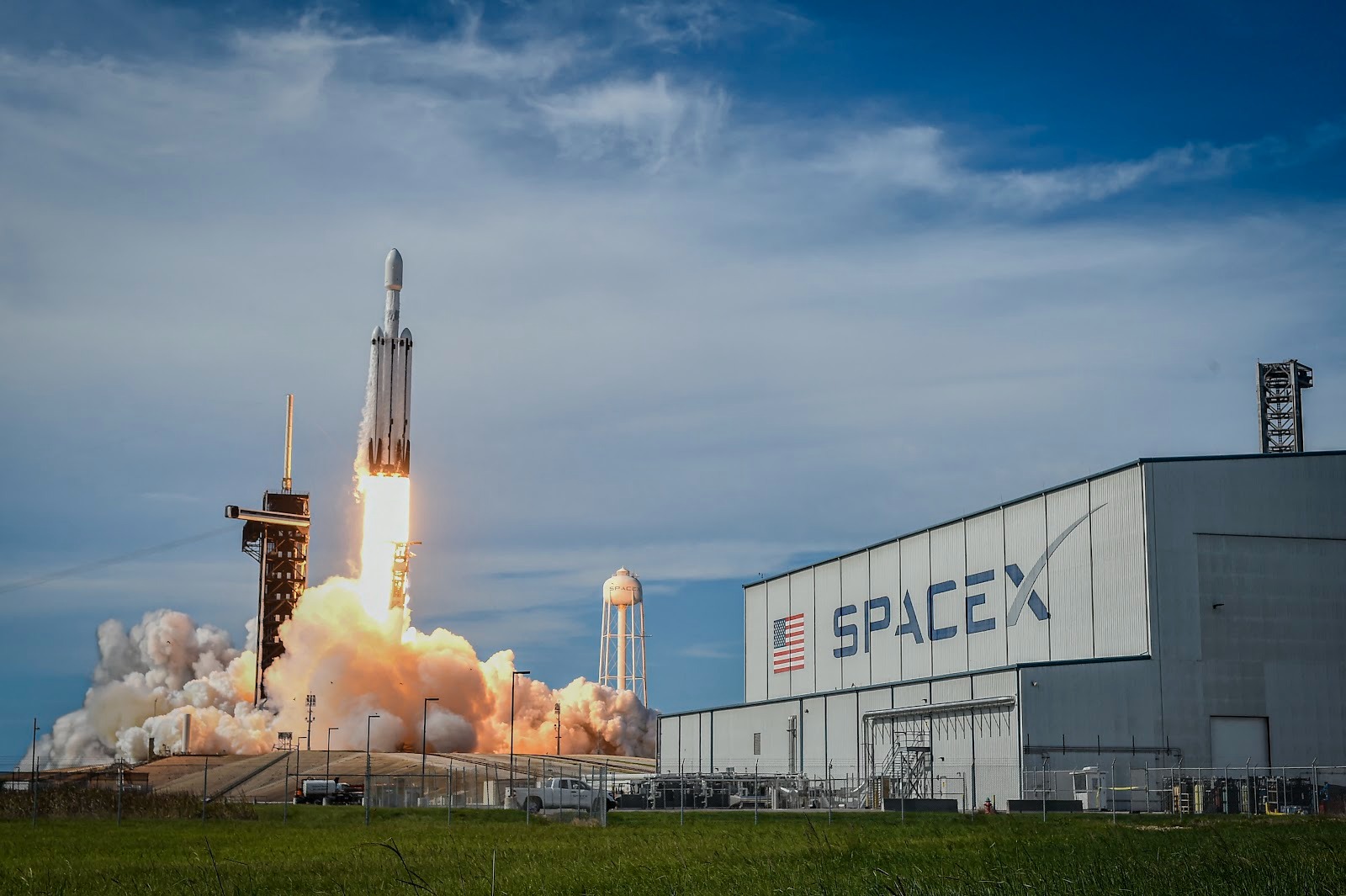
SpaceX is valued at approximately $1 trillion, while xAI is priced at about $250 billion. Under the terms of the deal, investors in xAI will receive 0.1433 shares of SpaceX for every xAI share, while select executives are being offered a cash alternative priced at $75.46 per share. The combined entity is expected to price shares at around $527.
Beyond the headline numbers, the transaction marks the clearest expression of Musk’s long-term vision that seems to be a tightly integrated personal conglomerate spanning artificial intelligence, space, communications, mobility, and neurotechnology.
What once appeared as parallel ventures are now being drawn into a single corporate orbit.
The xAI–SpaceX Merger: What It Means for AI, Investors, and the Tech Ecosystem
At the very basis of this merger and what it represents, the merger reflects industrial logic as much as grand rhetoric.
xAI is one of the most capital-hungry players in the AI race, with costs driven by advanced chips, large-scale data centers, and enormous electricity demand.
SpaceX, through its Starlink satellite network, already operates one of the world’s largest private communications infrastructures and generates steady cash flow.
By bringing xAI under SpaceX’s umbrella, Musk is effectively internalizing the full AI infrastructure stack. Starlink offers global data distribution and an expanding enterprise and government customer base, while SpaceX’s launch and satellite capabilities provide leverage over where and how future compute and data assets are deployed.
This positions the combined company to compete more directly with rivals such as Alphabet’s Google, Meta, Amazon-backed Anthropic, and OpenAI.

Ali Javaheri, a senior emerging spaces analyst at PitchBook, noted that Starlink is already a cash-flow engine and that adding AI introduces an entirely new revenue layer.
He also pointed to Starlink’s potential role as a distribution surface for AI services and data, particularly if future policy shifts allow certain categories of customer data to be used for model training.
While still speculative, the idea of orbital or space-based data centers further reinforces the view of SpaceX evolving into an integrated infrastructure platform rather than a pure rocket company.
For investors and shareholders, the merger concentrates both opportunity and risk. SpaceX was last valued at around $800 billion in a recent insider share sale, while xAI carried a valuation of roughly $230 billion as recently as November last year, according to the Wall Street Journal.
Combining the two at higher figures amplifies upside potential but also intensifies exposure, particularly as public markets remain sensitive to capital intensity in AI and infrastructure.
The deal also follows Musk’s broader pattern of consolidation. Last year, he merged social media platform X into xAI through a share swap, giving the AI startup access to real-time data and a built-in distribution channel.
Earlier in his career, Tesla absorbed SolarCity, folding energy generation into its electric-vehicle ecosystem. Alongside Tesla, Neuralink, and the Boring Company, the xAI–SpaceX merger further tightens what many investors now view as a single, interconnected industrial empire.
Financially, the implications are so immediate and dramatic, with a combined valuation of $1.25 trillion and a potential SpaceX IPO later this year, one that could value the company at more than $1.5 trillion, the merger strengthens Musk’s position as the wealthiest individual in history.
Several reports suggest that the transaction pushes his net worth beyond $800 billion, a threshold never before crossed by a single individual.
Conclusion: The Shape of Musk’s Future and Ours
The xAI–SpaceX merger is not just a corporate milestone; it is a statement about where technology is heading.
At a time when AI-related data-center deals reached a record $61 billion in 2025, Musk is offering investors a different narrative, one that links launch systems, satellite connectivity, data, compute, and AI services into a vertically integrated platform.
Regulatory and governance scrutiny will surely follow. SpaceX holds billions of dollars in contracts with NASA, the U.S. Department of Defense, and intelligence agencies, all of which may review the transaction for national security implications.
Questions around conflicts of interest, shared leadership, and the movement of engineers, data, and proprietary technology across Musk’s companies are unlikely to fade.
Still, the merger formalizes what has been unfolding for years. Musk is no longer operating a collection of loosely related ventures.
He is literally assembling a personal conglomerate designed so that each business feeds the others and positioning it as a single, expansive bet on the infrastructure of the future.
Whether this concentration of power and ambition proves visionary or volatile will define the next chapter of the AI era.