Do You Know Only Eight Countries Have Ever Won the World Cup?
Only eight countries have ever won the FIFA World Cup since 1930. Read this piece to explore who they are, when they won, and why football’s biggest prize remains so exclusive.
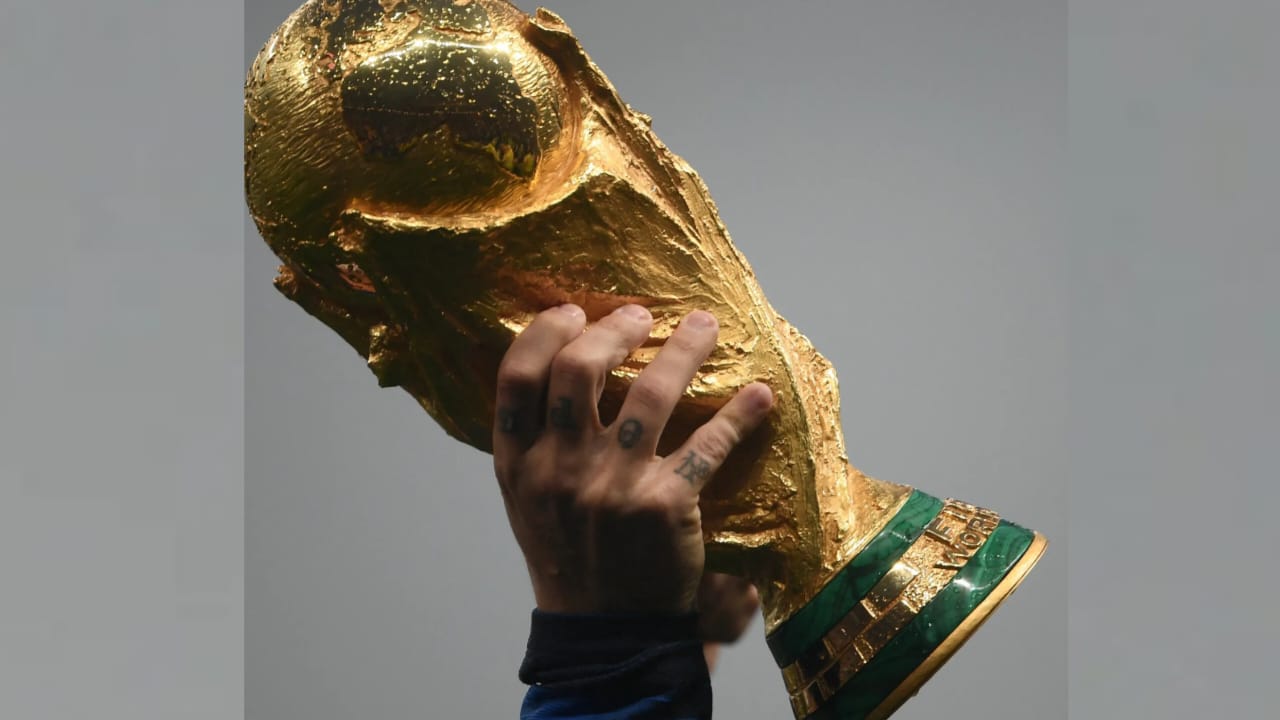
Every four years, the world anticipates a gathering that is full of anticipation, hope and the energy of the pitch and that expectation is currently in the air as the 2026 world cup draws closer.
The FIFA World Cup sells itself as one of the most global sporting events on earth, more than 200 countries compete in qualifiers, 80 nations usually appear at the tournament, and billions watch from every corner of the planet and anticipate the outcome every four years.
Yet beneath all of this energy, hope and global celebration lies a striking imbalance.
Since the first World Cup kicked off in 1930, only eight countries have ever lifted the trophy. This is not saying eight per continent or eight per era, it's just eight—drawn exclusively from across all time since its inception. Through 22 tournaments held up to 2022, this prize in football that the world chases has remained locked within what I refer to as an elite and almost closed circle of some national football teams.
It raises a fascinating observation: football belongs to the world, but not everyone has access to the World Cup.
The Eight Nations That Have Won The World Cup
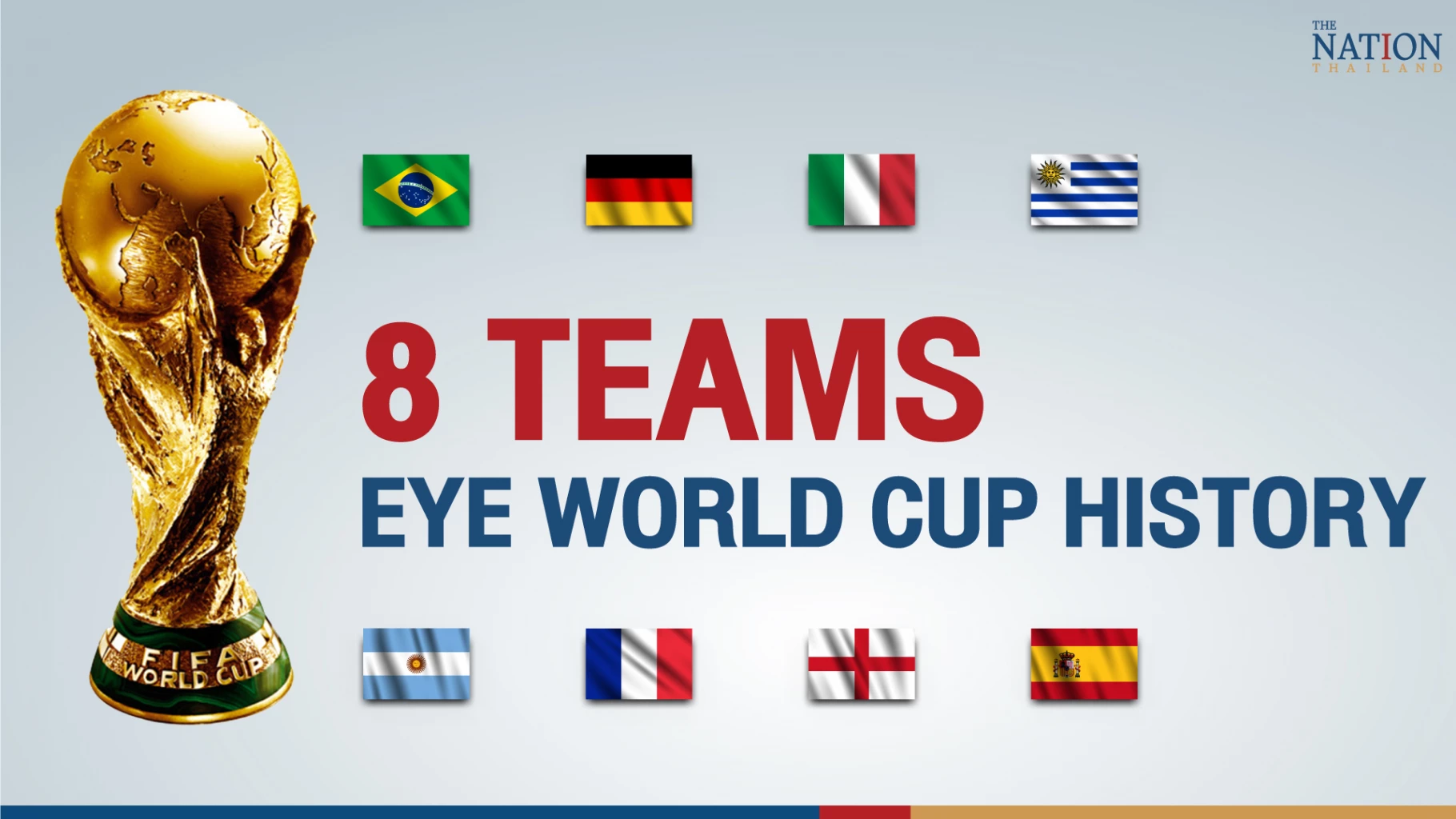
Only eight nations have won the world cup games since its inception and they are Brazil, Germany, Italy, Argentina, France, Uruguay, England, and Spain.
At the top of football’s hierarchy sits Brazil, which happens to be the most decorated nation in World Cup history. Brazil has won the tournament five times—1958, 1962, 1970, 1994, and 2002—and remains the only country to have participated in every single World Cup. Whether you are a football fan or not, you should know that Brazil’s football identity is deeply tied to creativity, flair, and an unbroken belief that the game belongs to them.
Close behind this list are Germany and Italy, each that have gotten four titles in the World Cup games. Germany’s wins came in 1954, 1974, 1990 (as West Germany), and 2014, reflecting a football culture built on structure, discipline, and long-term planning. Italy’s triumphs—1934, 1938, 1982, and 2006—highlights a nation famed for tactical intelligence, defensive mastery, and tournament resilience.
Argentina follows this list with three titles in 1978, 1986, and 2022. From Maradona to Messi, Argentina’s victories feel deeply emotional, often framed as national redemption stories rather than just sporting success.
Then comes the two-time winners, France that claimed the World Cup glory in 1998 and 2018, symbolizing a modern, multicultural football identity that blends youth development with elite systems. Uruguay, also one of football’s original powers, won the very first World Cup in 1930 and repeated the feat in 1950, cementing its place in football history despite its small population.

Rounding out the list are two nations with a single title each, England, won once, in 1966, on home soil. Spain joined the winners’ club in 2010, during a golden era defined by possession-based football and tactical dominance.

These eight countries account for every World Cup trophy ever awarded.
The World Cup has been staged every four years since 1930, with the only interruptions coming in 1942 and 1946 due to World War II. Over that time, 13 nations have reached the final, but only eight have crossed the final line.
The Weight of History, and the Hope of Change
That only eight nations have won the World Cup is not just a statistic, it is a mirror reflecting how power, preparation, and legacy operate in sport. It reminds us that breaking into this elite club is one of the hardest achievements in football.
This pattern exposes a reality football rare that success at the World Cup is not only about talent. It is about infrastructure, historical advantage, institutional stability, and decades of investment in any of the country's national teams.
And although, while Africa, Asia, and North America have produced stars and memorable moments, the ultimate prize has remained out of reach.
Yet history is not fixed and every tournament introduces new challengers, new narratives, and fresh belief and while the trophy’s past belongs to eight flags, its future remains unwritten.
The world keeps playing, and the expectation for this year's tournament is in the air and lets see how it unfolds.