Plastics and Priviledge: How Two Videos Reveal the Country’s Hidden Fault Lines
Two viral videos, one young man carrying plastics to survive, and a billionaire’s son shocked by fuel prices. This is what these clips reveal about Nigeria’s harsh inequalities and the hidden stories that make us question wealth, struggle, and empathy
There are two faces of Nigeria. One is invisible until someone turns a camera on it. The other is visible every time someone with money walks into a room. One story makes you cry because you see yourself in it. The other makes you grimace because you cannot imagine the disconnect.
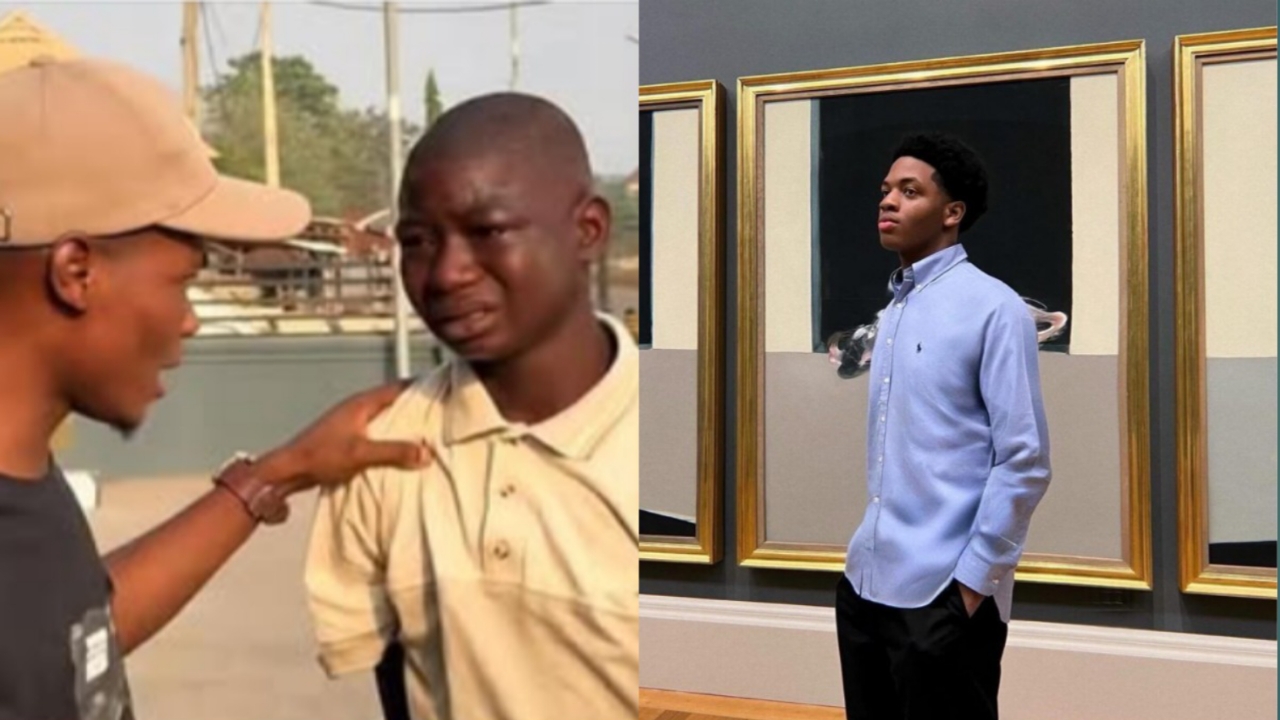
These two sides of the same coin have been splashed across our screens in clips that refused to be ignored. One video showed a young man picking plastics by the roadside to resell for a few naira.
The other showed the son of one of Nigeria’s richest industrialists talking about the price of fuel as if it were a shock he just learned about.
These clips went viral for very different reasons, but they reveal the same cruel truth: in Nigeria, the value of a life, and the awareness of struggle, depend on how much money sits in your pocket.
This is the story of Samuel. And this is the story of Wahab Okoya. These men live in the same country, breathe the same air, and yet inhabit completely different realities.
If you scroll past Samuel’s pain without feeling something deep in your chest, then you might just understand why Wahab’s ignorance struck a nerve.
The Boy Who Carried Plastics Like Dreams
What does it feel like to carry a bag of plastics so heavy that your shoulders burn and your feet ache before the sun even rises? Imagine doing that every day with your heart set on something that feels just out of reach — a set of tools, a chance to start a trade, a way out of the grinding cycle of low‑income hustles. That was Samuel’s life.
In the viral video that captivated millions across Nigeria, Samuel is on the streets without glamour. Sweat stains his shirt, dust covers his hands, and the bag of plastics he lifts is heavy, not just physically, but emotionally. He isn’t picking plastics because he wants to.
He’s doing it because it’s the only way he can make enough to buy the basic tools he needs to become a tiler; tools that most people take for granted: a mallet, a cutter, a knife.
He had learned the trade. He had the skill. What he didn’t have was access to the equipment that turns skill into income.
The video wasn’t staged. It wasn’t polished. It was real life. It was raw and unfiltered. And for millions of Nigerians, it felt painfully familiar.
There was a moment in the clip when someone recognized him. Someone with a platform decided to do something. He bought Samuel meals. He gave him new clothes. He handed him one of the tools he needed. He gave him cash he had never seen before.
And when Samuel realized what was happening, he cried. Not because he was overwhelmed by pity, but because someone had, for the first time in a long time, treated him like human potential instead of invisible labour.

Social Insight
Navigate the Rhythms of African Communities
Bold Conversations. Real Impact. True Narratives.
That moment became a watershed. People donated. Support poured in. At last count, it was reported that the total had reached over seven million naira. Offers of scholarships followed.
People across the country began to feel; not just watch, but feel the weight of another person’s struggle, as if some part of them woke up and realized what it means to fight for dignity with bare hands.
Privilege With No Context
Now contrast that with Wahab Okoya, the son of a billionaire industrialist, caught on camera talking about fuel prices as if he had just landed on Earth from another planet.
Fuel price in Nigeria is not a number on a news ticker. It is the cost of movement. It is the cost of business. It is the baseline that decides whether your day is profitable or disastrous.

It determines whether your children go to school, whether your goods get to market, whether your generator runs when the lights go out.
But in the clip that quickly spread across social media, Wahab spoke about the price of fuel as though it was something he learned about only recently. It was “crazy,” he said.
Then he went further, suggesting that Nigeria has “improved” economically and praising the government for progress. The comments ignited instantly.

People did not mock Wahab because he is rich. They reacted because his words sounded unaware, disconnected, detached from the pulse of ordinary Nigerians who feel every price increase deep in their wallets.
When someone has never had to calculate the cost of a liter of fuel against the cost of feeding a family, it tells us something about how silos of privilege can isolate the wealthy from the realities of everyday life.
For many, Wahab’s words weren’t just ignorance. They were a symbol: when wealth becomes a bubble, it obscures the common truths that millions live by.
Two Lives, One Nation
When you put these two videos side by side, you see the glaring disparities that mark Nigeria’s economic and social fabric.
You see a young man lifting plastics because he has no choice and a millionaire’s son talking casually about price points as if they are abstract concepts unrelated to survival.
It matters because stories shape empathy. Samuel’s video made people look at the streets differently. It made employers rethink opportunity. It made strangers send money to someone they had never met before.
Social Insight
Navigate the Rhythms of African Communities
Bold Conversations. Real Impact. True Narratives.
That is the power of shared humanity. It reminds us that hope can exist in places where resources are scarce but ambition is not.
Meanwhile, Wahab’s video made people look at wealth differently. It didn’t just raise eyebrows. It sparked debates across platforms about what it means to be rich in a struggling economy, what responsibilities come with privilege, and how disconnection from everyday hardship can damage public trust. People did not attack him for being wealthy.
They questioned the blind spot that privilege can create; the inability to relate to struggles that define the majority’s experience.
This is not about pitting rich against poor. It is about awareness. About understanding that money can buy comfort, but it cannot buy shared understanding.
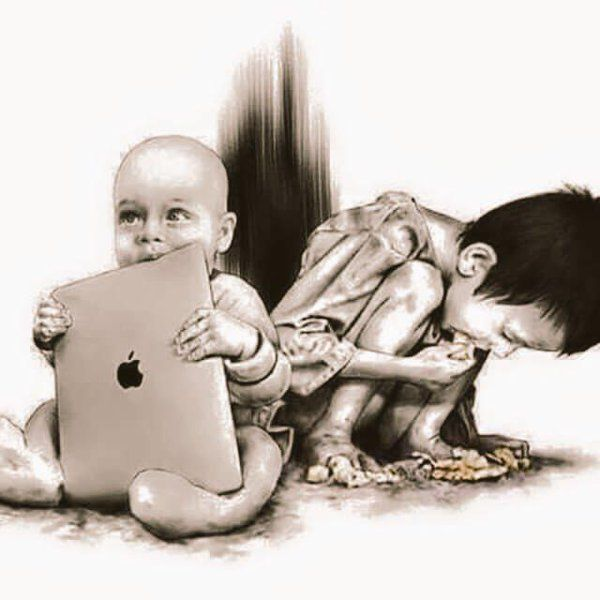
You can have wealth and still be in touch with the struggles around you. But when wealth blinds you to them, it becomes less of an advantage and more of a liability in the court of public sentiment.
What the Country Feels
The reactions to these two moments are mirrors. They reflect how Nigerians feel about opportunity, fairness, empathy, and leadership, not just political leadership, but social leadership, moral leadership, human leadership.
When someone sees a young man bending under the sun with a bag of plastics, it hits a nerve because almost everyone knows someone who has struggled.
Almost everyone can recall a time when money was insufficient, when they prayed for help that never came. That is why Samuel’s tears were not just his own. They became collective; a release valve for frustrations that have built up over years of watching people survive on the margins.
And when someone from a world of wealth talks about basic costs as new information, it triggers something different but equally intense. It creates a jolt, a moment of clarity that the experience of life differs wildly across society.
It makes people ask whether empathy is eroding, whether the wealthy can truly understand the pains of the poor, whether our society is fragmenting into parallel realities that never touch each other except through screens.
Conclusion
This is not about sensationalism. This is about human truth. When a young man’s struggle becomes a national conversation, it means that we are ready to see what we have been ignoring.
When a wealthy son’s unaware remark becomes a trending topic, it means we are sensitive to disconnection. Both moments are painful, but they are important. They force us to confront inequalities we silently accept.
They also remind us that everyone has a story. Some are told with dignity and resources and power. Others are told with dust and sweat and desperation.
Social Insight
Navigate the Rhythms of African Communities
Bold Conversations. Real Impact. True Narratives.
If there is one lesson here, it is this: empathy is currency we all have but few spend generously. Wealth can buy a lot, but it cannot buy the honesty of hard work or the shared experience of struggle. And poverty can be crushing, but it can also reveal the resilience of spirit that wealth cannot teach.

These videos trended because they were real. Not because they were entertaining. Not because they were dramatic.
Because they revealed something fundamental about who we are as a people. They exposed the raw edges of societ, the part where hope meets hardship, and where privilege meets perception.
And maybe just maybe these stories will make us pause. If even for a moment. Maybe they will make us look at the person lifting that heavy bag of plastics with eyes that see dignity, not invisibility.
Maybe they will make us expect more from those who speak on behalf of the nation, especially those who have never struggled to buy tools for their trade.
These are different stories. But they come from the same place; the heart of a nation that is tired of being misunderstood, underestimated, and under‑felt. And for once, in millions of screens and millions of hearts, they are being felt.