Rewind to the Year Nigeria Was Sold in the 1899 Royal Niger Company Deal
In 1899, Britain bought out the Royal Niger Company for £865,000, taking control of territories that would become Nigeria. Read the story of how a country that didn’t yet exist was sold, reshaping history and laying the foundations of colonial Nigeria.
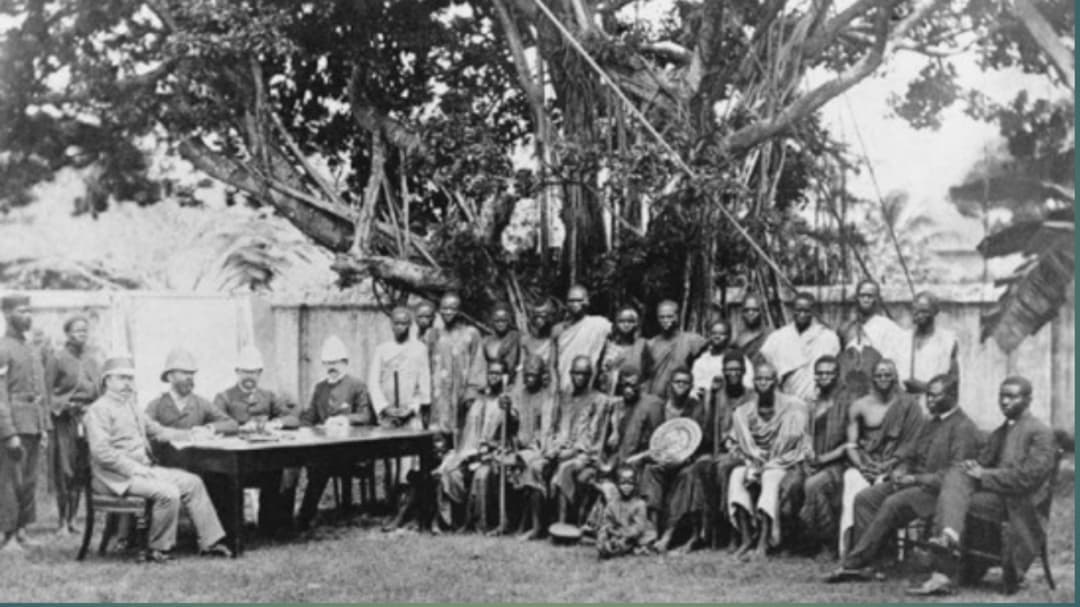
What do you mean “no referendum was held”,
“No Africans were present at the negotiating table”,
“Yet a decision was made in London that would shape the future of over 200 million people”.
In 1899, that was exactly what happened in West Africa!.
For £865,000, Britain took over the territories that would later become Nigeria.
This is the story of how that happened.
Before Nigeria Existed
In the late 19th century, Nigeria did not exist as a country.
Instead, the region was home to many independent societies and political systems like kingdoms, emirates, city-states, and communities.
These societies governed themselves, traded with neighbors, and had long histories before Europeans arrived.
Britain’s main interest in the region was trade, especially palm oil, which was crucial for British industry.
To control this trade, Britain did not initially use direct colonial rule. Instead, it used a company.
The Royal Niger Company: A Company That Ruled Like a State
In 1886, the British government granted a royal charter to a private firm known as theRoyal Niger Company.
This charter gave the company extraordinary powers.
It could control trade along the Niger and Benue rivers, take treaties with local rulers, maintain armed forces and administer justice in its territories
In practice, the Royal Niger Company ruled large parts of what is now Nigeria like a government, even though it was driven by profit.
History
Rewind the Stories that Made Africa, Africa
A Journey Through Time, Narrated with Insight.
Many of the treaties it signed with local rulers were deeply unequal.
Some rulers did not fully understand that they were surrendering sovereignty; others signed under pressure or threat of force.
These treaties later became the legal basis Britain used to claim control.
Why Britain Stepped In
By the late 1890s, Britain began to see problems with company rule.
The Royal Niger Company prioritized profit over administration, clashed with other European powers, especially France and struggled to maintain order across vast territories

At the same time, Britain was competing with other European empires during theScramble for Africa.
Direct control was seen as more effective than relying on a private company.
So Britain made a decision: the company would go, and the Crown would take over.
The 1899 Deal: £865,000 and a Charter Revoked
In 1899, the British government reached an agreement with the Royal Niger Company.
The company’s royal charter was revoked, and in return, it received £865,000 in compensation.
What Britain acquired was not land deeds in the modern sense, but:
The company’s administrative authority
Its trading monopolies
Its treaty rights over vast territories
History
Rewind the Stories that Made Africa, Africa
A Journey Through Time, Narrated with Insight.
This transaction transferred power from a private company to the British state.
On 1 January 1900, the takeover became official.
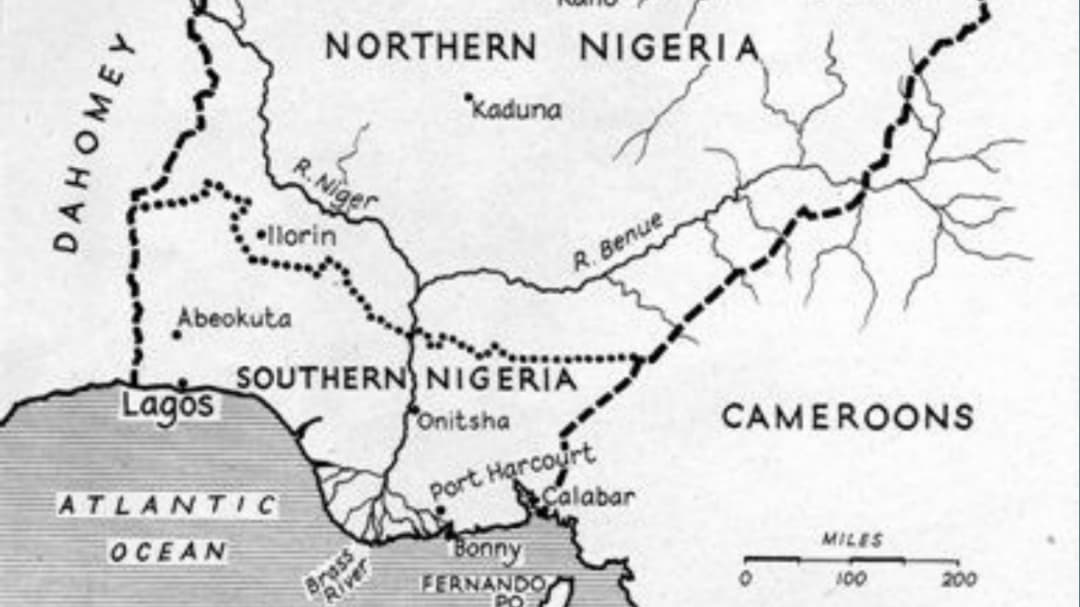
With the Royal Niger Company gone, Britain established:
the Protectorate of Northern Nigeria
the Protectorate of Southern Nigeria
These were now ruled directly by British officials, not merchants.
This marked the true beginning of formal British colonial rule in the region.
Fourteen years later, in 1914, these two protectorates were merged.
That amalgamation created the political entity now known as Nigeria.
So Was Nigeria Really “Sold”?
Nigeria, as a nation, did not exist in 1899.
But the future of Nigeria, its territories, peoples, and political direction was decided through a financial transaction between Britain and a private company, without the consent of the people who lived there.
Power over the region was transferred
Money changed hands
Africans had no say
History
Rewind the Stories that Made Africa, Africa
A Journey Through Time, Narrated with Insight.
A company was bought out.
An empire expanded.
And a country’s fate was sealed long before it had a name.
Nigeria was not created by its people in 1899.
It was created by empire, paperwork, and money.
And that history still matters.