Continuity or Change? What Should Happen to Policies and Projects Inherited by a New Government?
What happens to government policies when a new administration takes over? Should incoming leaders continue inherited policies and projects, revise them or abandon them?

When power changes hands, the usual expectation is that the incoming government will look at the policies already in place, fix what is not working and carry on with the programmes that are making progress.
Ideally, each administration builds on the one before it so that the country keeps moving forward.
But in Nigeria, what happens to the things one government leaves behind when another takes over?
Nigeria's Changing Development Priorities

Nigeria has experienced several changes in its national development plans over the years.
In 2004, the Obasanjo administration introduced theNational Economic Empowerment and Development Strategy (NEEDS), with a focus on poverty reduction, job creation and economic growth.
The Yar'Adua administration introduced itsSeven-Point Agenda in 2007, followed by the Jonathan administration'sTransformation Agenda in 2011.
In 2017, the Buhari government launched theEconomic Recovery and Growth Plan (ERGP), which was later followed by theNational Development Plan 2021–2025.
When Bola Tinubu assumed office in 2023, his administration introduced the Renewed Hope Agenda, built around eight priority areas covering economic reform, national security, agriculture, energy, infrastructure, human capital development, economic diversification and governance.
Each framework came with its own priorities and approach to addressing the country's challenges. Some initiatives carried over from previous administrations, while others reflected new economic and political priorities.
The ERGP, for example, was introduced after Nigeria's 2016 recession, with a strong focus on economic recovery. It also drew on some work from the previous Transformation Agenda, particularly in agriculture.
The National Development Plan 2021–2025 subsequently provided another medium-term framework for the country's development.
These changes are not necessarily a problem. Governments should be able to respond to changing economic conditions and national needs.
The concern is whether each new plan builds on lessons from previous efforts or simply replaces them without addressing why earlier plans struggled.
The country's difficulty in maintaining a consistent and implementable development framework has been arecurring concern in discussions.
The problem is not that Nigeria has lacked development plans. It is that having a new plan does not automatically translate into progress.
When priorities change too frequently, projects lose momentum, institutions struggle to maintain direction and the country risks repeating work that previous administrations have already undertaken.
When Public Projects Remain Unfinished
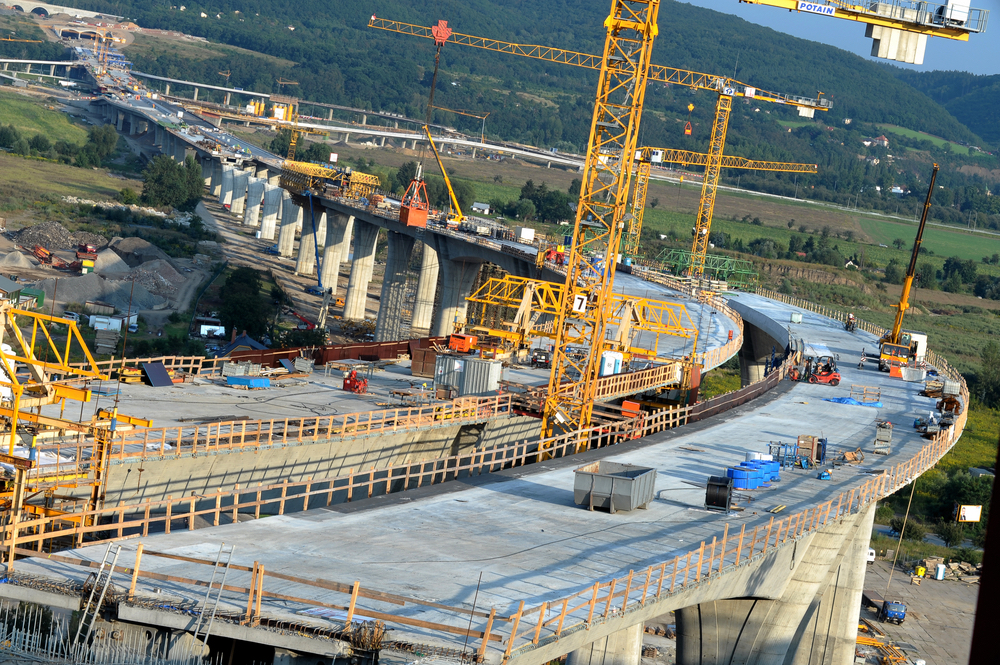
The consequences of poor continuity are particularly visible in abandoned public projects. Across the country, buildings, roads, hospitals and other infrastructure have remained incomplete for years, sometimes long after contracts were awarded and public funds committed.

The National Library headquarters in Abuja is one example.
Construction began in 2006 under the Obasanjo administration, with an initial contract value of ₦8.59 billion and an expected completion period of two years.
Work stopped in October 2008, leaving the project unfinished for nearly two decades.
The project has since received renewed attention. In August 2026, the Federal Executive Councilapproved ₦118.3 billion for the augmentation of the construction contract, while the Minister of Education disclosed that another ₦37 billion would be needed for furnishing.
Construction formally resumed on November 19, 2026, after contractors had mobilised, although the First Lady has said a further ₦70 billion is still needed to complete the project.
Also in 2006, the Federal Government initiated a programme to establish a 60-bed primary healthcare centre in each of Nigeria's 774 local government areas. The plan included doctors' quarters, ambulances, medical equipment and essential drugs. However, the initiative did not achieve its intended nationwide coverage.
In February 2022, the Senate ordered an investigation into the abandoned project, reportedly valued at about ₦400 billion. The investigation was expected to establish how the funds had been used, the level of work completed across the local government areas and the roles of the contractors involved.
The scale of the problem extends beyond these projects.
A 2023 assessment by the Collaborative Africa Budget Reform Initiative (CABRI), citing anearlier survey by the Chartered Institute of Project Management of Nigeria, reported more than 56,000 abandoned projects across the country's six geopolitical zones, with an estimated value exceeding ₦12 trillion.
The factors identified include the non-release of allocated funds, poor procurement practices, corruption, weak institutional capacity and a lack of continuity in policy and project implementation.
When a project is abandoned, the country loses more than the money already spent. Communities are left without the infrastructure or services they were promised, while completing the work years later can cost considerably more.
When Policies Are Reviewed and Continued
Not every change of government leads to the complete abandonment of an inherited programme.
The National Social Investment Programme (NSIP), introduced by the Buhari administration in 2016, is an example.
It was designed to address poverty, unemployment and economic vulnerability through initiatives such as N-Power, the Conditional Cash Transfer programme, the Government Enterprise and Empowerment Programme, and the Home-Grown School Feeding Programme.
When the Tinubu administration took office, activities under the National Social Investment Programme Agency were suspended in January 2024 amid concerns about alleged financial irregularities and operational problems.
A ministerial panel was subsequently established to review the agency's operations and recommend reforms.
The initial suspension affected all four major programmes. However, in February 2024, the government announced that cash transfers would resume, with additional measures to verify beneficiaries and strengthen the process.
A new administration can investigate problems, introduce safeguards and retain the aspects that remain useful.
Making Changes Without Losing Previous Progress
Nigeria cannot afford to keep starting from scratch every time political leadership changes. Public projects and development programmes should be treated as national responsibilities, not personal legacies belonging to the administrations that introduced them.
A new government should be able to make changes where necessary, but it should also recognise the value of previous investments and build on progress that benefits the country.