Where Does All the Money Lost in the Stock Market Go?
Billions of dollars disappear from the stock market overnight, but nobody seems to have taken them. So, who gets the money when investors lose?
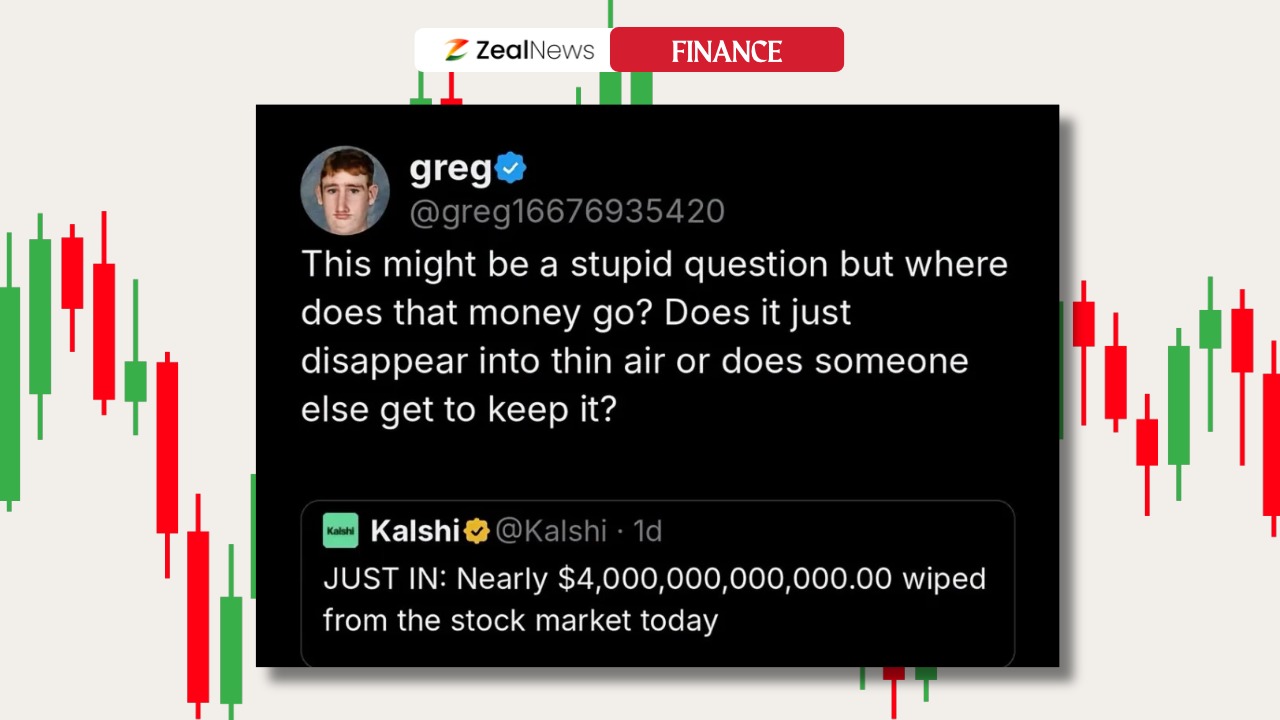
Imagine checking your phone one morning and discovering that investors have lost $500 billion in the stock market overnight.
That's $500 billion gone. No robbery, no bank heist, no billionaire walking into a vault and carrying away bags of cash. Just a terrible day on the stock market.
Naturally, you have questions. Who took the money? Where did it go? Is there someone somewhere celebrating because everybody else is losing?
The stock market is an interesting place. People buy shares, watch their investments rise and fall, celebrate profits and occasionally experience financial heartbreak.
But one of its strangest features is how easily billions of dollars can seemingly disappear without anyone physically taking them.
To understand this, we need to understand what investors actually own when they buy shares.
How Can Money Disappear Without Anyone Taking It?
Let's start with something easy to understand.
Suppose you buy 100 shares in a company for ₦100 each. You have invested ₦10,000. Everything looks promising, and over the next few months, the company's share price rises to ₦200.
Your investment is now worth ₦20,000. Congratulations! You have made ₦10,000 in paper profit.

But here's something important: unless you sell those shares, you haven't actually received that additional ₦10,000. Your investment has increased in value, but the profit exists on paper.

Now imagine the company experiences a difficult period. Investors become worried, people start selling their shares, and the price drops to ₦60.
Your investment is suddenly worth ₦6,000. You have lost ₦14,000 in market value.
Where did the money go?
Nobody necessarily took it. The market simply no longer considers your shares worth what they were worth yesterday.
This is because a stock's price is influenced by what buyers are willing to pay and what sellers are willing to accept. When investors become pessimistic about a company, demand for its shares can fall, pushing the price down.
The difference here is between money and value. Money changes hands when shares are bought and sold. Market value, however, can increase or decrease without an equivalent amount of cash moving anywhere.
This is why financial headlines can announce that a company has lost billions of dollars even when the company hasn't transferred that money to anybody.
What Exactly Is Market Capitalisation?
This is where things become even more interesting.
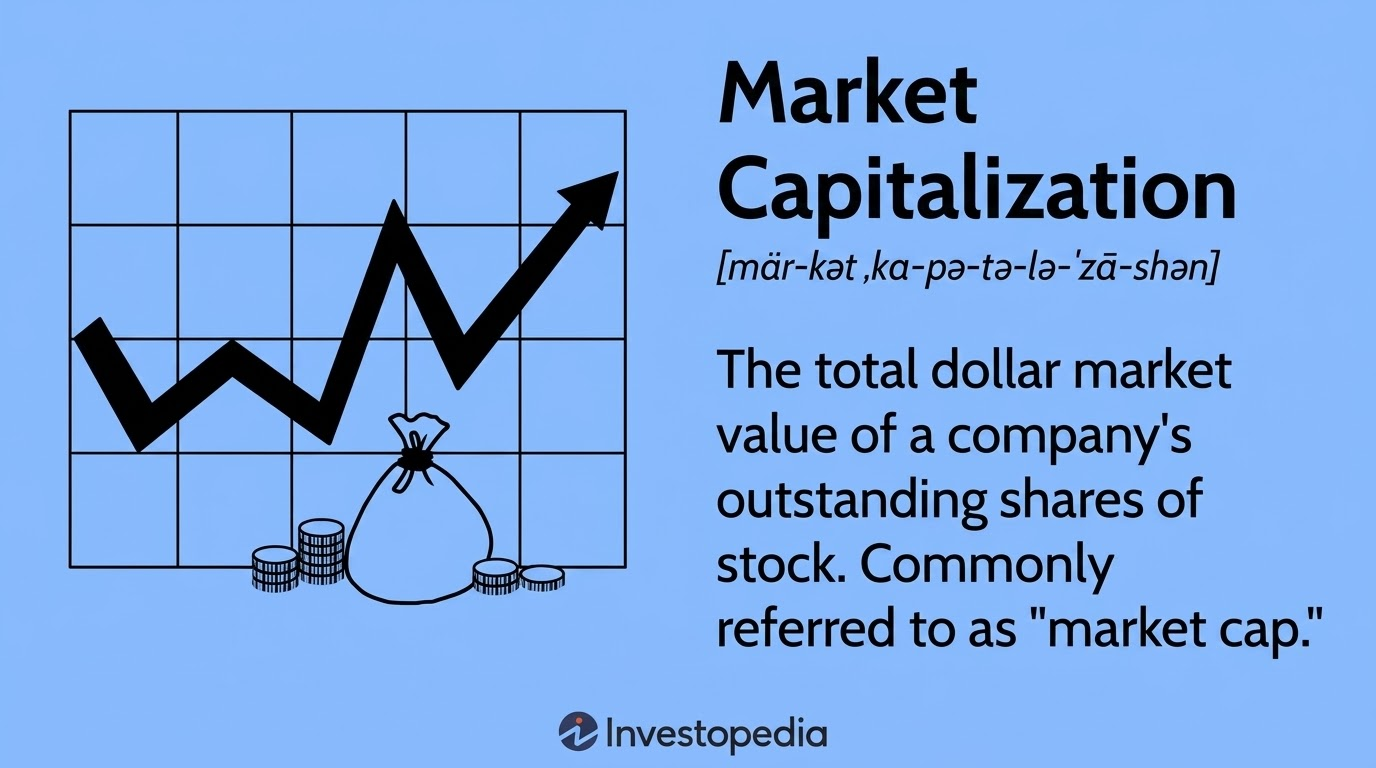
Market capitalisation, commonly called market cap, is the total market value of a company's outstanding shares. It is calculated by multiplying the current share price by the number of shares available.
Let's use a fictional company called MoneyMakers Inc.
Suppose it has 10 million shares, each trading at $100. Its market capitalisation is $1 billion.
Now, imagine investors receive disappointing financial results. Confidence drops, people start selling, and the share price falls to $70.
The company's new market capitalisation is $700 million.
Financial reporters could accurately announce that MoneyMakers Inc. has lost $300 million in market value.
But did $300 million leave the company's bank account? No.
Did another company receive the $300 million? Not necessarily.
The calculation simply reflects the lower price at which the company's shares are currently trading.
There is another interesting detail here. Market capitalisation is calculated using the current share price for all outstanding shares, including shares that were not traded that day.
This means the entire company can appear to lose hundreds of millions in value because of transactions involving a relatively small portion of its shares.
Think about the implications. If a company has millions of shares and only a fraction of them are sold at a lower price, that new price can affect the calculated value of the entire company.
A relatively small number of transactions can change the estimated value of billions of dollars in shares.
But Doesn't Somebody Make Money When Someone Else Loses?
Sometimes, yes. But the relationship isn't always as straightforward as people imagine.
Consider two investors. Investor A buys shares for $100 and later sells them to Investor B for $150.
Investor A has made $50.
Unfortunately, the company's performance deteriorates, and Investor B eventually sells the same shares for $80.
Investor B has lost $70.
The $150 paid by Investor B went to Investor A. The subsequent decline in the share price did not send the remaining $70 to another investor. It simply reduced the market value of the shares.
However, there are situations where investors can deliberately profit from falling stock prices.
One example is short selling. In a short sale, an investor borrows shares, sells them at the current market price and hopes to buy them back later at a lower price.

If the price falls, the investor can potentially profit from the difference, after accounting for borrowing costs and other expenses.
For instance, an investor borrows a share worth $100 and sells it.
If the price falls to $60, the investor can buy it back for $60, return the borrowed share and potentially keep the $40 difference before costs.
This is one reason falling markets can create opportunities for certain investors.
However, not every investor's loss becomes somebody else's profit. Some losses are simply reductions in market value. Others become actual financial losses when investors sell below their purchase price.
And when a company goes bankrupt, the situation becomes even more complicated. Its assets may be sold to repay creditors, but if there isn't enough money, shareholders can lose their entire investment.
The stock market, therefore, doesn't operate like a giant container of money where every lost dollar must automatically land in somebody else's pocket.
It is a marketplace where ownership changes hands, prices respond to expectations, and the perceived value of businesses moves constantly.
So, the next time you see a headline announcing that the stock market has lost $1 trillion, remember that it doesn't necessarily mean $1 trillion has disappeared from the financial system.
It means the market currently values those investments $1 trillion less than it did before.
Sometimes, the money hasn't gone anywhere. What has changed is simply how much people believe it's worth.