Economic Policies You Need To Understand Better (PART 2)
Government decisions may seem distant, but they have a direct connection to the economy and the choices that affect your everyday life. Learn what these policies mean in simple terms.
You definitely have heard something like the government approving a budget, raising import duties or taking on more loans.
Maybe you've also heard talk of protecting local industries. But what do these decisions mean in practice?
In this second part, we look at five more economic policies and concepts that can help you make better sense of government decisions and how they affect the economy.
1. Fiscal Policy Choices and Budget Execution
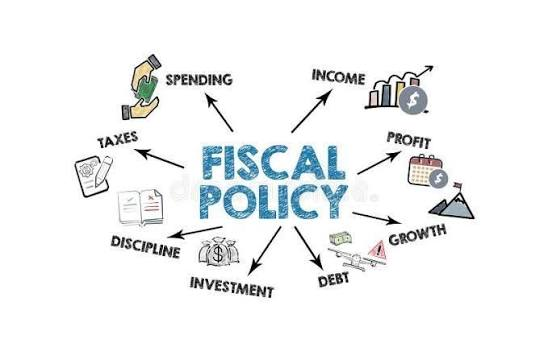
Fiscal policy is how the government handles its money. How much it raises, what it spends on, and whether it borrows to cover the gap.
Each year, the Federal Government presents a budget showing what it expects to earn and how it plans to spend it. The National Assembly approves it, and the President signs it into law.
The2026 budget, signed in April, comes to ₦68.32 trillion. About ₦32.2 trillion of that is for capital projects like roads and bridges, and ₦15.8 trillion goes to debt servicing.
Budget execution is what happens next, when funds are actually released and used and that's why budget implementation reports matter.
2. Import Tariffs and Customs Duties
Bring goods into Nigeria and you'll usually pay some charges before they're cleared. An import tariff is a tax on goods coming into the country.
Customs duty is what's actually collected, based on the tariff and the product's classification and value. So a business importing vehicles, machinery or clothing pays the duty before it can clear them.
Governments use tariffs to earn revenue and to shape what comes in. Pricier foreign goods also give local manufacturers a better shot at competing.
The catch is that businesses that depend on imported machinery or raw materials pay more when tariffs rise, and some of that cost ends up in the prices you pay.
Nigeria's tariffs also follow theECOWAS Common External Tariff, a shared tariff structure for goods coming from outside the regional bloc.
RECOMMENDED READ: 5 Economic Policies You Need To Understand Better (PART 1)
3. Government Borrowing and Deficit Financing
When the government plans to spend more than it expects to collect, the gap is a budget deficit. Say it plans to spend ₦10 trillion but expects to raise only ₦7 trillion, that's a ₦3 trillion deficit.
Deficit financing is how it covers that gap, and borrowing is a common way.

At home, the government issues treasury bills and bonds that banks, investors and other institutions can buy. It can also borrow from foreign governments, international financial institutions and other lenders.
The money pays for projects and other obligations when revenue falls short, but it has to be paid back, usually with interest.
People often mix up two terms here. A deficit is the shortfall between revenue and spending over a period. Public debt is everything the government still owes from past borrowing.
4. Local Content Policy
Local content policy pushes businesses to use Nigerian workers, materials, goods and services instead of relying mostly on foreign suppliers.
The idea is to give local businesses more opportunities, build skills at home and keep more of the money these industries make in the Nigerian economy.
Oil and gas is the clearest example. TheNigerian Oil and Gas Industry Content Development Act took effect in April 2010. It requires companies in the sector to give priority to Nigerian companies, workers, goods and services where they meet the required standards. The Nigerian Content Development and Monitoring Board (NCDMB) oversees it.
For local businesses, that can mean a chance to supply equipment, offer technical services and join projects that might otherwise go to foreign firms. But they can only take those chances if they have the equipment, skills, technology and capacity the industry demands.
5. Price Control Policy
Price control means the government limits how much certain goods, services or labour can cost. It's usually meant to protect consumers from excessive prices, or to keep the earnings of producers and workers from falling too low.
Nigeria has done this before. The 1977 Price Control Act, for instance,regulated the prices of items including fuel.
It comes in two forms. A price ceiling is the most a seller can charge while a price floor is the least a price can be. If the government fixes a maximum price for an essential commodity, sellers aren't supposed to charge more.
The ₦70,000 national minimum wage works the other way round. It's a price floor, since it sets the lowest amount eligible workers can legally be paid.
Price controls can protect buyers and workers, but they run into trouble when the set price doesn't cover what it costs to supply the product.
If sellers can't make their money back, they may produce less or leave the market. Then the product becomes harder to find at the regulated price.