5 Economic Policies You Need To Understand Better (PART 1)
Confused by MPR, electricity bands or other economic policies? Get a plain-English look at how 5 of them affect your money, business and daily life.
You hear about monetary policy, exchange rates, fuel subsidies, tax reforms and electricity tariffs all the time.
These policies influence the prices of goods, the cost of running businesses, access to loans and how much money the government has to spend on public services.
Many Nigerians still don't fully understand how these policies work. If you fall into this category, understanding them makes it easier to follow economic decisions.
1.Foreign Exchange Liberalisation
The value of the naira against foreign currencies, especially the US dollar, is a constant worry for many Nigerians.
Many businesses depend on imported raw materials, machinery and finished goods, and even some locally made products are affected when the exchange rate moves.
Foreign exchange liberalisation simply means letting market forces, mainly demand and supply, play a bigger role in deciding the value of a currency.
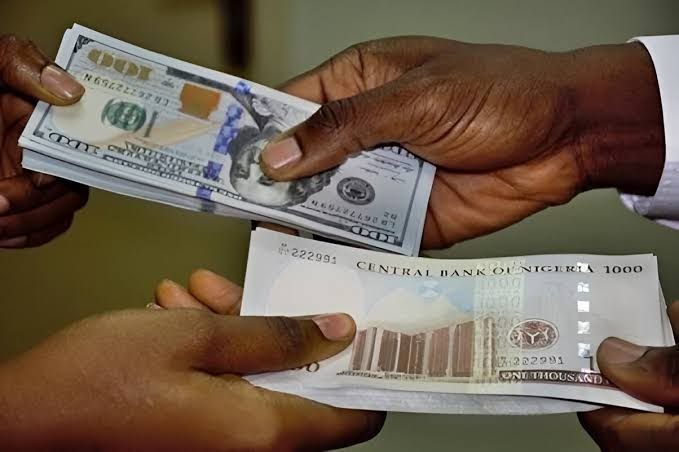
Nigeria made a major move in this direction in June 2023. A CBN circular dated June 14, 2023 ended the splitting of the FX market into different windows and brought back thewilling-buyer, willing-seller model.
To see the difference, compare the two systems.
Under a fixed exchange rate, the government or central bank sets the value of the currency and works to defend it. Under a market-driven system, the rate moves with how much foreign currency is available and how much people want to buy.
So if lots of businesses need dollars for imports but dollars are in short supply, the dollar gets more expensive against the naira.
The case for liberalisation is that it avoids thedistortions that appear when an official rate doesn't match market reality. It can also draw more foreign currency into the official market.
2. Monetary Policy Rate

When prices rise across the country, one of the tools the Central Bank of Nigeria (CBN) uses to bring inflation down is the Monetary Policy Rate (MPR).
Think of it as the benchmark interest rate that guides what it costs to borrow and lend in the financial system. The CBN's Monetary Policy Committee reviews it regularly. At itsJuly 2026 meeting, it kept the rate at 26.5 per cent.

When the CBN raises the MPR, borrowing gets more expensive for commercial banks. Banks usually pass that on, so loans cost more for individuals and businesses. When loans are expensive, people and companies tend to spend less.
That slows demand for goods and services, and slower demand can ease pressure on prices. Higher rates also make saving more attractive.
The downside is that businesses that rely on loans may struggle with higher repayments. Individuals may also find it harder to borrow for a home, school fees or other needs.
One thing to keep in mind is that the MPR isn't the exact rate your bank charges you. It's a benchmark that influences rates across the financial system.
3. Fuel Subsidy Removal
A subsidy is money the government puts in to make something cheaper for consumers. With petrol, the government covered part of the supply cost so it could be sold at a regulated price below the full market cost.
You paid less at the pump, and the government picked up the difference.
That difference was very expensive. The government argued that the money could go to infrastructure, healthcare, education and other public needs instead.
Once the subsidy was removed, petrol prices began to follow the real cost of supply, includingcrude oil prices, exchange rates, refining and distribution costs. Prices jumped sharply in the weeks that followed.
It's also worth knowing that removing the subsidy doesn't mean every naira once spent on it is suddenly free for new projects. That money still has to be accounted for within government finances, and it competes with other spending obligations.
4. Cost-Reflective Electricity Tariffs

Electricity bills are another place where government policy touches households and businesses directly.
Tariffs in Nigeria depend on what it costs to generate, transmit and distribute power, including gas, power generation, maintenance of infrastructure and other operating costs.
A cost-reflective tariff is meant to match the real cost of supplying electricity, instead of keeping prices artificially low through government subsidies.
Nigeria also runs a service-based tariff system, overseen by the Nigerian Electricity Regulatory Commission (NERC). Customers are grouped by the minimum hours of supply their distribution company is expected to provide. There are five bands:
Band A: Minimum of 20 hours of electricity daily.
Band B: Minimum of 16 hours daily.
Band C: Minimum of 12 hours daily.
Band D: Minimum of 8 hours daily.
Band E: Minimum of 4 hours daily.
In general, the higher the band, the higher the tariff, since those customers are supposed to get more hours of power. When Band A supply falls short, NERC can step in. It hasordered compensation for affected Band A customers.
5. Tax Reform
Taxes are one of the main ways governments raise money for roads, schools, hospitals, security and other public needs.
Nigeria's tax system has long had its problems: too many taxes, complicated administration, overlapping responsibilities and a narrow tax base. That's a big part of why the government introduced a new framework which we all know.
The goal is to simplify tax administration, improve compliance and make revenue collection more efficient. One visible change is that the Nigeria Revenue Service nowreplaces the Federal Inland Revenue Service.
It also helps to know that not all taxes work the same way. Personal income tax is charged on what individuals earn, while companies pay tax on their taxable profits.
Value Added Tax (VAT) is charged on specified goods and services, and you, the consumer, generally bear the cost when you buy them.
Another term you'll hear is widening the tax net. It means bringing more eligible individuals and businesses into the tax system, so the government isn't relying on a small number of taxpayers for most of its revenue.