ADC Presidential Primary Implodes: Amaechi, Hayatu-Deen Allege Widespread Rigging Amid Atiku's Contentious Win

The African Democratic Congress (ADC) presidential primaries, aimed at selecting the party's candidate for the 2027 general elections, have been plunged into a deep crisis following widespread allegations of voter disenfranchisement, electoral malpractice, and subsequent rejections of results by two prominent aspirants, Rotimi Amaechi and Mohammed Hayatu-Deen.
Former Minister of Transportation and former Rivers State Governor, Rotimi Amaechi, unequivocally rejected the yet-to-be officially announced results, describing them as “concocted.” In a statement posted on his X handle, Amaechi insisted that the primary process failed to meet the expected standards of fairness, transparency, and credibility. He alleged that approximately eighty percent of party members were not allowed to vote, which he deemed unacceptable. Amaechi accused the ADC of engaging in the very same electoral malpractices—such as vote buying, manipulation of results, and voter suppression—that it had criticized the ruling All Progressives Congress (APC) and the Independent National Commission (INEC) for. He maintained his stance that he would only accept results from a process that was free, fair, and transparent, pledging to uphold the values the ADC claimed to represent in its quest to rescue Nigeria from alleged impunity and mismanagement. Amaechi’s rejection came amid reports that former Vice President Atiku Abubakar was poised to win, prompting Amaechi to consider legal action to challenge the outcome. Notably, Amaechi was declared the winner of the ADC Presidential Primary election in Bayelsa State, polling 44,404 votes against Atiku Abubakar's 6,570 and Mohammed Hayatu-Deen's 939 votes, as announced by Promise Dappa, the state's Returning Officer.
Mohammed Hayatu-Deen, an economist and banker who was also a leading contender, had earlier rejected the process and announced his boycott of the official announcement of results. In a strongly worded statement on his X handle, Hayatu-Deen expressed deep disturbance by reports of widespread vote rigging, some of which he personally observed across the country. He insisted that what was intended to be a democratic process had been reduced to manipulation and coordinated interference, and stated his intention to consult with his team on the next line of action, including potential legal challenges. Hayatu-Deen had previously raised alarms about the lack of transparency and fairness shortly after casting his vote in Borno State, and also alleged that unnamed political actors had attempted to pressure him into stepping down for another aspirant. Early results from states like Gombe showed Hayatu-Deen polling significantly fewer votes compared to Atiku Abubakar, who secured 139,334 votes against Amaechi’s 1,150 and Hayatu-Deen’s 465 votes in Gombe State, according to Prof. David Agbu, the state Returning Officer.
Despite the strong allegations and rejections by Amaechi and Hayatu-Deen, preliminary results from several states consistently indicated that former Vice President Atiku Abubakar was leading the race by wide margins. Atiku, after casting his vote at the Ajiya Ward Polling Unit in Jimeta, Yola, Adamawa State, praised the process as "democracy at work" and a significant step towards national recovery. This contrasts with Amaechi's earlier public statements questioning Atiku’s electability despite a history of winning party primaries, suggesting that primary successes had not translated into general election victories.
The ADC, which had positioned itself as a major opposition platform, conducted a direct primary using the Option A4 voting system, where an estimated 3.44 million registered party members were expected to participate by openly queuing behind their preferred candidates across Nigeria’s 8,809 wards. The final collation of results, scheduled to begin at the Transcorp Hilton in Abuja, experienced delays. The party's National Publicity Secretary, Bolaji Abdullahi, defended the primary as one of Nigeria's most credible democratic exercises, emphasizing ADC’s commitment to transparency and internal democracy. However, Abdullahi admitted that the party currently lacks enough evidence to either support or deny the allegations of widespread rigging, stating that collation of results was still ongoing and no pattern of electoral fraud had been established. He affirmed that mechanisms exist within the party and the broader electoral system to address any complaints of irregularities.
The current crisis reflects longstanding fissures within the ADC coalition, which was formed to challenge the re-election of President Bola Tinubu in 2027 and amplify the voices of the downtrodden. The party had previously brought together figures like Atiku, Peter Obi, and Rabiu Kwankwaso, but Obi and Kwankwaso have since left to join the National Democratic Congress (NDC), where Obi emerged as a presidential candidate. The deepening controversy surrounding the primary has exposed widening cracks within the ADC coalition, threatening its unity and raising doubts about its strength as a viable opposition force ahead of the crucial 2027 elections. Political observers suggest that how the party manages this crisis will be crucial in determining its future trajectory and credibility.
You may also like...
Moniepoint Is Taking Tech Innovation Beyond Lagos With a N3 Billion University Investment

Moniepoint is investing N3 billion into innovation hubs across OAU, UNN and ABU in a major push to decentralize Nigeria’...
He Started Coding at 13, Dropped Out of Medical School, And Now Builds a Global Developer Tool

Sampson Ovuoba started coding at 13, dropped out of medical school, and quietly built Windframe, a developer tool now us...
5 Reasons MTN Says Its Network Is Still Bad Despite the 50% Tariff Increase

MTN's Chief just explained the reasons behind MTN's poor network. If you are an MTN user, you should probably read this ...
Is the Education System Getting Better or Worse? With Modern Technology

Education is changing through technology and social media, making learning easier to access. But with growing distractio...
Children's Day in Nigeria: What We Owe Nigerian Children Beyond Celebrations

Nigeria marks Children’s Day 2026 amid renewed reflection on child safety, as the Oyo school kidnapping underscores the ...
From 95,000 to 39,000: How Nigeria's Economic Crisis Is Written in Its Hajj Numbers

Nigeria’s Hajj participation drops from 95,000 to 39,000 pilgrims as rising costs and economic pressures make the 2026 p...
Cavaliers Secure Kenny Atkinson as Head Coach, Sources Confirm!
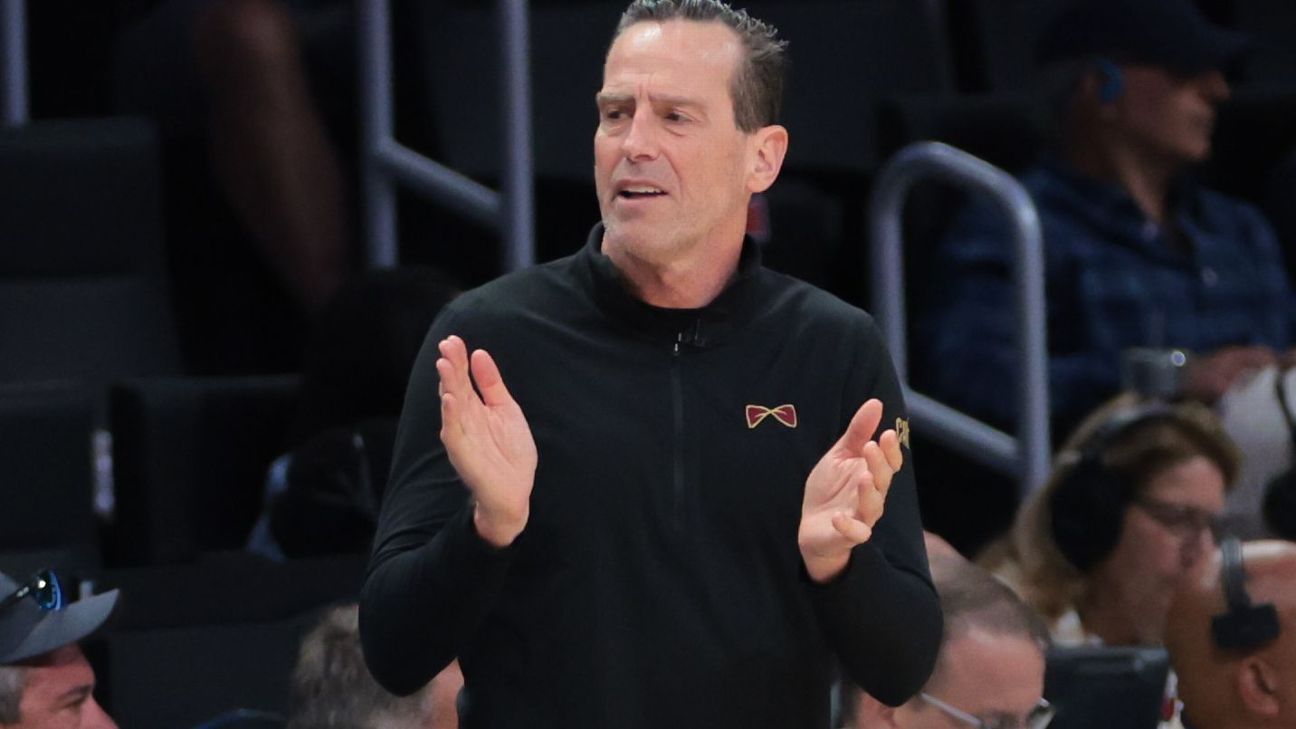
Kenny Atkinson will return as Cleveland Cavaliers coach next season, despite a conference finals sweep by the New York K...
Victor Wembanyama's $5.11M Card Sells, Shattering Records!
A rare Victor Wembanyama Panini Prizm Black parallel card has sold for a record $5.11 million, becoming the most expensi...