Six Nigerian Startup Founders Who Closed Funding Rounds at the End of Q1
Six Nigerian startup founders closed funding rounds at the end of Q1, raising a combined $4 million across fintech, healthtech, food commerce, waste tech, and debt recovery, get to see a breakdown of who they are and what they are building.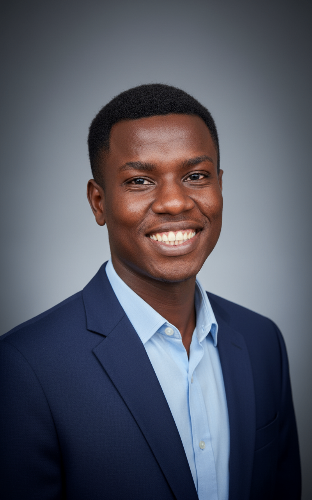

Africa's investment climate has not been the most accommodating in recent times, but that has not stopped some Nigerian founders from walking into rooms and walking out with cheques.
The continent's startup ecosystem has grown more selective, investors more cautious, and big-ticket rounds harder to announe, yet a handful of builders are still making the case for why their ideas deserve backing.
At the close of Q1, six Nigerian-founded startups disclosed funding rounds or strategic deals, collectively pulling in $4 million across sectors ranging from fintech and healthtech to food commerce, sustainability, and debt recovery.
The spread, however, was uneven, one company alone accounted for 77% of the total raised, with the remaining five founders sharing the other 23% between them.
What they are building and who is building it offers a window into the problems Nigerian founders are betting their time on.

Chinenye Nlemchi — Trashcoin ($100,000 venture round)
Sustainability is no longer a footnote in the African startup conversation, and Trashcoin is part of the reason why. Chinenye Nlemchi, co-founder and Executive Director at the waste-tech startup, closed a $100,000 venture round at the end of Q1 as investor appetite for climate and environmental solutions continued to grow.
Nlemchi co-founded the company alongside Nnodim Eliot Wogu and Damilola Daramola. The three founders are using technology to address the structural problems in waste management and recycling, challenges that are visible and unresolved in most Nigerian urban centres. Nlemchi holds a Bachelor's degree in Business Administration from the University of Ghana, where she graduated in 2019.
Tunde Elegba — Surgepay ($100,000 grant)
Tunde Elegba's fintech startup Surgepay picked up a $100,000 grant at the end of Q1, a milestone that adds meaningful momentum to a company still finding its footing in one of the continent's most competitive payment ecosystems.
Surgepay is built around improving digital payment experiences and pushing financial access to users who remain underserved. Elegba, a graduate of the University of Missouri St. Louis College of Business Administration, previously worked at SSM Health before channelling that experience into the software solutions Surgepay now delivers. For early-stage startups where ecosystem support can determine survival, a grant of this size at this stage is not a small thing.
Felix Daniel — NectarFi ($200,000 pre-seed round)
Felix Daniel and co-founder Stephanie Okeke secured $200,000 in pre-seed funding for NectarFi at the close of Q1, giving the fintech an early runway to develop its stablecoin-powered payments and savings infrastructure for emerging markets.
Daniel, a 2020 graduate of the University of Nigeria, Nsukka, leads NectarFi as chief executive. Before launching the company, he served as a Developer Advocate at Solana Foundation and later as Community Manager at Cube Group Inc, experience that positioned him well for building in the blockchain-adjacent fintech space. The pre-seed raise signals growing investor interest in stablecoin solutions addressing real financial access gaps.

Estelle Dogbo — Biovana ($200,000 venture round)
Healthcare startup Biovana closed a $200,000 venture round at the end of Q1, giving co-founders Estelle Dogbo and Jumi Popoola fresh capital to scale their operations within Africa's growing healthtech space.
Dogbo, who serves as chief executive, brings heavyweight biotech experience to the role, she previously held executive positions at Roche and Sanofi, and led African operations at 54gene where she oversaw the development of government-facing initiatives and large-scale genomic research infrastructure.
She holds a Master's degree in Cell Biology from Université Paris Sorbonne Nord and an MBA in Biotech Management from IONIS STM. At Biovana, she works at the intersection of hospitals, biobanks, biotech companies, and regulators to structure research-ready datasets across the continent. The round is also a marker for the continued rise of female-led innovation in African health technology.
Daniel Afolayan — Baskett ($300,000 venture round)

Daniel Afolayan's food commerce startup Baskett pulled in $300,000 in venture funding at the close of Q1, reflecting continued investor confidence in technology-driven solutions tackling Nigeria's food distribution problem.
Afolayan is a Y Combinator alumnus with a track record in the agriculture and supply chain space. He previously founded Sendme, a YC-backed startup that digitised fresh food distribution across multiple Nigerian cities, experience that directly informs what he is building at Baskett.
The startup targets the structural inefficiencies that keep Nigeria's food supply chain fragmented, making it harder for urban consumers to access affordable groceries reliably. The new capital is expected to support logistics improvements and customer expansion across competitive urban markets.
Julian Flosbach — Bfree ($3.1 million venture round)
Bfree led the funding table at the end of Q1 by a significant margin. The debt recovery fintech, co-founded by Julian Flosbach, Chukwudi Enyi, and Moses Nmor, closed a $3.1 million venture round, making it the largest disclosed raise tied to Nigerian founders during the period and accounting for the bulk of the total $4 million raised across all six startups.
Flosbach, who leads the company as chief executive, built his background across FairMoney, Rautenberg and Company, and DEG before co-founding Bfree. He holds a Master of Arts in International Business from Frankfurt School of Finance and Management, with a regional specialisation on Africa.
The company was built on the premise that non-performing loans and poor debt recovery systems were becoming a serious liability for Africa's fast-expanding digital lending market and that the solution required both technology and a more ethical approach to borrower engagement.
Bfree uses artificial intelligence, automation, and behavioural analytics to improve repayment outcomes while protecting customer relationships. Since launching in Nigeria, the company has expanded into other African markets, working with banks, fintechs, and digital lenders that need better loan recovery infrastructure.

The latest round is expected to fund product development, market expansion, and scaling ambitions as digital lending volumes across the continent continue to climb.