Five Things You Had No Idea Were Invented By Nigerians
Philip Emeagwali won computing's highest prize after teaching himself maths during a war. Silas Adekunle sold robots to Apple at 26. Four secondary school girls powered a generator with urine. Here are five inventions you probably didn't know were made by Nigerians.
You have probably used something a Nigerian built. You just did not know it was a Nigerian who built it. That is not your fault. It is a pattern; one that has repeated itself across computing, medicine, robotics, energy, and artificial intelligence. The work lands. The name does not travel with it. Here are five of the most significant ones.
1. Philip Emeagwali— Parallel Computing
Philip Emeagwali grew up in Onitsha, Nigeria. His father worked as a nursing attendant, and during the Biafran War, his education was interrupted. At 14, he dropped out of secondary school because his family could no longer afford the fees.
With schools disrupted and few opportunities around him, Emeagwali turned to self-study. He reportedly challenged himself to solve large numbers of mathematics problems every day to sharpen his mind and continue learning on his own.
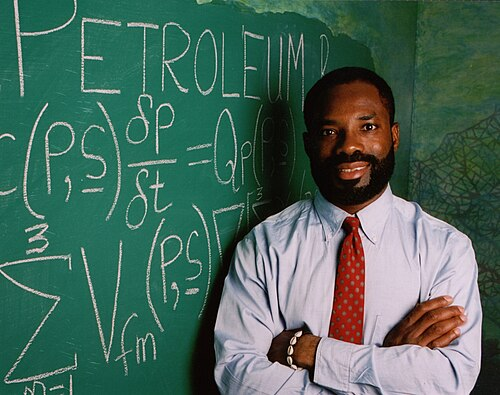
Years later, he earned a scholarship to study at Oregon State University. He went on to obtain multiple graduate degrees in mathematics, engineering, and scientific computing in the United States.
In 1989, Emeagwali gained international attention for his work in parallel computing. Using the Connection Machine supercomputer, he developed a method that allowed thousands of processors to work on calculations simultaneously for oil reservoir simulations.
His achievement earned him the prestigious $1000Gordon Bell Prize, one of the highest honours in high-performance computing.
For years, online claims falsely described him as “the inventor of the internet.” Those claims were later rejected by experts, including Gordon Bell himself, who clarified that Emeagwali’s award-winning work was related to parallel computing, not the creation of the internet.
2. Silas Adekunle— The World's First Intelligent Gaming Robot
Silas Adekunle was born in Lagos in 1991. He moved to the UK at 12 and earned a first-class degree in robotics from the University of the West of England.
In 2013, he co-founded Reach Robotics. In 2016, the company launched MekaMon, a four-legged robot that combined physical movement with augmented reality gaming through a smartphone app. It moved like a creature, it learned, and it battled other MekaMons. Nothing like it existed.
In November 2017, Apple signed an exclusive retail partnership, stocking MekaMon in stores across the US and UK at $299 per unit. Forbes put him on their 30 Under 30 Europe list.
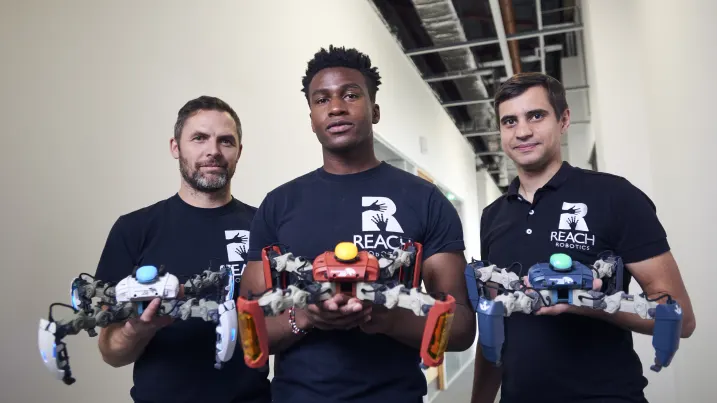
The Financial Times named him one of the Top 100 Minority Ethnic Leaders in Technology. Reach Robotics closed in 2019 when the consumer robotics market proved harder than the technology, and the world moved on.
What came next is the part that got almost no coverage. He founded Awarri and partnered with Nigeria's Ministry of Communications to build Nigeria's first multilingual open-source AI model, infrastructure designed to give African languages representation in systems that currently treat them as invisible.
3. Professor Oladipo Akinkugbe— Africa's First Hypertension and Renal Clinics
Hypertension is the leading cause of cardiovascular death globally. For most of medical history, its patterns in African populations were poorly understood and barely researched because the institutions doing the research were not particularly focused on African bodies.
Professor Oladipo Akinkugbe changed that from Ibadan. He trained at Oxford and Harvard. He came back. At 35, he became Nigeria's first professor of medicine.
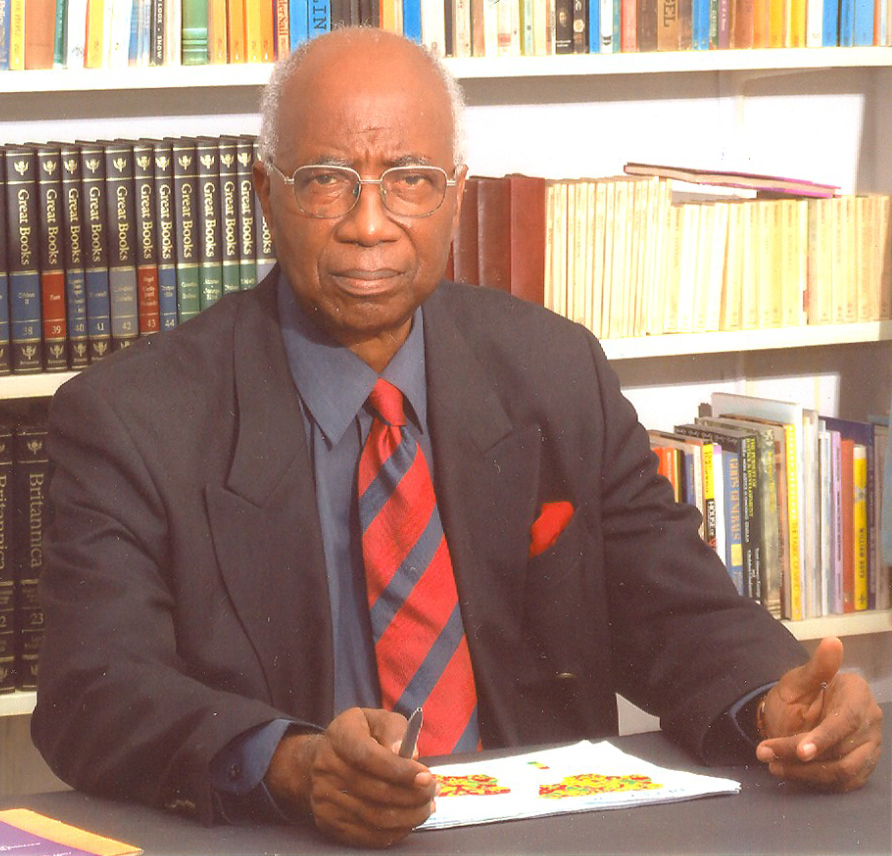
At University College Hospital in Ibadan, he established two clinics that had never existed anywhere on the African continent: one specialising in hypertension, one in renal disorders.
He built the clinical infrastructure for cardiovascular medicine in Nigeria from almost nothing, trained generations of doctors, and spent 60 years practicing in a system that consistently underfunded the work he was doing.
The global conversation about hypertension in Black populations, about the specific cardiovascular risks that affect African people at higher rates, has roots in the clinical research done in Ibadan under his direction. The world uses that research. The world rarely mentions where it started.
4. Duro-Aina Adebola, Akindele Abiola, Faleke Oluwatoyin & Bello Eniola— Urine-Powered Generator
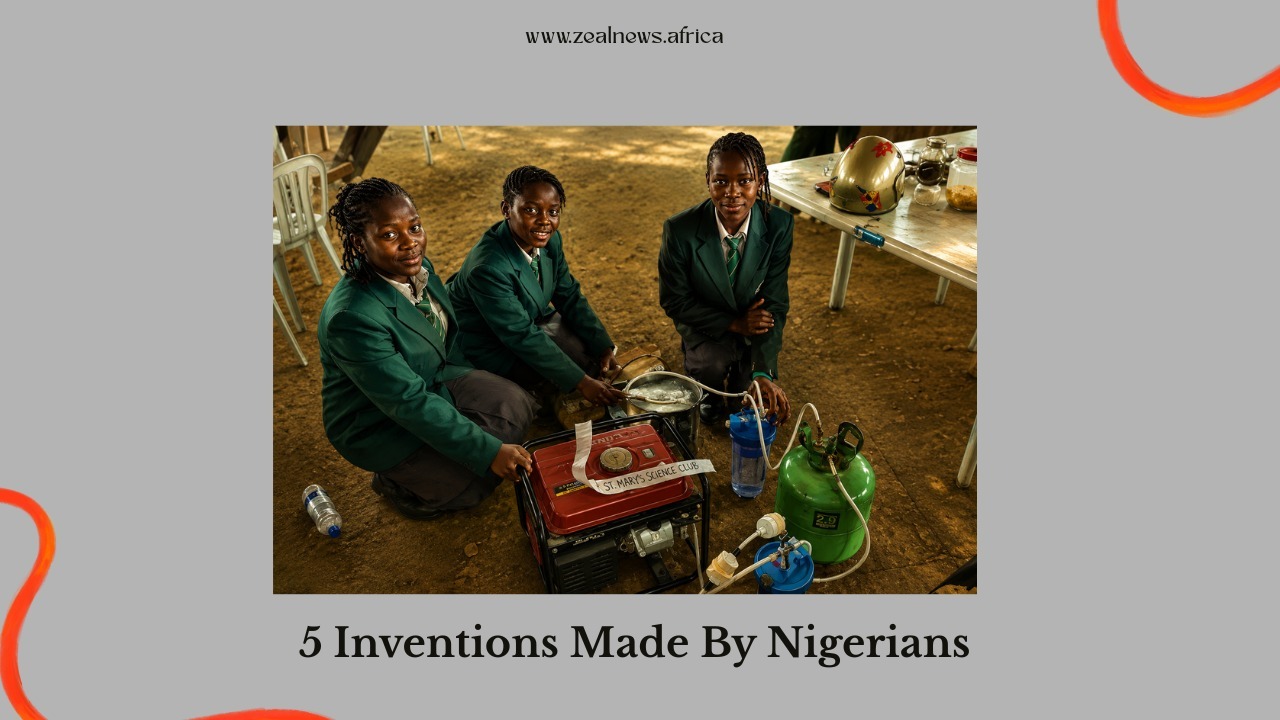
In 2012, four Nigerian secondary school girls walked into Maker Faire Africa with something nobody had seen before. They were teenagers. Still in school. They built a generator that runs on urine.
The process: urine goes into an electrolytic cell, which separates the urea into hydrogen, nitrogen, and water. The hydrogen is purified, compressed into a gas cylinder, and fed into a generator that produces electricity. One litre of urine powers the generator for six hours. They built a working prototype.
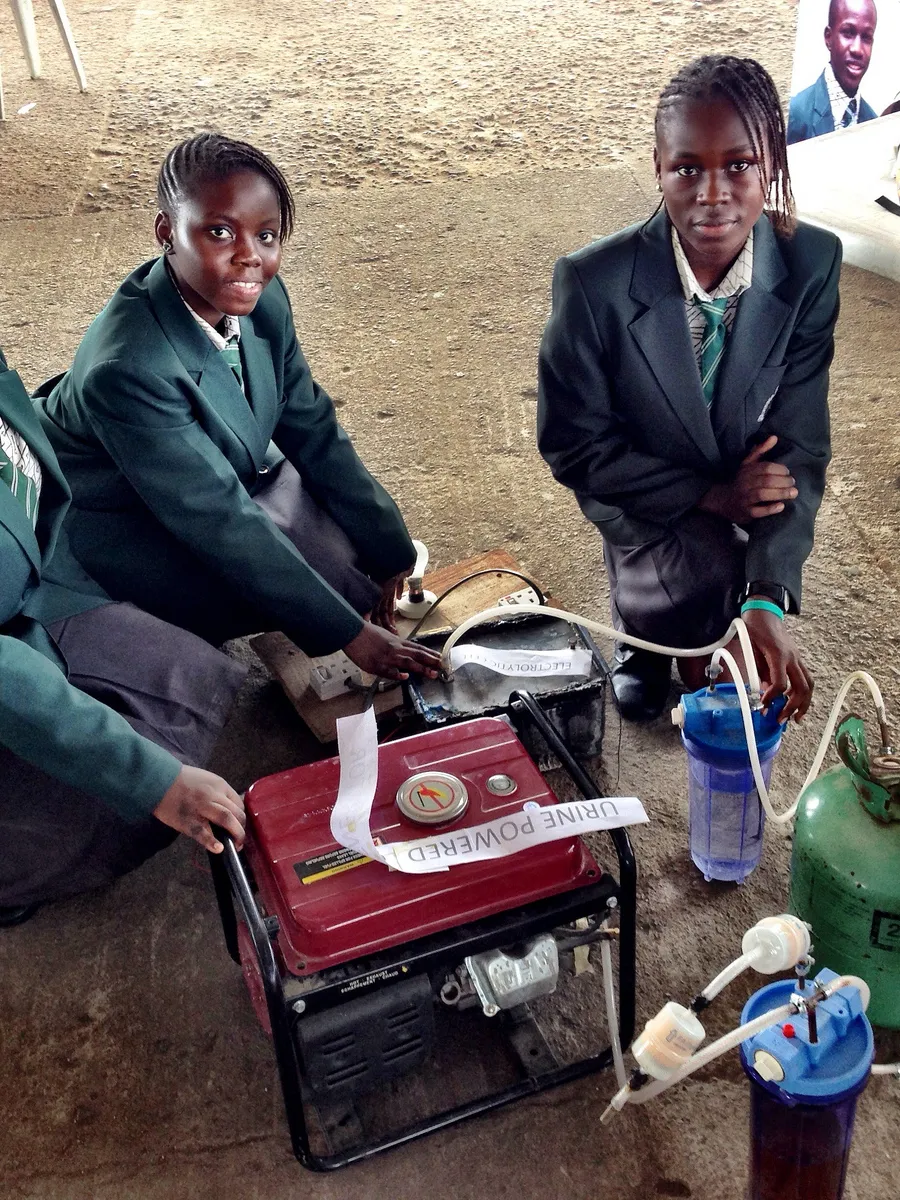

The invention went globally viral. International media ran the story for a week. Then the news cycle moved. Their names are not in any engineering textbook. Their prototype is not in any museum.
There is no follow-up story about what they built next, because the world that celebrated them for seven days was not particularly invested in what came after. They went back to school in Nigeria, largely unremarked upon by the same institutions that briefly made them famous.
5. Bosun Tijani & Awarri— Nigeria's First AI System for African Languages
Every major AI system in use today was trained predominantly on English-language data. Yoruba, Igbo, Hausa, Efik, and hundreds of other Nigerian languages that carry centuries of knowledge and culture are nearly invisible to these systems.
As the world moves toward AI-mediated communication and commerce, African languages are being left behind, not through deliberate exclusion but through the accumulated weight of who built these systems and whose language they thought to include.
Nigeria's Minister of Communications and Digital Economy, Bosun Tijani, in partnership with Awarri, announced the development of Nigeria's first multilingual open-source large language model, AI infrastructure built specifically for African languages and African contexts.
The project is designed to give African developers and creators the tools to build in their own languages and ensure that the knowledge encoded in those languages is not erased by a technology industry that wasn't thinking about them.
It is still being built. Which makes it the most urgent entry on this list. If it works, it is not a product. It is the infrastructure that determines whether African languages exist meaningfully in the digital world fifty years from now. The global AI conversation will reference this work eventually. Whether it says Nigeria's name is the question.