What Will Happen to Nigerians If Nigeria Actually Bans MTN and DSTV?
Revoking MTN and DSTV's licences sounds like justice after xenophobic attacks on Nigerians in South Africa, but the economic fallout would land harder on ordinary Nigerians than on the government in Pretoria.
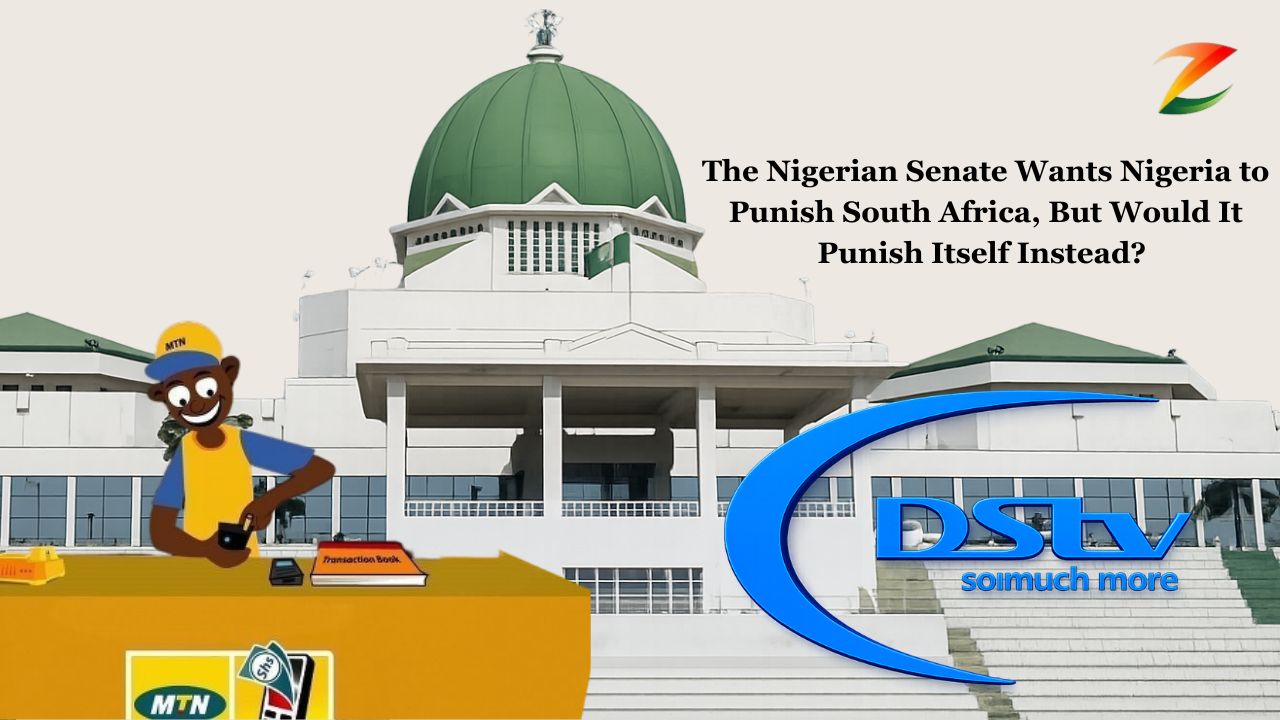
The images coming out of South Africa in recent weeks have been difficult to sit with. Nigerian-owned businesses including that of other African immigrants looted and set ablaze.
Foreign nationals have experienced being turned away from hospitals. People who have built their lives in another country are suddenly hiding in their own homes.
According to a report, two Nigerians were killed and the outrage that followed was not manufactured, it was justifiable.
So when Senator Adams Oshiomhole stood on the floor of the Senate on May 4, 2026 and said 'if you hit me, I'll hit you,' the room fully understood the pain and sentiment with which he spoke.
His proposal? Well, that the Nigerian government should revoke the operating licences of MTN and DSTV, nationalise MTN's assets, and force South African businesses out of Nigeria as a form of economic reciprocity.
The proposition was met with applause both online and offline. Different timeline erupted in agreement. For about 48 hours, revoking those licences felt like the most sensible thing Nigeria could do.
But the Senate President himself pumped the brakes, declining the proposal on procedural grounds and pointing toward diplomatic engagement instead.
He was right to some extent, not because Nigerian lives are worth less than foreign investment, as Oshiomhole framed it. But because the people who would feel the most pain from banning MTN and DSTV are not South Africans. They are Nigerians.
MTN Is No Longer Just a South African Company
This is the part of the conversation that gets skipped when emotions are running high. MTN Nigeria is listed on the Nigerian Stock Exchange. Millions of ordinary Nigerians, including pension fund holders, own shares in the company.
Nigerian institutional investors, mutual funds, and retail shareholders all have stakes in MTN's profitability. When Senator Oshiomhole called for MTN to be nationalised and its licence revoked, he may have been, indirectly, proposing action against a company that some of his own colleagues' retirement accounts are invested in. That is how entangled the economy is.
Beyond shareholding, MTN Nigeria directly employs thousands of Nigerians. Add to that the network of agents, vendors, SIM card sellers, data resellers, and small business owners whose daily income depends on the MTN ecosystem, and the number of Nigerians exposed to any disruption climbs quickly.
A licence revocation does not hurt a boardroom in Johannesburg first. It hits a kiosk owner in Onitsha or Kano on day one.
MultiChoice, which operates DSTV, tells a similar story. The company employs Nigerians across production, broadcast, content, and distribution roles. Its localised content investment, including Nigerian-produced programming, has deepened its integration into the domestic media economy.
Advocating for it to be switched off and its license revoked is not a clean blow to Pretoria. It is a disruption that lands squarely on Nigerian households and workers.
The SIM Card Problem Nobody Is Talking About

There is a layer to this debate that has barely been mentioned, and it is arguably the most consequential one for everyday Nigerians. MTN is not just a telecom company in Nigeria. It is critical financial infrastructure that is woven into the life of the average Nigerian.
Bank Verification Numbers (BVNs) and National Identification Numbers (NINs) are tied to SIM cards. For millions of Nigerians, the phone number linked to their MTN SIM is the same number attached to their bank account, their mobile banking app, their transaction alerts, and their identity verification records.
If MTN's operations were suddenly disrupted, those users would lose access to financial services, not because their banks failed, but because the SIM at the centre of the system went dark.
The Central Bank of Nigeria (CBN) recently introduced a policy restricting Nigerians to only one lifetime change of the SIM linked to their BVN. That policy, designed to curb fraud, now means the stakes of any MTN disruption are significantly higher than they were even two years ago.
The ordinary Nigerian who has never heard of Oshiomhole's proposal, living in a community where MTN is the only reliable network, would wake up one morning unable to receive a transaction alert, unable to transfer money, and unable to prove their identity to a bank's verification system.

Many people are suggesting porting of phone numbers. Mobile number porting to another network sounds simple in a tweet. In practice, it is a bureaucratic, logistical, and financial burden for millions of people who do not have the luxury of downtime.
What Investors Will See If Nigeria Pulls This Trigger
Foreign direct investment operates on confidence. Investors put money into a country because they believe the rules will remain consistent, that a licence granted today will not be revoked tomorrow because of a diplomatic dispute they had no hand in creating.
Nigeria has spent years trying to build that confidence, with mixed results. Revoking MTN's licence under these circumstances would send a message that no foreign-owned business in Nigeria is truly secure.
The question that follows a move like that is the one no government wants investors asking: if Nigeria can do this to MTN today, who is next tomorrow? It does not matter whether the action is justified in the context of xenophobic attacks.
What matters, in the calculation of an international investor, is that the Nigerian government demonstrated a willingness to revoke operating licences for political reasons.
That fear alone, not the action itself, but the precedent, can freeze billions in potential investment. Nigeria has enough structural deterrents already. Adding 'policy unpredictability' to the list is not retaliation against South Africa. It is self-sabotage in disguise.
The Real Lesson Hidden Inside This Debate
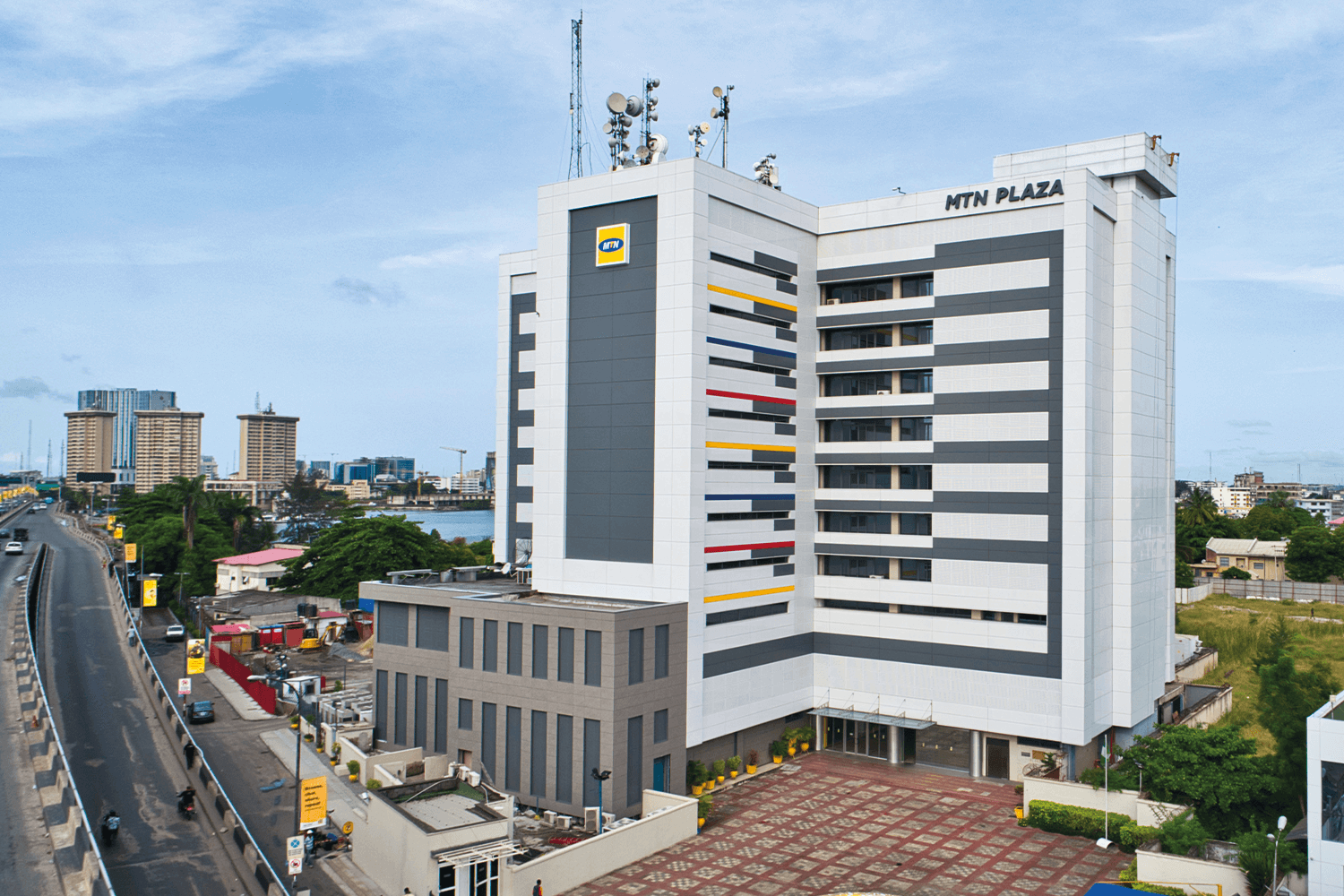
Nigeria's vulnerability in this moment is not because it lacks options. It is because it lacks alternatives. If there were a Nigerian-owned telecom at MTN's scale, yes, there are alternative networks but not at that scale.
Also if there was a home-grown pay-television platform with DSTV's reach, the threat to revoke those licences would carry genuine weight. South Africa would feel it. Instead, the threat carries blowback because Nigeria is more exposed to the consequences of its own retaliation than South Africa is.
Senator Victor Umeh made a point worth sitting with, when he referenced Nigeria's historical support for the anti-apartheid struggle. Nigeria contributed diplomatically, financially, and morally to South Africa's liberation.
The return on that investment has been decades of recurring xenophobic violence against Nigerians. That is a legitimate grievance. But grievance and strategy are different things, and confusing them is how countries make costly decisions in the name of dignity.
Strong countries do not win political battles with emotion. They win with trade leverage, diplomatic architecture, and economic self-sufficiency that makes a threat credible. The lesson of this moment is not that foreign companies are exploitative, though some are.
It is that Nigeria's dependence on foreign infrastructure in critical sectors like telecoms and media reduces its bargaining power precisely when it needs that power most. Building local alternatives is not a long-term romantic idea. It is the most direct path to the kind of leverage that makes other governments listen.
Nigerians have every right to be angry. Two of their citizens were killed. Dozens more are living in fear in a country their nation helped free from apartheid. The anger is not the problem. The problem is pointing it at a target that, when struck, collapses back onto the people holding the weapon.
Retaliation that hurts Nigeria more than South Africa is not strength. It is just a different kind of loss.