Mwape Chimpampa: The 15-Year-Old Zambian Girl Who Invented Life-Saving Sunscreen for People with Alb
After losing her father to skin cancer, 15-year-old Mwape Chimpampa from Zambia invented a low-cost, organic sunscreen designed to protect people with albinism. Her innovation is transforming lives and setting new standards for inclusive healthcare in Africa.
.jpeg)
A Personal Loss That Sparked a Scientific Mission
In a quiet district in Zambia, a determined young girl decided to fight the sun.
When Mwape Chimpampa was just eight years old, she lost her father to skin cancer. He had albinism and could not afford proper sunscreen—an essential product he needed for daily protection in the hot, high-UV environment of Zambia. His death wasn’t an isolated case but part of a tragic pattern that disproportionately affects people with albinism in Africa.
Now 15 and a Grade 11 student at Naboye Secondary School in Kafue District, Mwape is determined to make sure others don’t suffer the same fate.
She responded to that pain with purpose. Mwape invented a natural, affordable sunscreen to protect people with albinism—those like her late father—who are at high risk of skin cancer in a region where commercial sunscreens are either too expensive or simply unavailable.
Understanding the Urgency: Why Albinism Requires Special Protection
People with albinism lack melanin, the natural pigment that protects skin from UV radiation. Without it, they are dangerously vulnerable to sunburn, premature aging, and life-threatening skin cancers. In sub-Saharan Africa, where the sun is particularly intense, this vulnerability becomes a public health crisis.
The United Nations estimates that many people with albinism in the region do not live past 40. Most face stigma, limited access to healthcare, and are unable to afford effective sun protection.
In Zambia, sunscreen is rarely produced locally and is often treated as a luxury item. Imported brands can cost more than a week’s wages. For rural families, sunscreen is not even on the radar.
Mwape wanted to change that.
“My father died of skin cancer because he did not have access to sunscreen—it was too expensive,” she shared in an interview with The Pan Afrikanist.
“I took it upon myself to change the narrative.”
The Invention: Organic, Accessible, and Africa-Ready

Latest Tech News
Decode Africa's Digital Transformation
From Startups to Fintech Hubs - We Cover It All.
Mwape’s innovation is called The Organic Sunscreen—and it lives up to its name. Made from a blend of locally sourced ingredients such as fruits, vegetables, spices, and aloe vera, the sunscreen delivers a Sun Protection Factor (SPF) of 22—well above the minimum SPF 15 recommended for people with albinism.
The formulation is not only chemical-free and cost-effective but also tailored for African climates and skin types. It comes in a spray format, making it easy to apply and suitable for daily use.
“I wanted it to be something people could trust, use every day, and not worry about cost,” she said. “My father would still be here if something like this existed earlier.”
This isn’t just a homemade remedy. It’s a product with scientific backing and the potential to transform public health outcomes across the continent.
From Science Fair to National Recognition

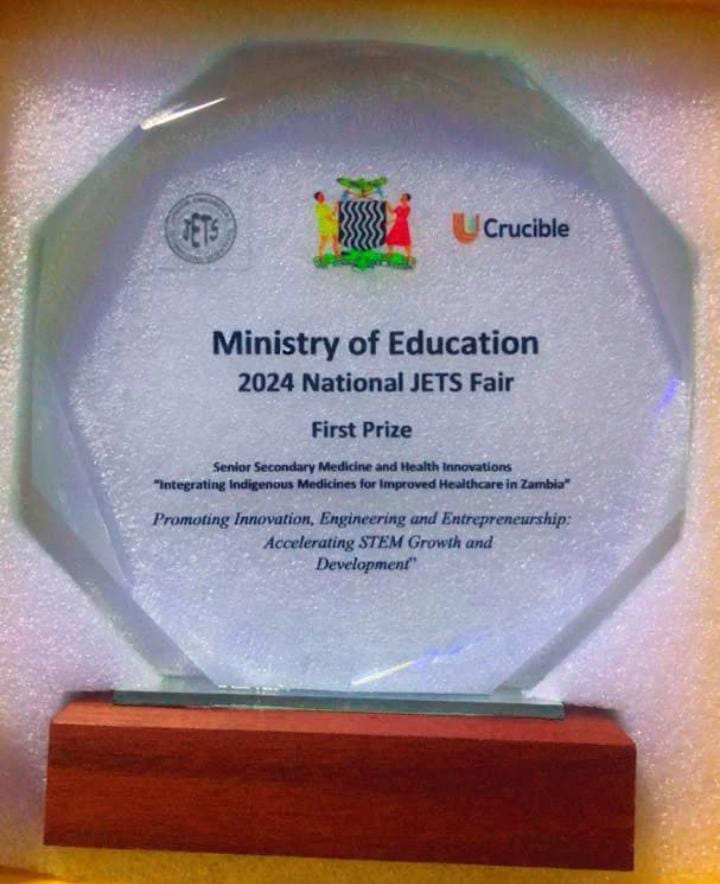
In 2024, Mwape entered her innovation into the prestigious National Junior Engineers, Technicians, and Scientists (JETS) Fair, hosted by the National Science Centre in Lusaka. Her project was hailed as one of the best and quickly drew national and regional attention.
Thanks to this recognition, the Zambia Research and Development Centre (ZRDC) selected her innovation for their incubation programme, providing mentorship, technical resources, and access to scientific advisors and dermatologists.
“This project represents a significant step toward addressing an equitable healthcare challenge in Zambia,” said Dr. Chisala Bwalya, a mentor at ZRDC.
“Mwape’s innovation has the potential to save lives, create jobs, and inspire other young innovators in the country.”
The Broader Impact: Health, Economics, and Policy

The significance of Mwape’s sunscreen isn’t limited to the lab.
According to ZRDC and The Pan Afrikanist, the sunscreen is undergoing rigorous testing and development involving health professionals, local farmers, and suppliers. Beyond skincare, the project addresses multiple challenges:
Public health: Reduces skin cancer risk in people with albinism.
Economic empowerment: Creates opportunities for local sourcing and manufacturing.
Social inclusion: Challenges stigma and marginalization through awareness and accessibility.
Latest Tech News
Decode Africa's Digital Transformation
From Startups to Fintech Hubs - We Cover It All.
The ZRDC is working with investors and policymakers to establish production facilities in Zambia, reduce reliance on imports, and potentially export the product to other African countries.
Support from Regional Leaders
At an International Multidisciplinary Conference in Lusaka, Mwape presented her invention to policymakers and academics. Among the attendees was Ms. Boemo Sekgoma, Secretary General of the Southern African Development Community (SADC) Parliamentary Forum.
She called Mwape’s work “commendable applied research” and stressed that it exemplifies how science can solve real, grassroots problems.
“Applied research drives innovation in key sectors, making them more efficient and competitive,” Ms. Sekgoma stated. “SADC countries must invest more in supporting young innovators like Mwape.”
Dr. Bwalya echoed the need for policy frameworks that:
Provide grant funding and tax incentives for young scientists and startups.
Include sunscreen in essential healthcare services.
Foster public-private partnerships to accelerate innovation to market.
A New Generation of African Innovators
Mwape’s story joins a growing chorus of youth-led African innovation. Her journey shares parallels with Heman Bekele, a 15-year-old Ethiopian-American who invented a soap infused with imiquimod—a skin cancer treatment that earned him the TIME Kid of the Year 2024 title.
But unlike Heman’s treatment-based solution, Mwape’s is about prevention, affordability, and community accessibility.
These young inventors are reshaping how the world sees Africa—not as a recipient of innovation but as a source of it.
Looking Ahead: What’s Next for Mwape and The Organic Sunscreen
Mwape has big dreams. She hopes to study biochemistry and establish a research hub dedicated to affordable tropical healthcare innovations.
Latest Tech News
Decode Africa's Digital Transformation
From Startups to Fintech Hubs - We Cover It All.
She’s also involved in community education campaigns to raise awareness on albinism and sun protection. With approximately 30,000 people with albinism in Zambia alone, the potential impact of her work is massive.
“I came up with this sunscreen to promote local production in Zambia and make sun protection more affordable,” she said. “This will reduce the risk of skin cancer for thousands of people living with albinism.”
ZRDC officials believe that with the right support, the product could soon be available nationwide—and potentially across SADC and ECOWAS countries, where albinism-related health risks remain poorly addressed.
From Grief to Global Impact
Mwape Chimpampa’s invention is more than just a sunscreen.
It is a bold, heartfelt response to injustice. It is a symbol of healing through innovation, of love transformed into action. It is a product, yes—but it is also a movement.
She took the pain of losing a parent and turned it into something that could save others. In doing so, she became a beacon for a healthier, more inclusive future in Africa.
And at just 15, she’s only getting started.