If Gender Is a Social Construct, Who Built It And Why Are We Still Living Inside It?
If gender is a social construct, who built it—and why does it still shape our lives? This deep dive explores power, colonial history, biology, and the systems that keep gender in place.

Part One — The Architecture
When people talk about gender it is rarely what is gender, or how many genders are there, but rather, who decided any of this in the first place?
Because if gender is a social construct and there is a ton of evidence to back that up, then someone did the constructing. And for what reasons? That is the part we barely talk about enough.
What does "social construct" actually mean? Because the phrase gets thrown around without people actually understanding it.
A social construct is not something fake or meaningless. Money is a social construct, so is a nation and so is Tuesday. They are real in their effects but they exist because humans collectively agreed to behave as if they do.
In a simpler term, social construct is an idea, concept or category accepted by the society rather than existing naturally in the physical world.
Gender works the same way. The categories exist and the consequences are real. But the categories were not handed down from some alien in the universe, they were assembled.
And they were assembled by specific forces with specific needs. Patriarchal power structures, yes. But also economic systems that needed someone to do unpaid domestic labour – cooking, raising children, caring for the sick — without that work showing up in any budget.
If you assign that labour to "women" as a natural role rather than a political choice, you have just saved an enormous amount of money and avoided a conversation about fairness. Very convenient.
Add to that religion, states that needed census categories, inheritance laws, military rosters, medicine that required binary classification to function administratively.
None of these sat in a room and designed gender. But they all reinforced it, generation after generation, because it was useful to them. That is how constructs become invisible, through repetition.
Part Two — The African Room in the House
It gets more interesting. When we talk about gender as a construct, Western frameworks tend to dominate the conversation as if Europe invented both gender and the critique of gender. However, Africa tells its own story.
I know you’d be shocked but do you know many pre-colonial African societies had far more fluid understandings of gender roles than the binary system we now accept as default? I’d show you in a moment.
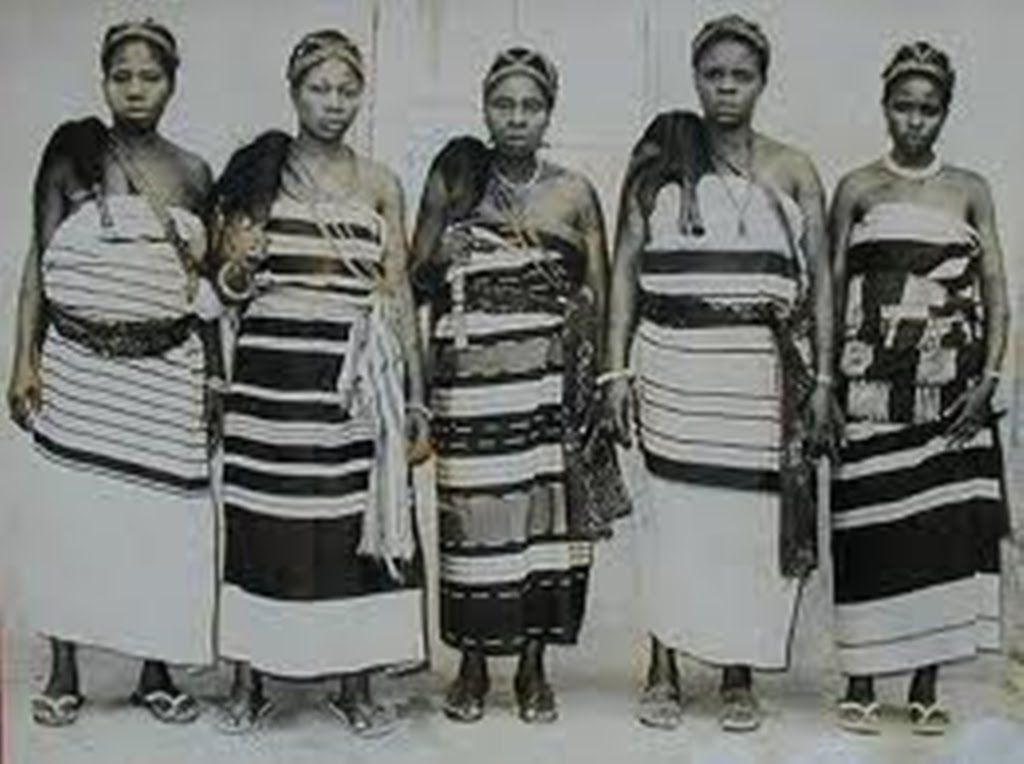
Among the Igbo of present-day Nigeria, the concept of "female husbands" was documented — women who, under specific social circumstances, could take on the social and legal role of a husband. This was the custom.
The Akan of Ghana structured power and inheritance through matrilineal lines, giving women forms of social authority that colonial administrators found so confusing they actively tried to dismantle them.

Social Insight
Navigate the Rhythms of African Communities
Bold Conversations. Real Impact. True Narratives.
The Dagaaba people of Ghana recognised a third gender category altogether and gender allocation is based on energy.
What colonialism did, deliberately and systematically, was import a rigid Victorian binary and impose it as the "civilised" standard.
Missionaries, colonial law, and Western education did not just change religion and language. They restructured gender.
The construct most of the modern world now lives inside is, in large part, a colonial export. Which means that in many African contexts, what looks like a "progressive modern idea" about gender fluidity is actually a recovery of something older.

Part Three — The Biologist's Objection
At this point, someone always raises their hand. But what about biology? And this is a legitimate question.

Evolutionary psychology argues that some of what we call gender are just real biological variations like differences in hormone profiles, neurological development, and certain statistical tendencies across large populations.
The argument is not that everything is natural, but that the construct sits on top of something real, which is what makes it so hard to separate.
The honest answer is: both things are true, and they are in tension.
There are biological differences between people that societies have held onto, exaggerated, and built entire systems of meaning around.
The leap from "some statistical variation exists" to "women are naturally suited to caregiving and men to leadership" is enormous and that leap is the construct.
Biology gives you a raw material. Culture decides what to build with it, and who benefits from the building.
Part Four — Why We Can't Just Leave
So if we know all this, why are we still in it? Because constructs don't disappear when you understand them intellectually.
The philosopher, Judith Butler, spent decades explaining that gender is not something you have, it is something you do, a performance you repeat so constantly it starts to feel like identity. And the penalties for not performing it are real. We are talking of social exclusion, economic consequence, violence.

People are not choosing to stay inside a cage because they are naive. They are making rational decisions under irrational conditions.
Also, the economic and institutional infrastructure built around gender is still completely intact. Wage gaps, care work distribution, legal systems and even if every individual woke up tomorrow with perfectly fluid ideas about gender, the material architecture would still sort people into categories because it needs to in order to function.
Social Insight
Navigate the Rhythms of African Communities
Bold Conversations. Real Impact. True Narratives.
Changing minds is necessary but not sufficient.
The Part We're Living Through Now
What makes this moment unusual is that the construct is being renegotiated in real time. But the backlash is equally real, because constructs that organise labour, power, and inheritance don't get renegotiated without a fight.
The question "who built gender?" does not have a singular villain. It has a system, assembled by many hands, over centuries, because it served interests that were rarely named honestly.
Understanding that doesn't free you automatically. But it does something almost as important: it shows you that the walls are not natural. They were put there. And what humans build, humans can, slowly, imperfectly and collectively rebuild it.
The house is real but the architecture is not sacred. That is why we start from the foundation

.