What’s Really in Your Pepper? FIIRO Warns of Toxic Grinding Machines
Heavy metals from common market grinding machines may be entering everyday meals, with FIIRO linking the exposure to rising cases of organ failure and heart disease. This is what you need to know about the hidden risks in Nigeria’s food chain.
Nigeria’s public health crisis is often narrated through familiar themes: sugar-heavy diets, sedentary living, rising obesity, genetic predisposition. Yet an industrial variable embedded in everyday food preparation is now demanding attention.
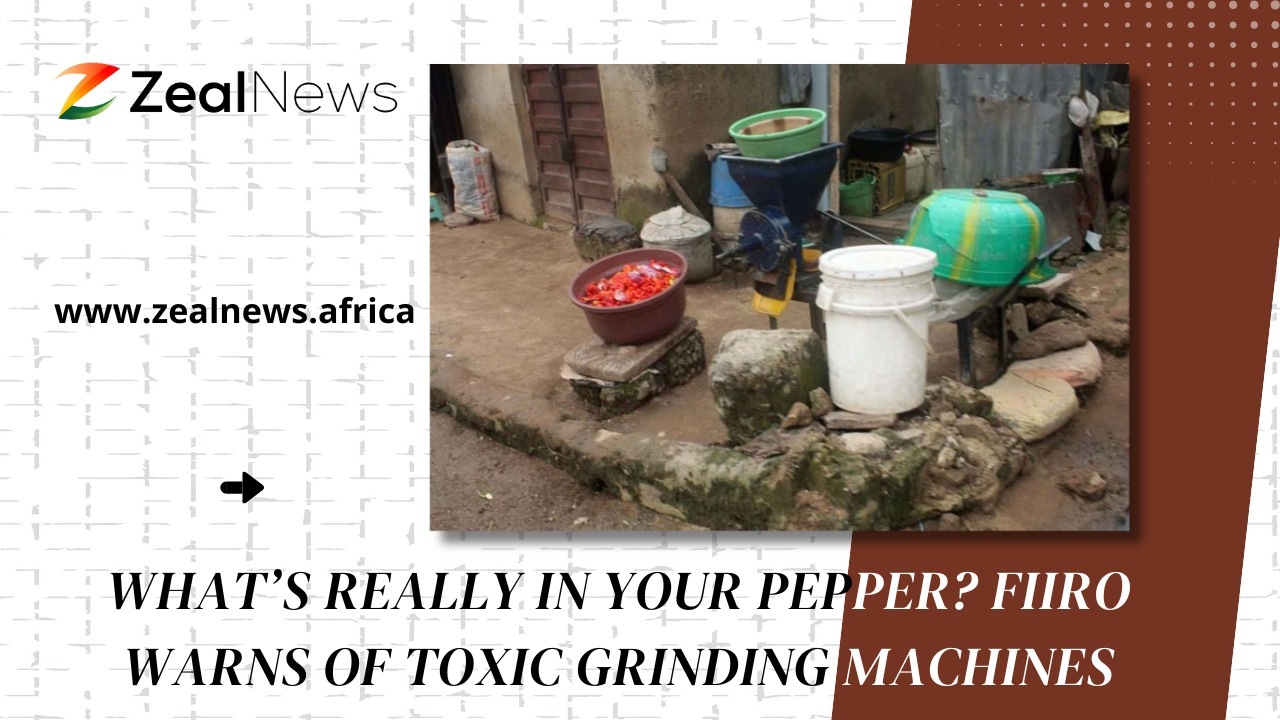
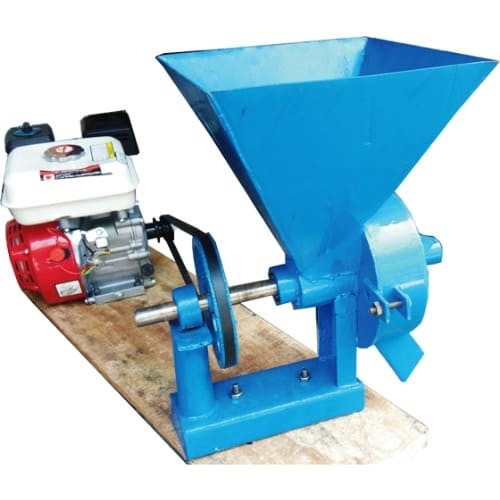
The Federal Institute of Industrial Research, Oshodi (FIIRO) has raised concerns that certain locally fabricated grinding machines, known as “ERO” by the yoruba tribe, used across markets and small food-processing hubs may be introducing toxic metals into food.
According to the institute , prolonged exposure through daily consumption could be contributing to increasing cases of organ failure and cardiovascular diseases.
This warning reframes a national conversation. It suggests that public health may be shaped not only by what Nigerians eat, but by what their food touches before it reaches the plate.
The Silent Contaminants in Everyday Meals
In a scientific assessment conducted in 2013, FIIRO researchers examined grinding machines commonly used to process tomatoes, peppers, onions, and melon seeds in Lagos, and every other place in Nigeria.
Laboratory analysis detected traces of heavy metals including lead, cadmium, chromium, nickel, copper, and manganese. Non-heavy metals such as iron, zinc, calcium, and magnesium were also present.
The presence of metals alone does not automatically signal danger. The critical factors are concentration, frequency of exposure, and what scientists term “bioaccumulation.”
Bioaccumulation refers to the gradual buildup of substances in body tissues when they are absorbed faster than they can be excreted. Heavy metals are particularly concerning because they are non-degradable and persistent.
According to FIIRO, contamination levels in some cases exceeded safety thresholds established by the World Health Organization and the Food and Agriculture Organization.
These standards are designed to define tolerable exposure limits. When levels surpass them, the issue shifts from incidental contamination to structural risk.
The troubling reality is that contamination is invisible. The pepper remains bright. The soup tastes unchanged. There is no sensory warning. The risk operates at the microscopic level.
How Locally Fabricated Machines Become Risk Factors
Many grinding machines used in open markets are built from mixed metal components, sometimes incorporating recycled or scrap alloys not certified for food contact.
Under constant friction, moisture, and heat, especially when grinding acidic foods like tomatoes, metal surfaces can corrode or release microscopic particles into the mixture.
This process does not produce dramatic poisoning. It produces accumulation.
Heavy metals such as lead have been linked to hypertension and vascular damage. Cadmium exposure is associated with kidney dysfunction and bone fragility.
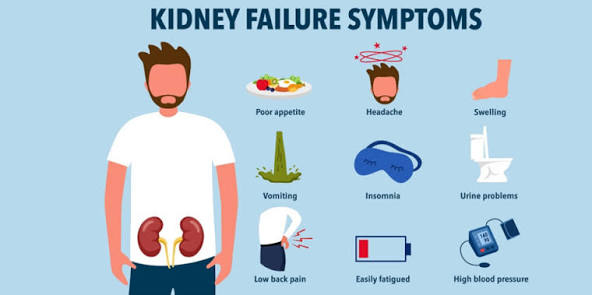
Chromium and nickel, depending on form and dosage, may contribute to cellular stress. These effects do not appear overnight. They develop slowly, compounding other health vulnerabilities.
Urban environments may intensify the problem. Areas with heavy traffic and industrial emissions already experience elevated environmental metal presence.
When grinding machines operate in such contexts without food-grade safeguards, cumulative exposure becomes plausible.

A single machine in a busy Lagos market can process hundreds of portions daily. Over months and years, that exposure multiplies across communities.
Innovation, Regulation, and the Way Forward
In response to its findings, FIIRO has designed a stainless-steel pepper grinding machine aimed at minimizing contamination risks. Properly graded stainless steel resists corrosion and significantly reduces metal leaching when exposed to acidic foods.
The institute has indicated plans to collaborate with policymakers and stakeholders to promote safer alternatives through mass production and structured distribution.
Grinding machines are ordinary objects in Nigerian markets. Yet their composition may have extraordinary implications.
If reform follows research, this moment could mark a decisive shift in food safety governance. If not, the consequences will remain subtle but cumulative, measured not in headlines, but in hospital wards years later.