Inter Vs Barca: What’s Next For Referee Marciniak After Allegations?
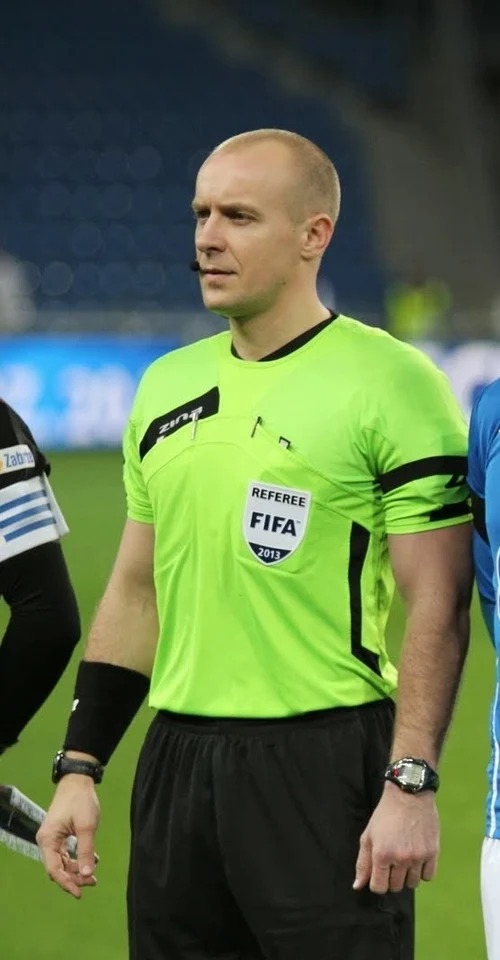
The final whistle had barely pierced the Milan night air when news reports began flooding in. Inter Milan had clinched a dramatic 4–3 victory over Barcelona after extra time, edging through to the Champions League final with a narrow 7–6 aggregate. But beneath the roar of celebration and heartbreak, another story was quietly unfolding — one that could alter the course of referee Szymon Marciniak’s distinguished career.
Author: Ibukun-Oluwa E. Addy
The final whistle had barely pierced the Milan night air when news reports began flooding in. Inter Milan had clinched a dramatic 4–3 victory over Barcelona after extra time, edging through to the Champions League final with a narrow 7–6 aggregate. But beneath the roar of celebration and heartbreak, another story was quietly unfolding — one that could alter the course of referee Szymon Marciniak’s distinguished career.
The Inter–Barcelona semi-final was always going to be high-stakes. But Marciniak’s actions during the match ignited an internet firestorm, and a shocking escalation into formal UEFA investigation requests.
Who is Szymon Marciniak?
Szymon Marciniak began his football journey at the age of 15. However, at 21, he traded his boots for a whistle and transitioned into refereeing. By 2009, he had risen to officiate in the Ekstraklasa (Poland’s top league), and in 2011, he was recognized by FIFA as an international referee. Over his career, Marciniak has officiated over 300 matches in the Ekstraklasa and 47+ UEFA Champions League games, issuing approximately 1,200 yellow cards, 79 red cards, and 131 penalties.
Decorated with honours like the IFFHS World’s Best Referee in 2022 and 2023, Marciniak has remained mainly uncontroversial, until now.
Partiality and Favouritism in Milan?
Barcelona’s coach, Hansi Flick, has expressed his frustration with the just concluded Inter-Barcelona match. His criticism was aimed squarely at Marciniak, who awarded Inter Milan a penalty after consulting with the video assistant referee (VAR). Spectators found the decision particularly baffling, noting that such penalties are typically given in real time — not after a delayed review.
Marciniak had also reversed a penalty decision that had originally been given to Barcelona. More so, Flick pointed out that Inter’s Henrikh Mkhitaryan should have been shown a second yellow card — an action that would have led to his dismissal from the match. However, no such card was issued.
Citing these events, Barcelona has formally requested that UEFA launch an investigation into referee Szymon Marciniak’s performance.
In Inter’s defense, club officials maintained that the decisions were in line with VAR protocols and that the penalty awarded to Lautaro Martínez was justified based on contact initiated by Jules Koundé, which impeded a clear goal-scoring opportunity. They also argued that the reversal of Barcelona’s penalty was the correct outcome after closer inspection revealed minimal contact on João Félix.
Regarding the Mkhitaryan incident, Inter stated that while the challenge on Gavi was late, it did not warrant a second yellow under the context and flow of the match. Inter has since called for calm, emphasizing respect for officiating standards and urging both clubs to focus on the competition ahead rather than officiating controversies.
A Pattern, or a Coincidence?
This isn’t the first time Marciniak has been in the spotlight — for the wrong reasons. Just last year, in the Real Madrid vs Bayern Munich semi final, a controversial offside call overturned a crucial Bayern equalizer. UEFA, in response, reportedly removed him from officiating the Euro 2024 opener.
So....What’s Next for everyone?
Take Tom Henning Øvrebø, for example. In 2009, he oversaw the infamous Chelsea vs Barcelona semi-final, where he denied Chelsea multiple penalty claims. The backlash was so intense that he never officiated a Champions League semifinal again.
With UEFA’s investigation pending and public scrutiny at its peak, Marciniak’s future at the summit of refereeing is uncertain. Will he be entrusted with officiating the Champions League Final once again, or will UEFA choose a less controversial figure to restore calm?
Adding fuel to the fire is growing speculation about the possibility of a rematch — an unprecedented move at this level, but not entirely without precedent.
In 2005, FIFA ordered a full replay of a World Cup qualifier between Uzbekistan and Bahrain after a referee incorrectly applied the rules during a penalty decision.

While such actions are rare, they underscore that governing bodies can intervene decisively when officiating errors are deemed to have materially impacted the outcome of a match.