An AI Data Center Secretly Drained 29 Million Gallons of Water Over 15 Months. How Did This Happen?
A Blackstone-owned data center used 29 million gallons of water nobody was tracking, in a state under drought emergency, while residents were told to conserve due to the drought situation. The county's response was a retroactive bill and a comment about partnership; no fines and no penalties.
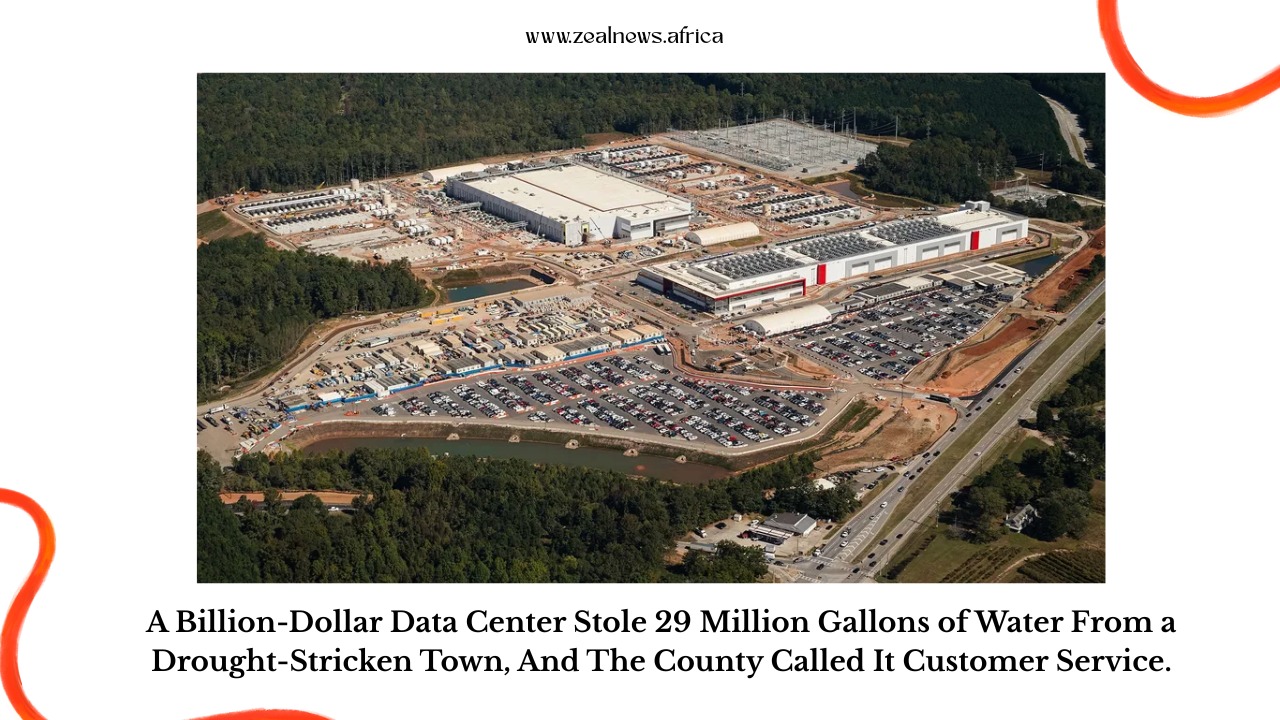
James Clifton is an attorney, and he knows how to read a letter. So when the Fayette County water system sent one to Quality Technology Services in May 2025, telling the company it owed $147,474 for 29 mill ion gallons of water it had used without being billed, he read it carefully, posted it on Facebook, and Fayetteville, Georgia, had its reckoning.
The story started the way these things usually do, with something small and annoying. Residents of Annelise Park, an upscale subdivision in Fayetteville, started noticing their water pressure was lower than usual.
County investigators traced the problem to a nearby data center campus operated by Quality Technology Services, where two high-capacity water connections had not been properly monitored. One was installed without the utility's knowledge, and the other was not tied to a billing account at all.
Nobody knew the water was leaving. Nobody was tracking it. And while it was being taken, county officials were doing what governments do when there is not enough of something: they were telling residents to stop watering their lawns.
29 Million Gallons, Zero Fines.
All told, QTS used more than 29 million gallons of unaccounted-for water, far exceeding the peak limit the company agreed to during the data center planning process.
To be clear about the scale of that number, 29 million gallons is not a rounding error or a billing technicality. It is a year or more of unmonitored industrial-scale water consumption, drawn from a county that was actively managing a shortage.
QTS is not a small operation either. The company is owned by Blackstone, and its Fayetteville campus, which is 615 acres, codenamed Project Excalibur, is among the largest data center developments in the country, with an expected investment of up to $1 billion.
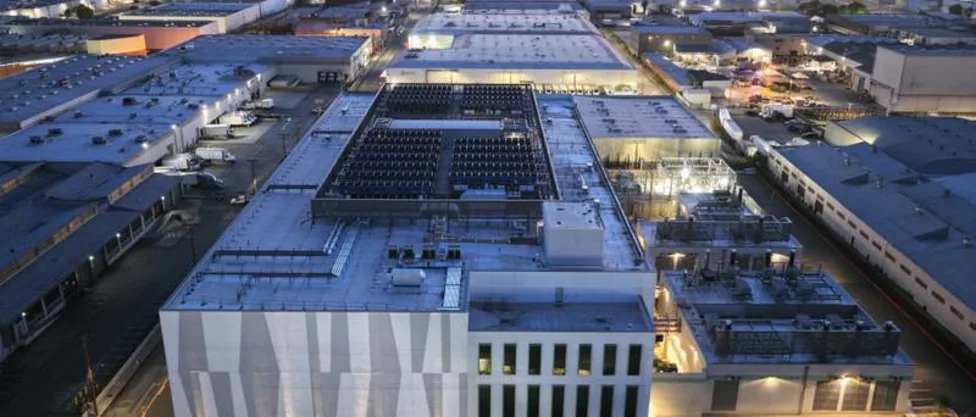
The county did not fine QTS beyond the retroactive charge of $147,474, a figure that Gregory Pierce, director of the UCLA Water Resources Group, described as unusual given that no financial penalty was levied at all.
The county's explanation was not unusual. It was, in fact, the oldest reason in the world. Vanessa Tigert, director of the Fayette County water system, said that "they're our largest customer, and we have to be partners. It's called customer service."
Customer service, for a company that pulled 29 million gallons through connections the county did not know existed, in a state under active drought, while residents were being asked to let their grass die.
How 29 Million Gallons Disappeared Without Anyone Noticing
The technical explanation involves two things that have no business being in the same story: a billion-dollar facility and a one-person inspection team. Tigert told Politico that her department is understaffed and stretched, that "I've got one person that's doing inspections and plan review, and so he's spread pretty thin."
The connections slipped through during the county's transition to a cloud-based metering system, and QTS has since said the unmetered usage coincided with that transition and that its meters are now fully integrated.
How long did this actually go on? That depends entirely on who you ask. Tigert estimated about four months, while QTS said the figure was somewhere between nine and fifteen months, which is not a minor discrepancy. That gap is the difference between a short administrative oversight and more than a year of a billion-dollar company drawing water from a drought-stricken county with nobody watching.
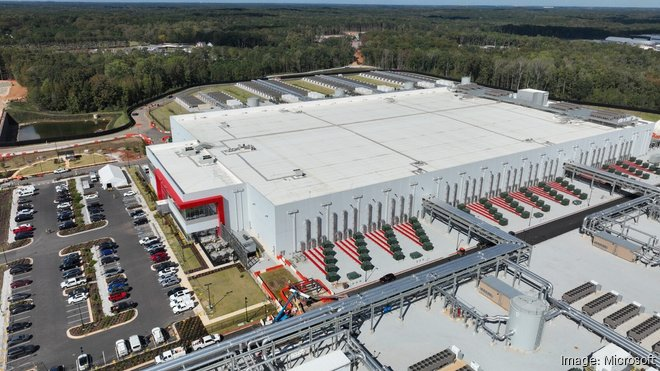
QTS maintains that all of it was construction-related, covering things like concrete work, dust control, and site preparation, and the company says that once the campus is fully operational, its closed-loop cooling system will limit long-term water use to roughly what four US households consume per month.
Latest Tech News
Decode Africa's Digital Transformation
From Startups to Fintech Hubs - We Cover It All.
That may well be true, but it still does not explain the unauthorised connections, or why the county's largest commercial water consumer was running off lines that were not properly registered or billed, or why the response to any of it was a retroactive invoice and a statement about partnership.
What the Rest of the County Has to Say About That
James Clifton was not subtle about any of it. "We get this notification from Fayette County water system saying you need to stop watering your lawns to help conserve water,"he said.
"so the first thing they do is lean on the individuals and the citizens to stop water consumption when we have QTS that's just absolutely draining us. Most months it's the number one consumer of water in the county."
He is running for a seat on the Fayette County Board of Commissioners, and while the water letter was not why he entered the race, it might very well be what wins it.
Because at its core, this is not really a story about a metering error. It is a story about who gets asked to sacrifice and who gets called a partner. Residents of Annelise Park got a conservation notice. QTS got a retroactive bill and a phone call about customer relations.

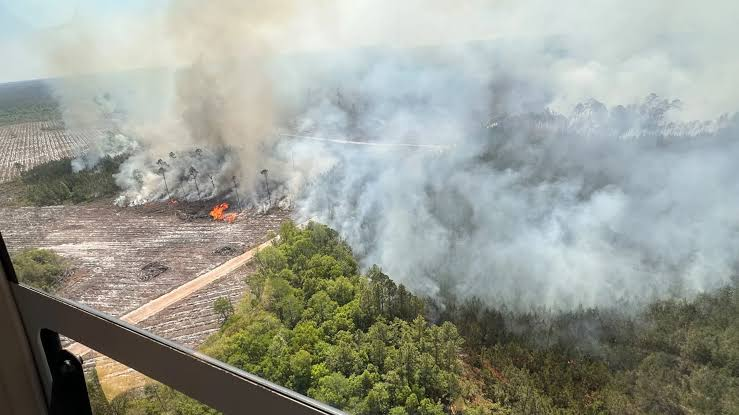
Georgia is currently experiencing moderate to high drought levels, and Governor Brian Kemp declared a state of emergency last month in response to one of the state's worst wildfire outbreaks in years.
Water is not an abstract resource in Fayette County right now. It is actively scarce, being managed by a department with one person doing two jobs, in a county where a billion-dollar campus was drawing from connections nobody was watching.
The Bigger Picture Nobody in the Industry Wants to Talk About
Fayetteville is not an isolated case. It is one of at least 50 cities across the US with active bans on new data center construction, with four adopting permanent prohibitions, and the Fayetteville City Council voted last month to ban new data centers across every zoning district in the city. The economic argument for hosting them is real, and county officials say the QTS campus alone could generate tens of millions of dollars in annual property tax revenue that funds public services. Nobody is pretending the county does not need that money.
But the cost side of that equation keeps growing in ways that are hard to ignore. A January 2026 report by Bloom Energy projects that US data center energy demand will nearly double between 2025 and 2028, jumping from 80 to 150 gigawatts.
Residential electricity prices have already risen 7.1 percent, more than double the inflation rate, topping 20 percent in some states, and areas with high concentrations of data centers saw electricity prices jump 267 percent over the past five years.
Georgia's Public Service Commission froze Georgia Power's base rates through 2028 specifically to stop data centers from pushing those costs onto residential customers, but the water system has no equivalent protection.
What it has instead is one inspector, a metering gap that let 29 million gallons walk out the door unnoticed, and a utility director explaining the absence of penalties by citing customer service. QTS paid its $147,474, construction on the campus continues, and it will almost certainly become the county's largest taxpayer.
will also remain the county's largest water consumer, in a state under drought emergency, overseen by a utility that has already demonstrated it does not have the staff to monitor what it is responsible for.
Clifton posted the letter. Fayetteville banned new data centers. The rest of Georgia is watching, and the AI industry is still thirsty.