You Said You Don't Do Politics. But Politics Is Doing You
If you think politics doesn’t affect you? Then please, think again. Every unpaid bill, every fuel hike, every school fee increase traces back to elections you skipped. Here’s why showing up and voting is the only way to reclaim your power.
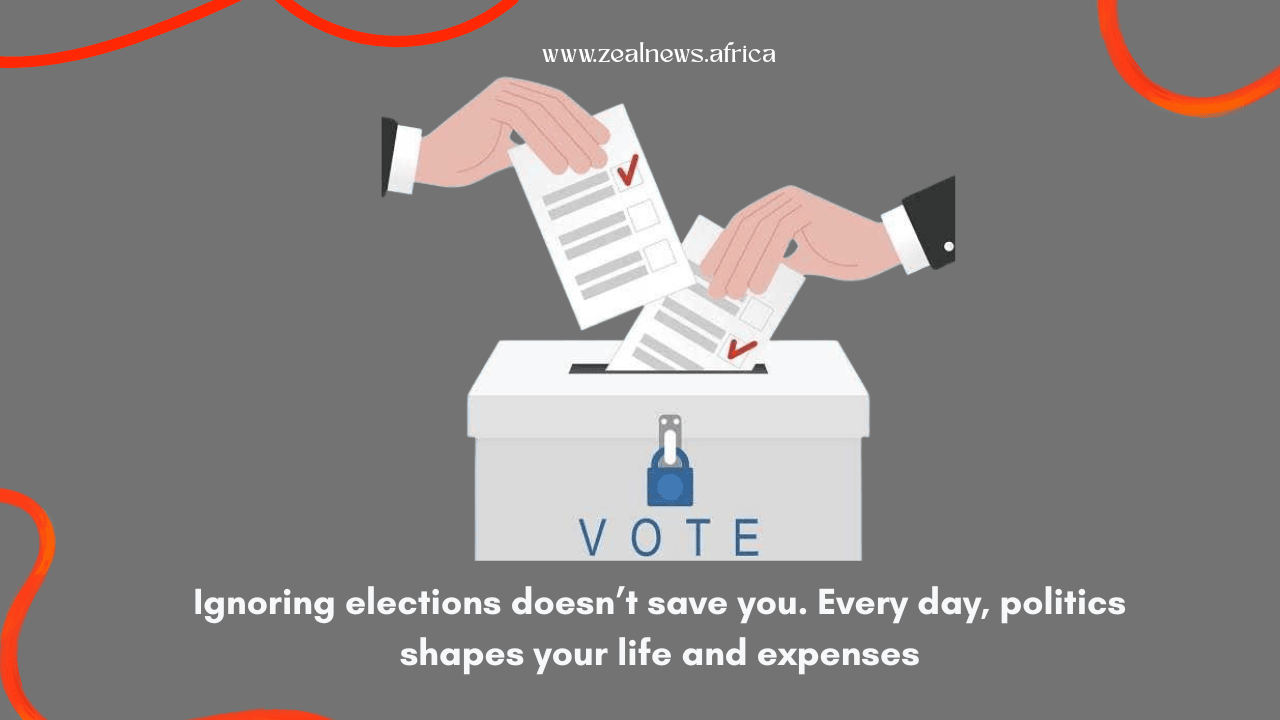
There is a particular kind of person in Nigeria who wears their political apathy like a badge of honour. You know them. You might even be them. They are the ones who say, with complete confidence, sometimes even a little pride, "I don't do politics. That thing is dirty. I just face my hustle."
And then they go home. Past the pothole that has swallowed three tyres this year. They stop at a petrol station and join a queue that stretches around the block. They buy tomatoes at a price that makes them do a quiet calculation in their head.
They check their electricity; still not back. They wonder, briefly, why their cousin who graduated two years ago still cannot find a job. And then they sleep, wake up, and repeat it all again tomorrow.
Without ever connecting any of it to politics.
This is not just irony. It is one of the most expensive misunderstandings in Nigeria today.
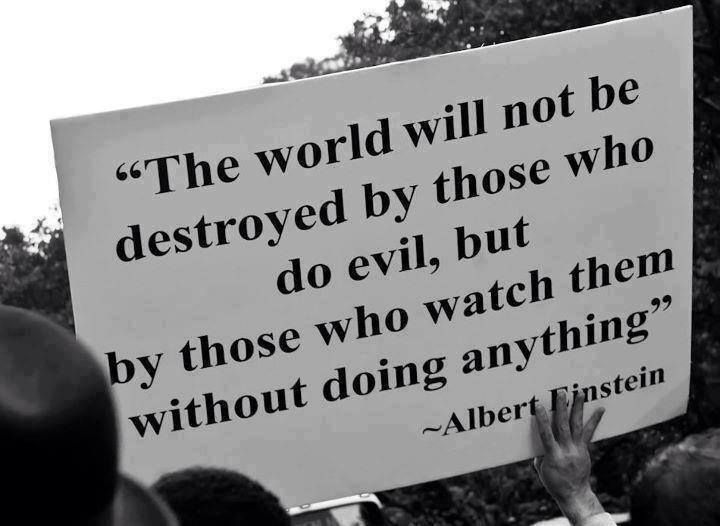
The Myth of Opting Out
Let us be precise about what political apathy actually means in practice, because the language around it is dangerously comfortable. When a Nigerian says "I don't do politics," what they are functionally saying is: I will allow other people to make decisions that govern every dimension of my life, and then live with those decisions without complaint or participation.
That is not neutrality. That is surrender with extra steps.
Politics is not something that happens in Abuja and stays there. It travels. It comes down through federal budgets and state allocations and local government neglect and lands, with full force, in your kitchen, your child's classroom, your hospital waiting room, and your monthly bank balance.
The person who decided not to vote did not escape politics. They simply handed their share of decision-making power to someone else, and that someone else used it, enthusiastically, in their own interest.
You opted out. The consequences opted in anyway.
The Day-to-Day Bill Nobody Told You Was Political
Let us make this concrete. Let us follow one ordinary Nigerian through one ordinary day and count the political decisions embedded in it.
You wake up and there is no light. That is electricity policy, decades of mismanaged infrastructure, corruption in the power sector, and a regulatory environment that has kept Nigeria's grid among the weakest on the continent despite billions spent. You did not vote. The person who determined that policy did.
You buy fuel. The price you are paying today, the one that has quietly restructured your entire budget, is a direct consequence of the fuel subsidy removal, a policy decision made by an elected government.
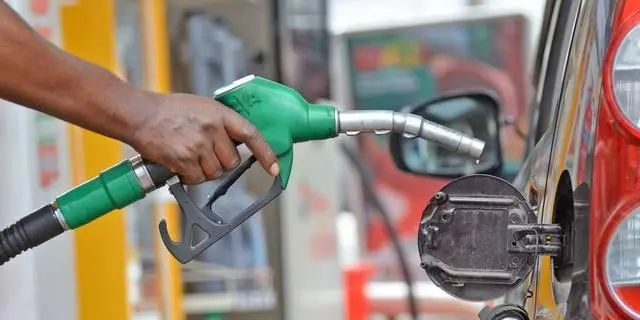
Whether that decision was right or wrong is a separate argument. The point is that it was made by people who got into office through an election. An election where millions of eligible Nigerians stayed home.
Your child's school fees went up. Why? Because when government schools are underfunded — a budgetary decision made by elected officials — private schools absorb the demand and charge accordingly. You pay. You always pay. The only question is whether you had any say in who set the budget.
You go to a hospital. The drugs are unavailable or unaffordable. The doctor is overworked because half his colleagues have japa'd to the UK and Canada, fleeing a healthcare system that successive elected governments have chronically underfunded. You lie on that hospital bed and politics is in the room with you, whether you invited it or not.
This is not a list of complaints. It is a map. Every single point on it traces back to a policy. Every policy traces back to a government. Every government traces back to an election. And every election is shaped, decisively, by who shows up.
The Dirty Game Argument, And Why It Does Not Hold
The most honest version of Nigerian political apathy is not laziness. It is exhaustion. It is the weariness of a generation that watched the 2023 elections with real hope, queued for hours, carried their PVCs, defended their votes online, and then watched results that felt like a betrayal of everything they had invested emotionally and physically.
The cynicism that followed was not irrational. It was a reasonable response to a painful experience.

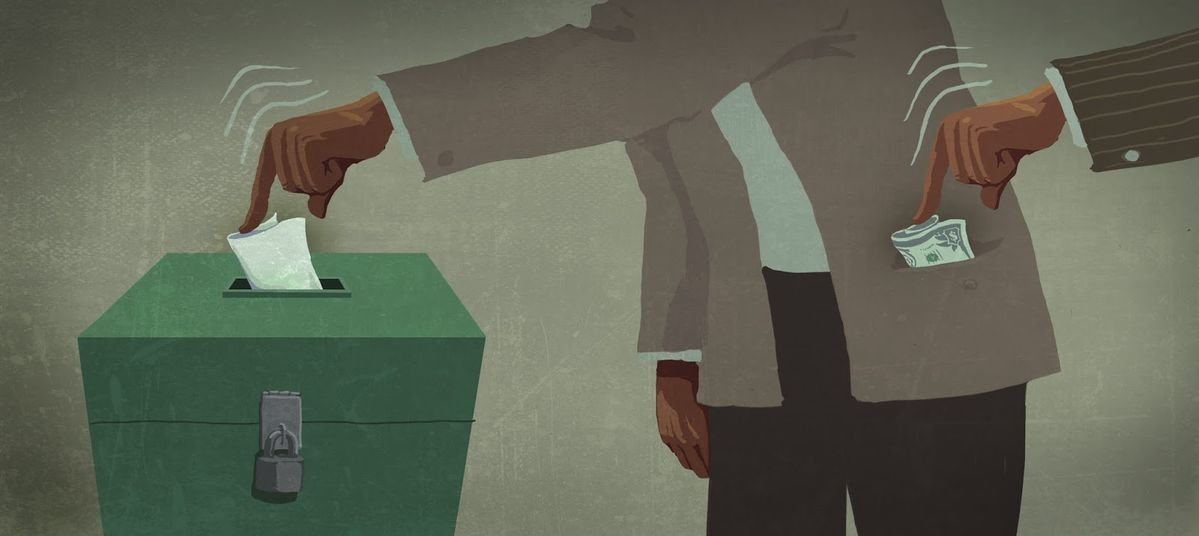
But here is where the argument breaks down. The response to a compromised system is not to abandon it to the people who are compromising it. That is precisely what they are counting on. Low voter turnout is not a protest. It is a gift to the powerful.
When the educated, the aware, the connected, and the frustrated all stay home, the electorate that remains is smaller, easier to manipulate, and cheaper to influence. Your absence does not send a message. It sends an opportunity.
The system is dirty. That is true. The solution to a dirty system is not to leave it entirely to the people who made it dirty and are benefiting from keeping it that way.
What Your Vote Actually Is
Strip away every piece of political theatre — the rallies, the jingles, the endless drama — and a vote is a very simple thing. It is the one moment in a democracy where a market woman in Onitsha and a senator's son in Maitama have identical power. One person. One vote. The senator cannot buy two. The market woman cannot be given zero.
That equality is fragile. It only exists if you use it. The moment you decide your vote does not matter, you have voluntarily made yourself unequal, and the system will treat you accordingly, for the full duration of that government's tenure.
Your fuel price does not care that you stayed home. Your rent does not care. Your child's WAEC result does not care. They are all shaped by governance, and governance is shaped by elections, and elections are shaped by the people who bother to show up.

Show Up
Nigeria's next electoral cycle is coming. It always comes. And the same choices will be on the table, not just between candidates, but between participation and abdication.
You are already paying the price of bad governance. The only question left is whether you will have had any say in it.
Register. Collect your PVC. Show up.
Because the alternative; the "I don't do politics" alternative has a price too. You have been paying it every single day. You just never saw the invoice.