Unpacking 'Clout Chasing': The Internet Term Taking Over Celebrity Buzz!
Discover the phenomenon of "clout chasing," a modern internet term describing the pursuit of online attention and fame. This article explores its meaning, common examples, and why social media inherently encourages such behavior in the digital age.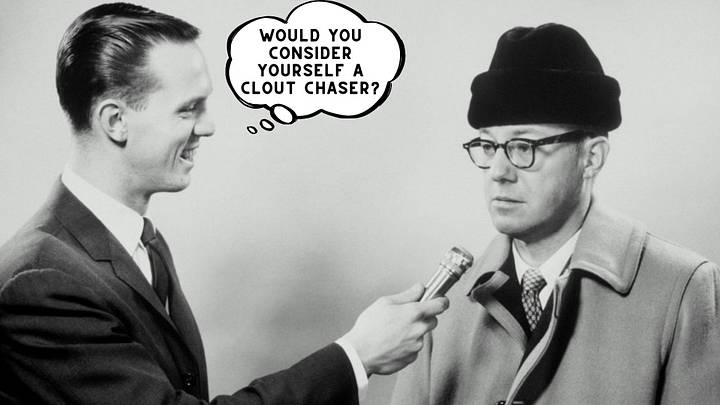
In the evolving landscape of the 21st century, a new social phenomenon has emerged as a primary pursuit for many online: "clout." The term "clout chasing" has become a prevalent, often derisive, accusation leveled at individuals whose actions are perceived to be motivated solely by the desire for attention, popularity, influence, or online fame. While being labeled a "clout chaser" typically carries a negative connotation and can be embarrassing, understanding its meaning reveals much about contemporary internet culture.
At its core, clout chasing refers to the act of engaging in behaviors primarily aimed at gaining notoriety or a higher profile on social media. The word "clout" itself signifies power and influence, particularly within digital spheres. When combined with "chasing," it vividly paints a picture of someone relentlessly pursuing internet relevance, akin to a frantic sprint for the last coveted item. This term is almost universally negative and is frequently invoked when an individual appears to strategically align themselves with a celebrity, a trending topic, a public controversy, or a viral moment, solely to boost their follower count or general visibility.
Examples of clout chasing abound in the digital realm. This might include an influencer staging artificial drama to inflate their view counts, or someone suddenly becoming overtly friendly with a famous content creator the moment a camera is present. Such actions are typically seen as a desperate attempt to garner attention that the individual is perceived as unable to attract authentically. However, the application of the phrase online is often casual; sometimes individuals are genuinely networking or promoting themselves, while other times their behavior undeniably resembles an audition for a reality show. The online community frequently weighs in to distinguish between these scenarios.
The phrase "clout chasing" is versatile, fitting seamlessly into both informal conversations and online commentary. It can be used playfully, sarcastically, or with a hint of judgment, often simultaneously. For instance, one might say, "He started beef with that singer for attention. Total clout chaser," or "Every time there’s a viral trend, she jumps on it immediately. People say she’s clout chasing." It can function as a noun, as in "that’s clout chasing," or describe an individual as a "clout chaser." Regardless of its grammatical application, the underlying message is clear: someone is seeking attention, and observers are keenly aware of it. Interestingly, the phrase has permeated internet lexicon to such an extent that people sometimes use it humorously to describe their own self-promotional efforts, indicating a degree of self-awareness.
Paradoxically, the very structure of social media platforms inherently encourages the behavior labeled as clout chasing. These applications are designed to reward attention, which in turn leads to increased followers, ultimately translating into greater influence. Thus, while "clout chasing" serves as a criticism, it also reflects a fundamental and often confounding reality of modern internet culture, where the pursuit of digital visibility is deeply embedded in the system.