Ray Gunn Unleashes Bizarre Zootopia Metaphors
"Ray Gunn," Brad Bird's animated return, presents a visually stunning retrofuture world and a hardboiled detective story, but struggles with its confounding plot and a shallow, inconsistently portrayed segregation metaphor involving its alien population. The film dazzles visually but falters in narrative depth and character development.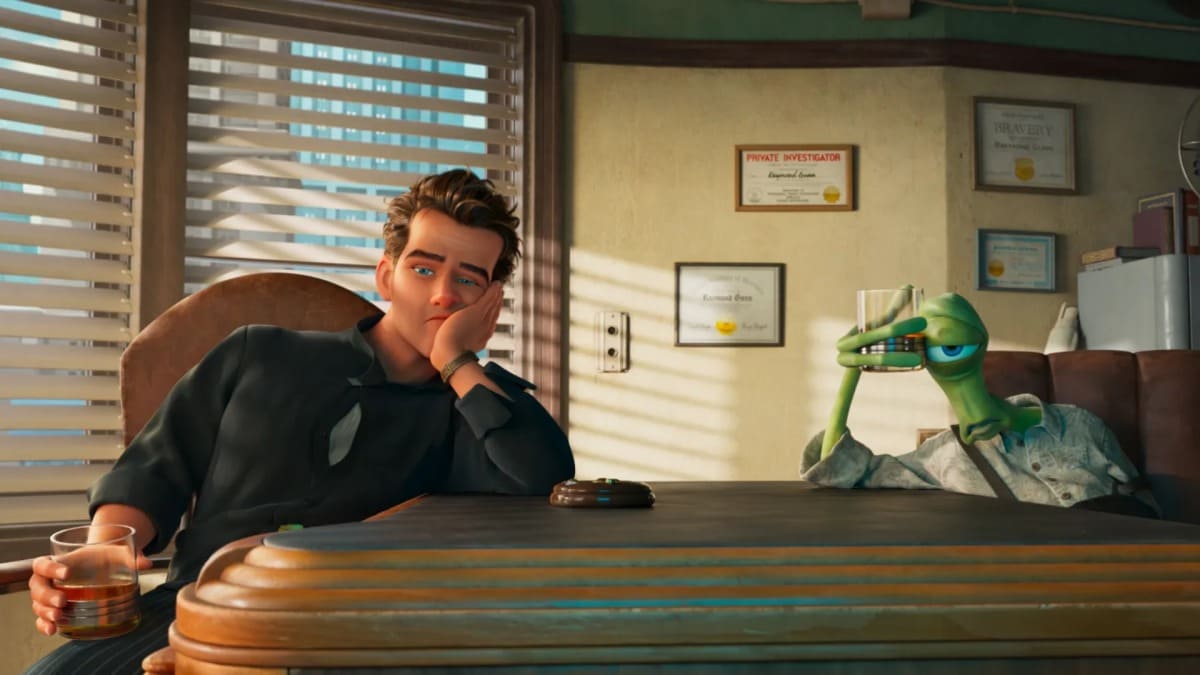
Filmmaker Brad Bird makes his highly anticipated return to animation with "Ray Gunn," a Netflix-produced feature that blends imaginative action with confounding plotting and shallow metaphors. Known for acclaimed works like "The Iron Giant," "The Incredibles," and "Ratatouille," Bird tackles a more mature approach to his CG-rendered human characters, primarily focusing on a hardboiled detective and a short-tempered femme fatale.
The film's visual appeal is undeniable, presenting an immaculately designed metropolis steeped in "dazzling, mid-century retrofuture designs with distinctly modern concerns." Bird skillfully combines an era of promise with technology gone awry, creating a dreamlike aesthetic. Art deco buildings are complemented by futuristic elements such as rent-a-jetpack stands, akin to modern bike-sharing systems, and intrusive holographic personalized advertising. These holograms often feature the world-famous pop star, Venus Nova (voiced by Scarlett Johansson), who gradually becomes entangled in the central narrative.
The plot kicks off when the "discreet" private eye Raymond Gunn (voiced by Sam Rockwell), a morally gray protagonist, is hired to steal information from a former associate. This initial assignment vaguely connects to forging documents for extra-terrestrials, whom Gunn disparagingly refers to as "illegals"—a term laden with heavy, ugly implications in the context of immigration metaphors. While Gunn is established as an antihero, this particular notion remains largely unchallenged as the forgery subplot soon subsides, leaving the metaphorical depth unexplored.
Despite Rockwell's grizzled antihero being at the center of the action, he often proves to be the least engaging character, lacking charisma, memorable quips, or consistent characterization. Much more captivating is his one-eyed, green-skinned alien associate, Eyera (voiced by Tom Waits). Eyera, a biomechanical being capable of snapping photographs with his cycloptic gaze, embodies a "Eh, it’s a living" disposition, bringing humor and a desire for ethical improvements to their morally ambiguous line of work. His appearance, resembling a stretched-out Mike Wazowski from "Monsters Inc.," is one of several character designs that evoke a sense of familiarity, which isn't necessarily a detriment to the film.
The supporting alien cast, while visually creative, serves primarily to underpin a "half-baked segregation parable." Examples include a middle-aged alien business magnate, whose design is a cross between "Monsters Inc.'s" Roz and Henry J. Waternoose, desperately trying to conform to human standards by tucking her extra appendages into a two-armed suit. However, details concerning how aliens assimilate into human society, and the broader worldbuilding, are frequently sidelined until late in the two-hour runtime, a recurring issue throughout the film.
"Ray Gunn" grapples with platitudes about immigrant extra-terrestrials as an underclass and victims of apartheid, but this theme is portrayed unevenly. Sometimes aliens are denied medical treatment based on their appearance, while at other times they appear to be fully integrated members of society without question. The fact that their oppression is depicted as being carried out by humans at large, including numerous Black supporting characters, creates jarring optics, particularly in conjunction with "Jim Crow-like 'no aliens allowed'" signage, undermining the film's intended social commentary.
Ultimately, while "Ray Gunn" shines with its dazzling visuals and ambitious retrofuture aesthetic, its potential is diminished by a confounding plot, inconsistent characterization, and a shallow, unevenly handled segregation metaphor that struggles to achieve its dramatic goals. The film looks like a dream, but its narrative fails to fully capitalize on its imaginative premise.