US Plans 1,500 Wireless Base Stations In Nigeria and West Africa to Push Out Chinese Telecom Giants
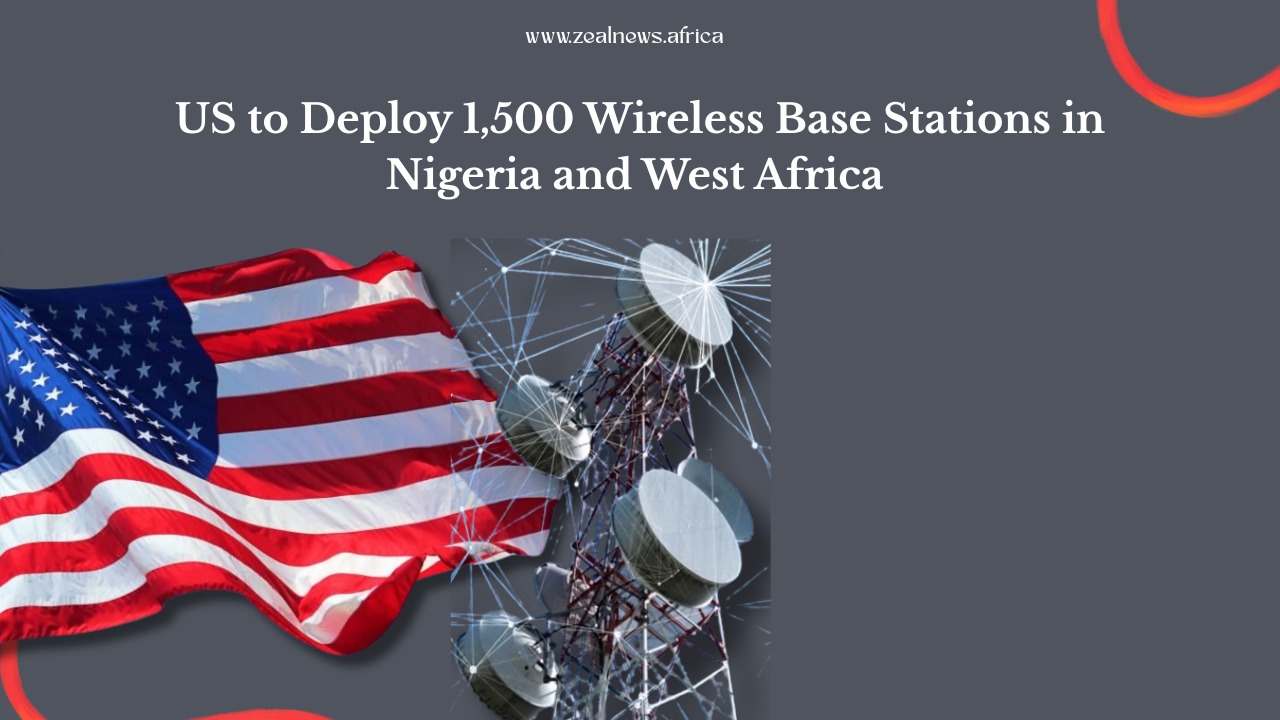
The US Trade and Development Agency has funded a feasibility study for 1,500 American-made base stations across Nigeria, Ghana, Benin, and Côte d'Ivoire. Huawei built 70 percent of Africa's 4G networks, and Washington wants that to change.
Somewhere between Lagos and the nearest functioning base station, there is a Nigerian who has never made a phone call from their own home.
Not because they cannot afford a phone. Not because they do not want one. Because the network does not reach them.
They live in the geography that every major telecom operator in Nigeria has looked at, calculated the return on investment, and quietly decided was not worth the infrastructure cost.
So they walk. To the market, to the junction, to wherever the bars appear on the screen. They conduct their lives in the gaps between coverage maps, and the digital economy everyone is building continues to be built around them rather than for them.
This is the problem America says it wants to solve in West Africa. The solution it is proposing involves 1,500 base stations, a Massachusetts company most people have never heard of, and a geopolitical objective it is not particularly trying to hide.
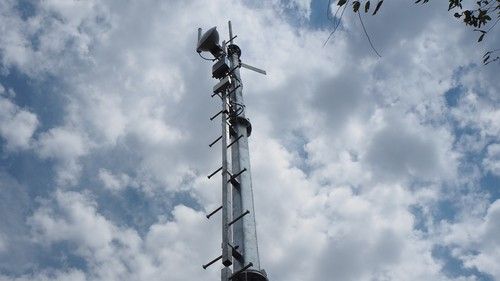
The United States Trade and Development Agency announced funding for a feasibility study to install approximately 1,500 mobile communications base stations across Nigeria, Ghana, Benin, and Côte d'Ivoire, using wireless technology developed by Vanu Inc.
The stated mission is connecting off-grid communities still running on outdated 2G and 3G networks. The unstated mission sits right beneath the surface of every official statement, barely disguised.
Washington wants its infrastructure where China's already is.
Who Built What You Are Already Using
Before this announcement means anything, you need to understand the terrain it is entering.
Fifty percent of Africa's 3G systems were built by Huawei. Another 20 to 30 percent were built by ZTE. Huawei alone built 70 percent of Africa's 4G networks.
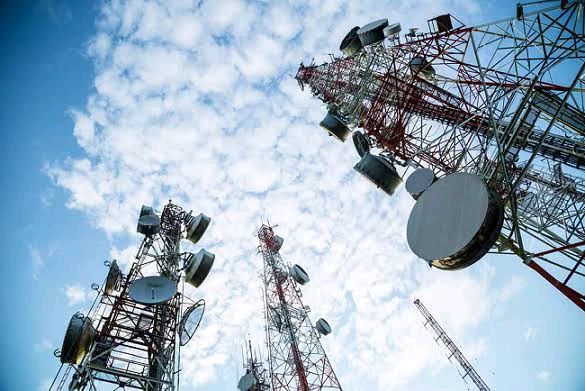
The phone call you are making right now, the data your WhatsApp message is travelling on, the mobile money transaction completing while you read this — most of it is moving through Chinese-built infrastructure.
This did not happen by accident. Huawei and ZTE arrived in Africa with a coordinated playbook: end-to-end solutions spanning network infrastructure, handset distribution, cloud services, and system integration, bundled with unusually attractive financial terms backed by state-linked financing that Western vendors simply could not match.
When European and American companies looked at rural Africa and saw risk, Chinese companies looked at the same landscape and saw a two-decade infrastructure strategy.
They won. Comprehensively. Chinese technology investments and contracts in sub-Saharan Africa totalled $7.19 billion between 2005 and 2020 alone.
Latest Tech News
Decode Africa's Digital Transformation
From Startups to Fintech Hubs - We Cover It All.
The architecture of African digital life has Beijing's fingerprints on it, and those fingerprints deepen with every new generation of technology because the infrastructure that went in first tends to determine who gets the upgrade contracts.
What Washington Is Actually Doing
"USTDA is bringing private sector solutions to unlock widespread, affordable, trusted internet access in off-grid communities across West Africa.
By helping American companies compete in these critical markets, we are offering an alternative to insecure infrastructure while creating export opportunities that make America more prosperous," USTDA Deputy Director Thomas Hardy said.
Insecure infrastructure. That is the American description of what your phone currently runs on. The allegation Washington has been making for years, and which African governments have largely declined to act on, is that Huawei's infrastructure is engineered in ways that allow Chinese state access to communications data.
African network operators are more dependent on their Chinese suppliers than service providers anywhere else in the world, given the tight financial constraints that made Chinese financing attractive in the first place.

Switching is expensive. And switching requires someone to offer something comparable at a price that works. That is what Vanu is supposed to be.
Vanu has previously deployed off-grid wireless solutions in Edo and Delta states in Nigeria, as well as in Benin, Ghana, and Côte d'Ivoire.
It is not arriving as a stranger. The feasibility study will examine existing telecommunications networks, market conditions, legal and regulatory environments, and develop financing strategies for implementation across the four countries.
This is an important context because the 1,500 base stations are not confirmed or funded for deployment yet. They are the target that depends entirely on what the feasibility study concludes. A study finding that the economics do not work could quietly end the whole initiative before a single station goes up.
The Connectivity Problem That Exists Regardless of Geopolitics
Strip away Washington versus Beijing and underneath is a problem that has nothing to do with either power and everything to do with real lives.
Millions of West Africans still depend on weak 2G and 3G services or remain completely disconnected from digital networks.
No mobile banking where there are no banks. No telemedicine where there are no hospitals. No market price information for farmers consequently at the mercy of whatever price the middleman with the truck decides to offer.
The economic cost of connectivity gaps in rural West Africa compounds daily, season after season, in every transaction that cannot happen because the network does not reach.
If Vanu's technology works at the price point required to make rural deployment commercially sustainable, the communities that benefit will not care whether the base station was made in Massachusetts or Shenzhen. They will care that the call goes through.
What West Africa Should Be Asking
The honest response to this initiative is neither enthusiasm nor suspicion alone. It is both, applied carefully.
Latest Tech News
Decode Africa's Digital Transformation
From Startups to Fintech Hubs - We Cover It All.
The connectivity need is genuine. The technological base of African nations is not simply Chinese-made. It is increasingly Chinese-shaped, embedding standards, architectures, and dependencies that will endure for decades.
Diversifying that architecture through American alternatives gives African governments more negotiating room, more leverage over their own infrastructure, and less dependence on any single foreign power's goodwill.
But the terms matter. The pricing matters. Whether the financing model that follows the feasibility study resembles the Chinese approach of accessible loans with long-term structural dependencies, or something more transparent and less entangling, matters enormously.
Vanu CEO Andrew Beard saidthe company's technology is designed to make connectivity in remote markets profitable, scalable, and sustainable for operators.
Profitable for operators. That is the frame. The question West African governments need to answer before this goes further is whether profitable for operators also means affordable for the communities those operators are supposed to serve.
America is coming to fix your internet. It wants Huawei out and American companies in. Those two things can be true at the same time as a third: rural West Africa genuinely needs better connectivity and deserves to receive it on terms that serve the people living there, not just the geopolitical scoreboard being kept thousands of miles away.
The 1,500 base stations are still a feasibility study. The people without signals are not.