Lagos Received 16 Million Fake Emergency Calls in 14 Months. Are People Aware Of Dangers Attached?
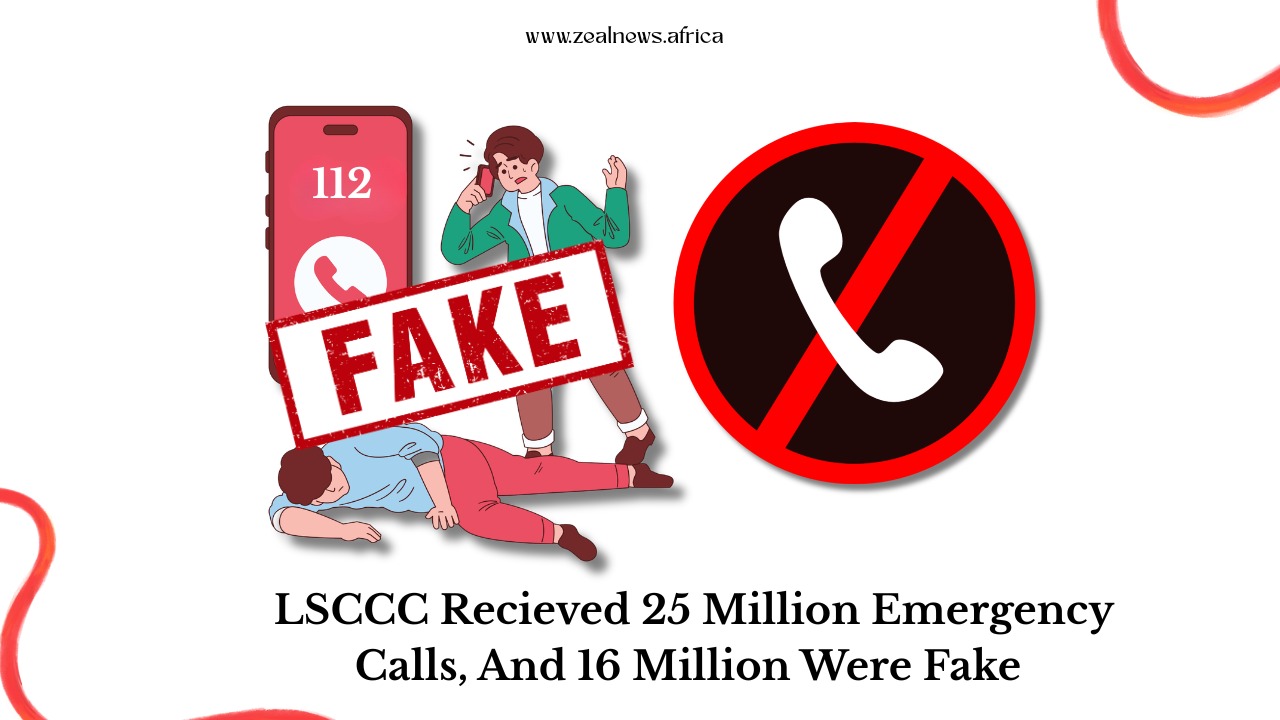
Lagos residents made 16.39 million fake emergency calls in 14 months. In the same period, 1,924 people were rescued alive from genuine emergencies. The people demanding faster response times and the people clogging the lines with pranks live in the same city.
Somewhere in Lagos last year, a building caught fire.
The people inside needed help fast. Someone called 112. The line connected. An operator picked up. What that caller could not have known is what the operator had spent the last hour doing. Or the hour before that. Or every hour of every shift since January 2025, when Lagos residents decided, in numbers that require a moment to absorb, that the emergency line was entertainment.
Between January 2025 and April 2026, the Lagos State Command and Control Centre received 24.15 million emergency calls. Of those, 16.39 million were fake. That is 67.9 percent of every call that came through a line built to save lives, swallowed by people calling to prank, to test, or simply to hang up and do it again.
Sixteen million calls. In fourteen months. From a city that loses people to fires, building collapses, and road accidents every single week.
What the Numbers Mean on the Ground
The figure is large enough to become abstract, which is exactly why it needs to be made concrete.
When a genuine call comes in, operators process and escalate the information within two minutes to the relevant agency for dispatch. But when lines are tied up with prank calls, it becomes difficult for those in real distress to get through promptly.
False distress calls also lead to unnecessary deployment of ambulances, fire trucks, and security personnel, diverting resources from real emergencies elsewhere in the city.
Two minutes. That is the window between a call arriving and a fire truck being dispatched. Medical professionals call it the golden hour. The difference between a fire that can still be contained and one that has already taken the building.
Between a road accident victim who survives and one who does not. Every fake call compresses that window for someone else who has no idea their emergency has been deprioritised by a stranger who thought this was a reasonable way to spend an afternoon.
The centre recorded 1,972 genuine emergency incidents between January and December 2025, excluding false calls.Fire outbreaks accounted for 1,685 of those cases, making it the most common emergency Lagosians faced all year. March recorded the highest number of incidents with 210 cases. December surged again to 189, driven by festive season activity, increased movement, and higher energy consumption.
Emergency responders rescued 1,924 victims alive and saved properties worth N118.32 billion during the period. Properties worth N19.72 billion were still lost.
That N19.72 billion is not a statistic. It is someone's house. Someone's shop. Someone's livelihood that took fifteen years to build and forty minutes to burn because response was slower than it should have been.
The Official Response
Commissioner for Special Duties Olugbenga Oyerinde revealed the figures on Monday during the 2026 Ministerial Press Briefing in Ikeja, held as part of activities marking seven years of Governor Babajide Sanwo-Olu's administration. He described the growing trend of prank and fake calls as alarming and dangerous to public safety.

Social Insight
Navigate the Rhythms of African Communities
Bold Conversations. Real Impact. True Narratives.
"It is disturbing that people call simply to test whether our lines work. Our lines work. But every wasted minute can cost lives," Oyerinde said.
He noted that emergency operators often struggle to separate genuine distress from prank calls, adding that delayed responses worsen fire outbreaks, accidents, and medical emergencies. Oyerinde urged parents, schools, and community leaders to educate young people on the dangers of making prank calls, stressing that emergency communication must be treated as a public safety responsibility.
General Manager of the Command and Control Centre, Femi Kennedy-Giwa, added that some operators receive repeated prank calls from single numbers. He warned that the trend was putting enormous pressure on emergency communication infrastructure and slowing response to genuine distress situations.
"The misuse of emergency numbers is not a harmless act. It can cost lives. We urge residents to be responsible and allow the system to function effectively for everyone," Kennedy-Giwa said.
A City That Demands Better While Making It Worse
The specific direction of Oyerinde's appeal toward parents, schools, and community leaders tells you something about who the calls are coming from. Young people. Children who found a toll-free number and discovered that someone picks up every single time, without consequence.

When startup founder Adetunji Opaleye died after a tragic accident in 2025 and when a fire gutted Afriland Towers in Lagos that same year, Nigerians went on social media demanding improved emergency response times across the state. The conversations ran for days.
In the same year those conversations were happening, twelve million of those same Lagosians were calling 112 and 767 as a prank.
The people demanding faster emergency response and the people clogging the lines that make faster emergency response possible are, in many cases, the same people. That is not an accusation, it is the data.
And it points to something deeper than bad behaviour. It points to a city that has watched emergency response fail often enough that the system no longer feels like something worth protecting. When institutional trust collapses, institutions get treated accordingly.
Kennedy-Giwa had made the same warning months earlier at the National SEMA Conference in Lagos. "Response time is very important in saving lives. When residents make false calls, they block genuine callers from reaching emergency lines. This delays first responders and affects the golden hour, that crucial window between life and death," he said.
The warnings have been consistent. The numbers have kept climbing.
What Happens Next?
No penalty framework for fake emergency callers was announced at the Ministerial Briefing. No prosecution figures were cited. No deterrent beyond public appeals to parents and community leaders was placed on the table. In the absence of consequences, the number that was 12 million in 2025 reached 16 million by April 2026 and shows no sign of reversing.
The system still works. Strategic positioning of response units enables first responders to arrive at incident scenes within five to ten minutes in many cases. 1,924 people were pulled alive from emergencies last year. N118 billion in property was saved. The operators are doing their jobs under conditions that would break most people.
But the margin for error in emergency response is measured in seconds, not statistics. Every fake call burns a second that belongs to someone else. The toll-free emergency numbers are 112 and 767. They connect directly to the command centre. Only call when there is a real emergency.
Sixteen million people already made the case for why that instruction matters. The question is who was waiting on the other end of the call that did not get through because those sixteen million came first.