Africa Finance Corporation Is Putting $100 Million Behind African Tech
Africa Finance Corporation has committed $100 million to African-owned technology fund managers, with anchor investments in Lightrock Africa Fund II and Future Africa Fund III. A breakdown of the strategy, the funding gap it targets, and what it signals for the continent's venture capital ecosystem.
Foreign capital has funded Africa's startup boom for years; now, the Africa Finance Corporation (AFC) wants African money to do more of that work. For nearly two decades, Africa Finance Corporation (AFC) wrote cheques for bridges, ports, power plants, and subsea cables.
It was and still is a development finance institution built around hard infrastructure, the kind you can see and measure. Just recently, its board approved something different: a commitment of up to $100 million to invest in Africa-focused technology fund managers, marking a deliberate pivot into the continent's venture capital ecosystem at a moment when the funding landscape is shifting in ways that make the move both urgent and strategic.
What the AFC Is Actually Doing With the Money
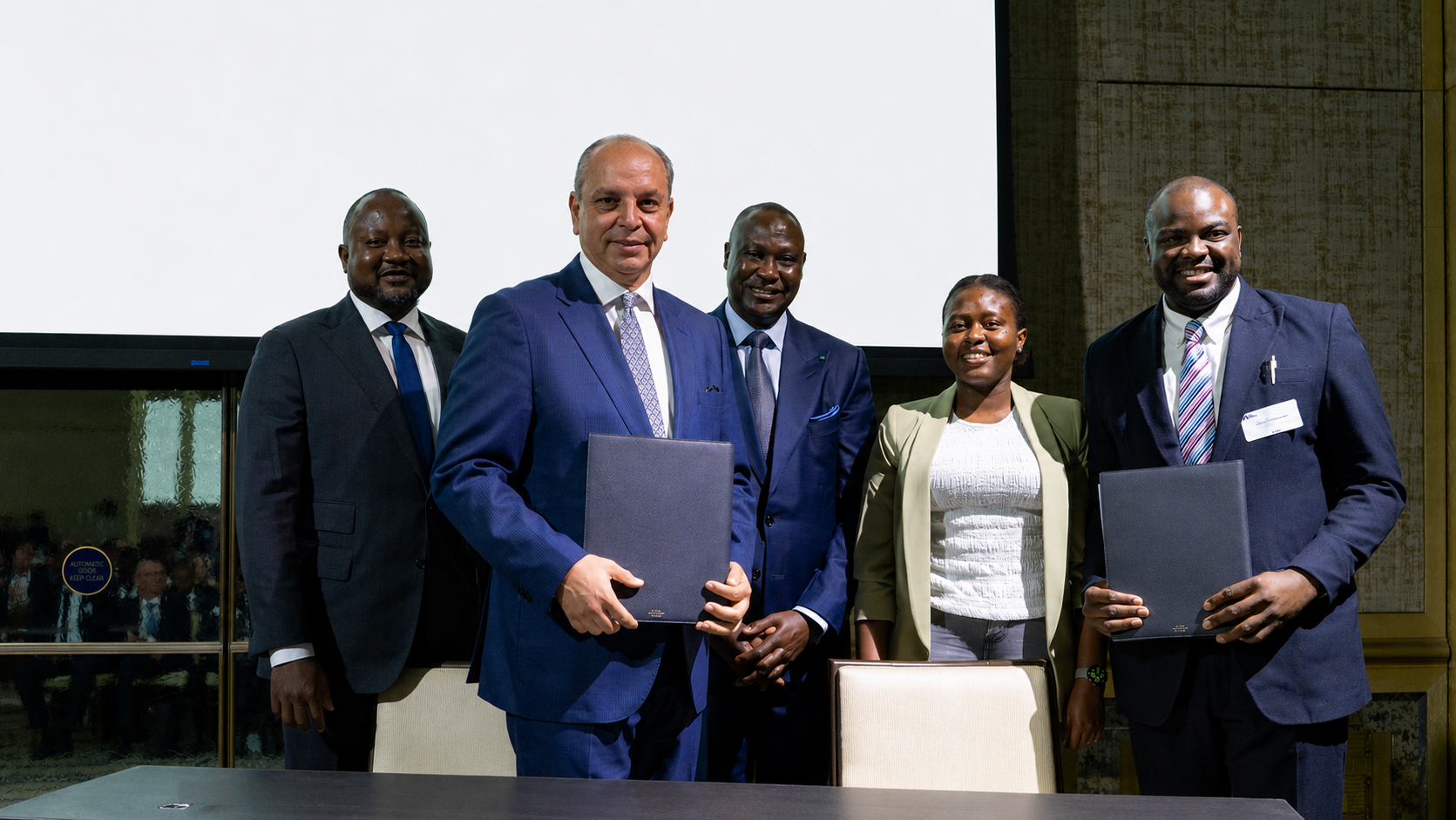
The $100 million is structured as a fund-of-funds, AFC invests into technology funds, which in turn invest into African startups. The emphasis is specifically on African-owned fund managers, a category that has historically been underrepresented in a venture ecosystem dominated by international capital.
As the first tranche of deployment, AFC has already made anchor commitments to two funds: $25 million to Lightrock Africa Fund II and $15 million to Future Africa Fund III. Lightrock is an impact investment firm with existing stakes in companies like Moniepoint and M-KOPA.
Future Africa, led by Iyin Aboyeji, co-founder of Andela and Flutterwave, focuses on early-stage founders solving structural problems in financial inclusion, digital infrastructure, and education.
Together, the two commitments position AFC across the full innovation lifecycle, from pre-seed to growth-stage scaling. Additional fund commitments are being evaluated, with AFC describing the current deployments as the first round of a broader programme.
The strategy's framework goes beyond the $100 million itself. AFC has signalled plans to use its institutional credibility as an anchor to raise between $300 million and $500 million in co-investment from United States and European foundations, endowments, and pension funds, investors that have wanted African exposure but lacked the on-the-ground capacity to evaluate individual fund managers independently.
By offering co-investment alongside AFC, the corporation positions itself as the credibility layer that smaller African funds cannot currently provide to large foreign limited partners on their own.
Why the Problem AFC Is Solving Actually Matters

African startups raised $3.8 billion in 2025. The continent has produced nine unicorns. Some of its leading fund managers have generated returns of up to 128 times the original capital invested.
The numbers tell a story of a venture ecosystem with real momentum. What they obscure is where the money is actually coming from. The majority of venture funding flowing into African technology businesses still comes from international sources.
European venture investors, historically the largest source of capital into African funds, collapsed from 70% of commitments between 2022 and 2024 to just 21% in 2025, according to the African Private Capital Association. Development finance institution participation dropped to 27% of total commitments in that year.
That external dependency creates a specific vulnerability: when foreign investors grow cautious, as they have done since the funding peak of 2021 and 2022, African startups feel the contraction immediately, and local institutional capital is not yet deep enough to absorb the gap.
In April 2026, African startups raised $110.4 million across 34 deals, down from $150.5 million in March. The number of deals rose, but total funding declined, reflecting continued liquidity pressure and a market that has become more selective. AFC's commitment lands precisely in that contraction, making the timing deliberate rather than coincidental.
What It Signals for Africa's Digital Economy

Africa's digital economy is projected to contribute more than $700 billion to the continent's GDP by 2050. That figure has been cited frequently enough to become background noise, but what it actually requires, patient, long-term institutional capital that understands African markets and is accountable to African stakeholders, has been largely absent from the conversation.
AFC, which holds $19 billion in total assets and counts 48 African member countries, is structurally positioned to be that kind of investor in a way that foreign funds are not.
The corporation has framed digital infrastructure as equivalent in strategic importance to roads, rail, ports, and power, not a secondary investment class but a foundational one.
That context matters because it changes how AFC's board and shareholders account for the commitment. It is not a departure from the institution's infrastructure mandate. It is an extension of it into a new category of infrastructure that happens to be digital.
For Africa's startup ecosystem, the most consequential outcome of AFC's move may not be the $100 million itself. It may be whether the signal it sends, that African institutional capital is willing to underwrite risk that others are stepping back from, is strong enough to pull other development finance institutions, pension funds, and insurers in behind it.