Screen Industry Terms That Sound the Same but Are Not
Six pairs of cinema terms that sound interchangeable but carry distinct meanings, clearly broken down and explained for better understanding of common industry confusion.
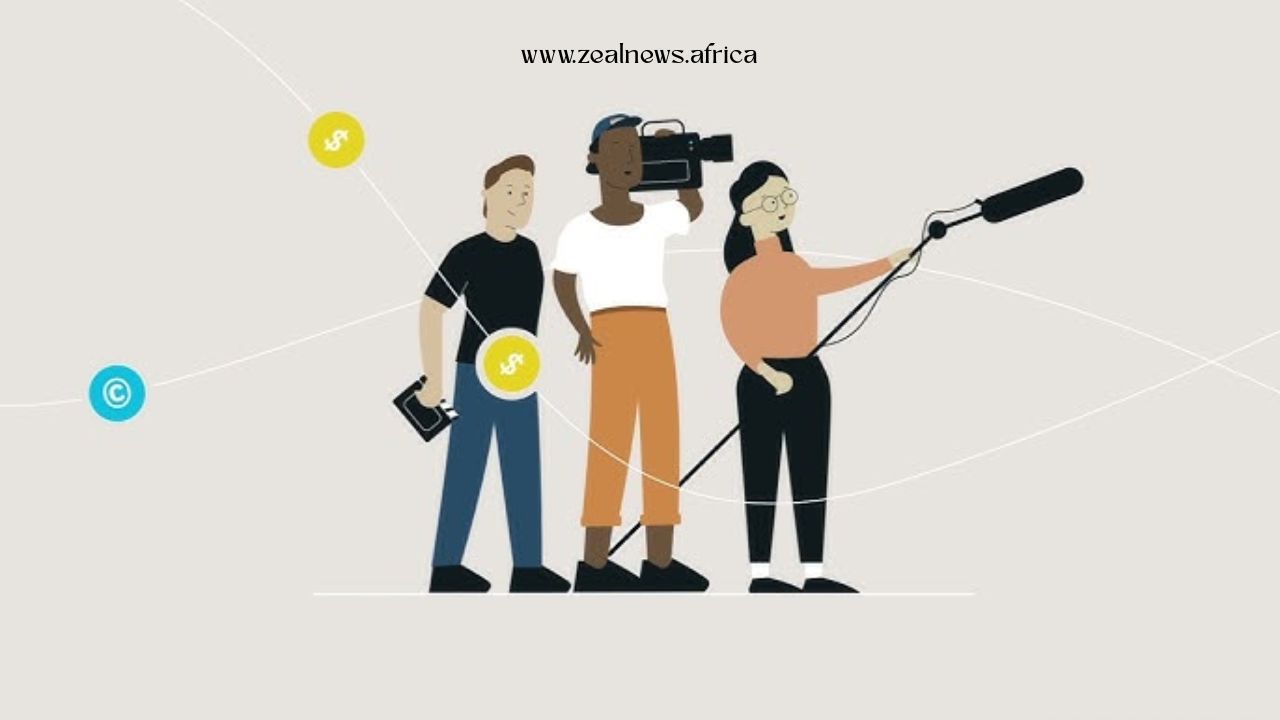
Cinema has its own language, and most people speak it loosely. We say movie when it is actually a film, call something a true story when we are actually referring to a biopic, and describe a spinoff as a sequel without even thinking twice.
These terms travel together so often that the distinctions between them have started to blur without us even knowing. But the differences are real, and knowing them changes how you watch, describe, and think about what you see on screen.
Here are six pairs worth keeping straight.
Movie vs Film
Both words describe a motion picture, but they carry different intentions. A movie is built primarily for entertainment, it is the thing you watch on a Friday night without overthinking it.
A film, by contrast, leans toward artistic storytelling. It is concerned with craft, perspective, and the way a story is told, not just what happens in it. Every film can be called a movie, but not every movie earns the title of film.
Biopic vs True Story
The phrase “based on a true story” covers a wide range of things. A true story can be about any real event, a disaster, a trial, a social movement, with the focus on the event itself rather than any single person.
A biopic is more specific: it tells the life story of a real, named individual, tracing their arc from a defined point to another. Bohemian Rhapsody is a biopic. Erin Brockovich is a true story. The subject of a biopic is always a person; the subject of a true story could be almost anything real.
Sequel vs Spinoff
A sequel continues the original story. It picks up where the previous instalment left off, usually with the same central characters, advancing the same plot.
A spinoff takes a different angle, it lifts a secondary character, a location, or a concept from the original and builds something separate around it. Better Call Saul is a spinoff of Breaking Bad. It exists in the same world but tells its own story.
A sequel answers the question of what happens next. A spinoff asks what else is happening or what happened before.
Satire vs Parody
Both use humour, but they aim at different targets. Satire uses wit and exaggeration to critique something real, society, politics, power structures, human behaviour. The humour is a delivery mechanism for a point.
Parody imitates something, a genre, a specific film, a style, primarily to get a laugh out of the imitation itself. Don’t Look Up is satire; it uses comedy to say something serious about how society handles existential threats. Scary Movie is parody; its entire purpose is the comedic imitation of horror films. Satire wants you to think and Parody wants you to laugh.
Linear Narrative vs Nonlinear Narrative
A linear narrative follows events in chronological order, beginning, middle, end. The story moves forward in time as you watch it.
A nonlinear narrative does not. It jumps between timelines, uses flashbacks or flash-forwards, or structures events in a way that is deliberately out of sequence. Pulp Fiction is the textbook nonlinear example; its scenes are arranged to create meaning through juxtaposition rather than chronology. The structure itself becomes part of the storytelling.
Arthouse Film vs Indie Film
These two are often used interchangeably but describe different things. An arthouse film is defined by its intent, it prioritises creative and artistic expression over commercial appeal.
It may have unconventional pacing, abstract imagery, or themes that resist easy resolution. An indie film is defined by its production, it is made independently of major studio financing and distribution systems.
An indie film can be a straightforward romance or a genre thriller; it does not need to be formally experimental. Some films are both but most are only one.
Language shapes how we experience things. Calling a parody a satire, or a spinoff a sequel, is not just imprecise, it misrepresents the intent behind what was made.
Cinema has a vocabulary for good reason. The more accurately you use it, the more clearly you see what is actually in front of you.