A Smartphone Tax in One of Africa's Most Connected Countries, What Could Go Wrong?
Kenya's Finance Bill 2026 proposes a 25% excise duty on smartphones, applied at the point of activation. With 48.7 million smartphones already on its networks and digital inclusion still in progress, the tax risks are pushing consumers into the grey market and slowing the growth it claims to support.
Kenya has spent years building one of Africa's most impressive digital economies, with mobile money penetration sitting at 98%. In December 2025, the country had 48.7 million registered smartphones on its networks, far outnumbering the 29.6 million feature phones still in use.
That growth did not happen by accident; it was driven by affordable Chinese Android devices, buy-now-pay-later financing schemes, and a population that adopted mobile technology as the primary infrastructure for work, banking, education, and commerce. Now the government wants to tax the device at the centre of it all.
What the Finance Bill 2026 Actually Proposes
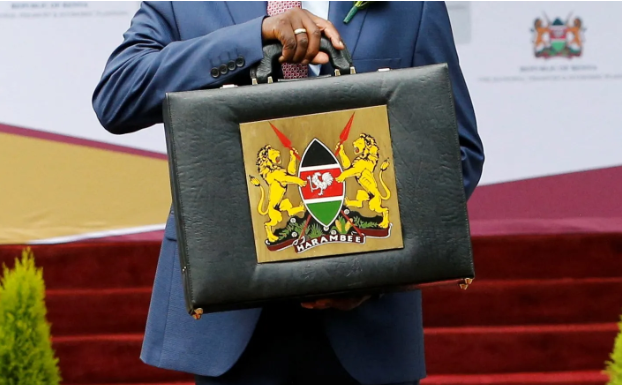
Tabled on May 13, 2026, Kenya's Finance Bill 2026 introduces a 25% excise duty on mobile phones for cellular and wireless networks. The bill is part of a government revenue push targeting an additional KSh 120 billion for the 2026/27 financial year, with total Kenya Revenue Authority (KRA) collections projected at KSh 2.985 trillion, a 7.21% increase from the previous fiscal year.
Other targets in the same bill include crypto wallets, digital services, betting winnings, and card networks.
The structural detail that sets this proposal apart is when the tax applies. Unlike conventional import duties collected at the border, the excise duty would be charged at the point of activation, the moment a device is first switched on and connected to a mobile network.
A trader stocking phones in a warehouse pays nothing. The tax only lands when the phone reaches an end user and goes live. Treasury Cabinet Secretary John Mbadi has framed this as a reform, not a new burden, arguing that the current patchwork of taxes, Import Declaration Fees, Railway Development Levies, VAT, and customs duty already pushes the cumulative tax load on phones to roughly 55%.
The 25% excise duty, he says, consolidates all of that into one simpler charge. 'Phone prices will not go up because we have removed all the other taxes and replaced them with one single tax,' Mbadi said at a Treasury briefing.
Tax experts are less convinced, and different questions remain about who is actually responsible for remitting the levy, whether that falls on telecom operators, importers, or distributors, and whether the consolidation argument holds up under scrutiny when applied to devices that entered the country through informal channels and never paid border taxes in the first place.
The Grey Market Problem and the Digital Inclusion Risk
Kenya has been here before, and this is not the first time a finance bill like this has been proposed. When the government removed VAT exemptions on mobile phones in 2013, retail prices spiked sharply, pushing consumers toward informal imports and setting back adoption momentum.
The smartphone market recovered largely because cheap Android devices and financing companies stepped in to bridge the affordability gap. M-Kopa, Watu Simu, and Safaricom's Lipa Pole Pole programme built entire business models around giving low-income Kenyans access to devices they could not buy outright.
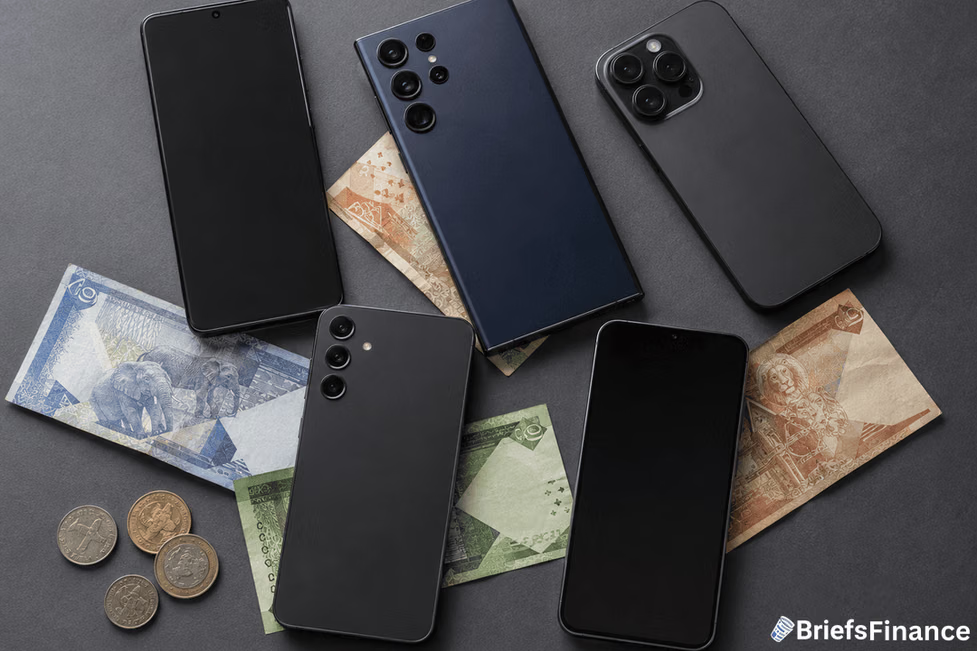
The average selling price of a smartphone in Kenya jumped from KSh 5,955 in 2019 to nearly KSh 19,000 in mid-2025, already a significant shift driven by currency depreciation and rising import costs.
A 25% excise duty applied on top of an already elevated price point could push entry-level devices beyond reach for the households most dependent on financed smartphones.
The grey market risk is the deeper structural concern. Kenya has invested years in reducing informal phone imports and strengthening official distribution networks. Higher prices in the formal channel give consumers an incentive to buy through unregulated routes, untaxed, unregistered handsets that slip through without contributing to the revenue base the Finance Bill is trying to build.
If that happens at scale, the government ends up with less tax revenue than projected, a weaker formal market, and a harder compliance problem to solve. It is the same trap that has caught similar tax measures in other markets: raise the formal price, push demand underground, collect less than expected, then tighten further to compensate.
What This Means for Kenya's Digital Ambitions

The tension of this debate is not really about tax rates; it is about what a smartphone is. If it is a consumer product, a gadget, a luxury, something people choose to buy, then taxing it like one is defensible.
But if it is infrastructure, the primary tool through which millions of Kenyans access banking, government services, health information, online employment, and digital education, then taxing access to it at the point of activation is something different. It is taxing participation in the economy itself.
President William Ruto's government has consistently positioned Kenya as a technology-forward nation, pushing digital public services, AI adoption, cashless payments, and online tax filing.
More than 40 million Kenyans rely on mobile money services that are only accessible through a connected device. The Finance Bill 2026 is currently before the National Assembly for public participation, with debate expected to intensify before the July 1, 2026, implementation date for most of its provisions.
The question the government has not fully answered is whether taxing the device that makes all of that possible is how you build the digital economy you keep saying you want, or how you slow it down right when it was accelerating.