Has Nigeria Priced Its Citizens Out of the Sky?
Nigeria’s domestic airfares have soared beyond the reach of ordinary citizens, turning air travel into a luxury for the wealthy while millions face dangerous road journeys amid rising fuel costs, taxes, and naira depreciation.
Emeka has done the calculation so many times he barely needs a calculator anymore.
He works as a mid-level logistics officer in Lagos, earning better than most of his counterparts, he knows this but he has not been home to Enugu in fourteen months, not because there was anything pulling him back. His mother's birthday just passed in February. His cousin just did his marriage ceremony and he wasn't around for it.
On top of that, there is a family meeting next month that his uncle has called three times to remind him about. It is not that he cannot go. It is that going now costs more than surviving.
As always, he pulled up the flight app in April, the same way he does every few weeks, the same way you press a bruise to remind yourself it still hurts.
A one-way round ticket from Lagos to Enugu: ₦286,000. He stared at the screen for a long time, then put his phone face-down on the table and went back to work.
₦286,000 is more than his monthly salary. It is more than what he sends home to his mother every three months combined. It is, at Nigeria's current minimum wage of ₦70,000, the equivalent of four months earnings, for a one-way ticket on a flight that lasts less than an hour.
He then decided to board a bus for the journey, bus transportation is usually twelve hours, sometimes fourteen, but he still boarded the bus anyway, quietly, the way Nigerians absorb impossible choices, without announcing the weight of them.
This is what it looks like when a country prices its citizens out of the sky.
How the Floor Fell Out
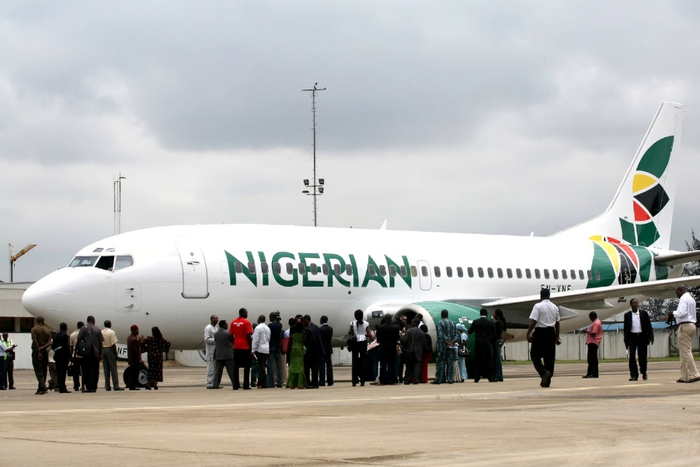
It was not always like this, and the numbers make the distance feel almost surreal. In the early 1990s, when aviation fuel was refined locally and the exchange rate hovered around
₦40 to a dollar, a domestic ticket costs between ₦3,800 and ₦4,000. Even accounting for decades of inflation, those prices existed in a different economic universe, one where a flight was expensive but imaginable for a working professional.
Fast-forward to June 2023, the month after President Bola Tinubu removed the petrol subsidy, and a Lagos-Abuja ticket, the country's busiest domestic route, averaged around ₦50,000. It was not cheap, but it was something a senior civil servant or a small business owner could stretch toward on a good month.
By late 2025, a one-way Lagos-Abuja ticket ranged between ₦125,000 and ₦190,000. At peak travel periods, Christmas, Easter, any long weekend, prices unspool into something closer to absurdity.
debating the issue at a recent plenary reported fares of high prices for the Abuja-Lagos route alone. One traveller, according to an instagram post, reported being quoted ₦499,998 for a single Lagos-Owerri flight. A family of six flying to the South-East for Christmas was looking at a combined ticket cost exceeding ₦3 million for a round trip.
The National Bureau of Statistics has tracked the trajectory without flinching. The average domestic airfare for a single journey rose from ₦74,648 in January 2023 to ₦89,975 in January 2024, a 20.53% increase.
By September 2024, the figure had climbed to ₦124,693, representing a 57.81% year-on-year surge.By April 2025, the NBS recorded an average fare of ₦130,243. The direction of travel has been consistent and unrelenting.
When Tinubu removed the fuel subsidy in May 2023, the price of Premium Motor Spirit spiked almost overnight. Aviation fuel — Jet A1 — followed its own brutal trajectory. Between February and April 2026 alone, Jet A1 prices rocketed from roughly ₦900 per litre to as high as ₦3,300 per litre, a surge of over 266% in a matter of weeks.
Airlines describe fuel as accounting for 40 to 50% of their operating costs. Rano Air suspended multiple routes in May 2026, declaring the situation "commercially unsustainable." Others scaled back frequencies.
The crisis triggered emergency talks between the government, airlines, and fuel marketers, with President Tinubu approving a temporary 30% reduction in certain aviation fees, but industry stakeholders were clear: without structural reform, the relief would not hold.
RELATED ARTICLE: What Does a 30% Debt Cut Actually Mean for Airlines and You?

Layered onto the fuel crisis is the naira-dollar dynamic. Most aviation costs, fuel, aircraft leasing, spare parts, insurance, maintenance, are denominated in dollars or priced against the dollar. The naira has lost catastrophic value since 2023, dragging every dollar-indexed cost upward in naira terms.
Data shows a 69% correlation between exchange rate movement and airfare increases. When the naira weakens, tickets get more expensive. The naira has been weakening for years.
And then there are the taxes. Nigeria's aviation sector is one of the most heavily taxed in the world. There are more than 54 separate taxes, fees, and levies applied across the aviation chain, accounting for an estimated 35% of the cost of every ticket. The NCAA alone adds between ₦18,000 and ₦25,000 to the price ofa single domestic ticket.
Airlines pay FAAN, NAMA, FIRS, and more than a dozen other agencies, each with their own schedule of charges. Six of these are directly embedded in every ticket sold.
Where countries like Ghana, Kenya, South Africa, and the United Kingdom charge two to three times less in comparable levies, Nigeria's regulatory apparatus operates as a revenue machine with wings.
The Real Cost of a Ticket
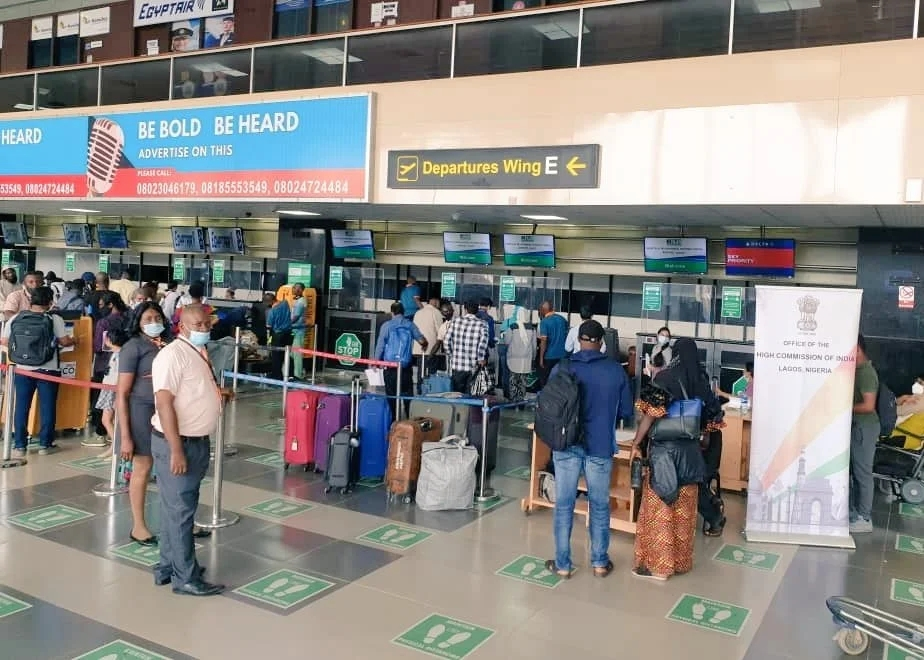
Here is the arithmetic that the aviation debate rarely centres, even though it is the one that matters most.
Nigeria's national minimum wage is ₦70,000 per month, a figure agreed between the federal government and labour unions in July 2024 after months of strikes and negotiation. The unions had originally demanded ₦494,000. They eventually settled for ₦70,000, less than a sixth of what they asked for, and called it a difficult but necessary compromise.
Even that ₦70,000 is a fiction for many. The NBS and labour researchers have consistently found that enforcement is patchy at best; many workers in the informal sector, in states that move slowly on implementation, or in small private firms earn far less.
But even using the official figure: a Lagos-Abuja ticket at ₦162,500 costs more than two months of minimum wage. A Lagos-Enugu ticket often starting around ₦245,000+ costs more than four months.
A return trip home for Christmas for a family of four from Lagos to Owerri, the kind of journey that used to be aspirational but achievable, now runs into sums that exceed annual earnings for minimum wage workers.
This is what pricing a population out of the sky actually looks like in practice. It is not an abstraction. It is fourteen months without seeing your mother. It is choosing the bus on a road your friends have begged you not to take. It is the quiet, persistent cost of a country that has decided to treat a public service as a revenue opportunity.
There has been alarm about declining passenger numbers: traffic down 27% from 2024 levels. The sector is not just unaffordable, it is emptying out. Fewer passengers means fewer routes, means fewer options, means airlines scale back further, means prices stay high.
What makes this particularly grim is that air travel in Nigeria is not truly optional for millions of citizens. So many insecurity news, and condition of major highways, has made long-distance road travel genuinely dangerous in many corridors.
So, Has Nigeria Priced Its Citizens Out of the Sky?
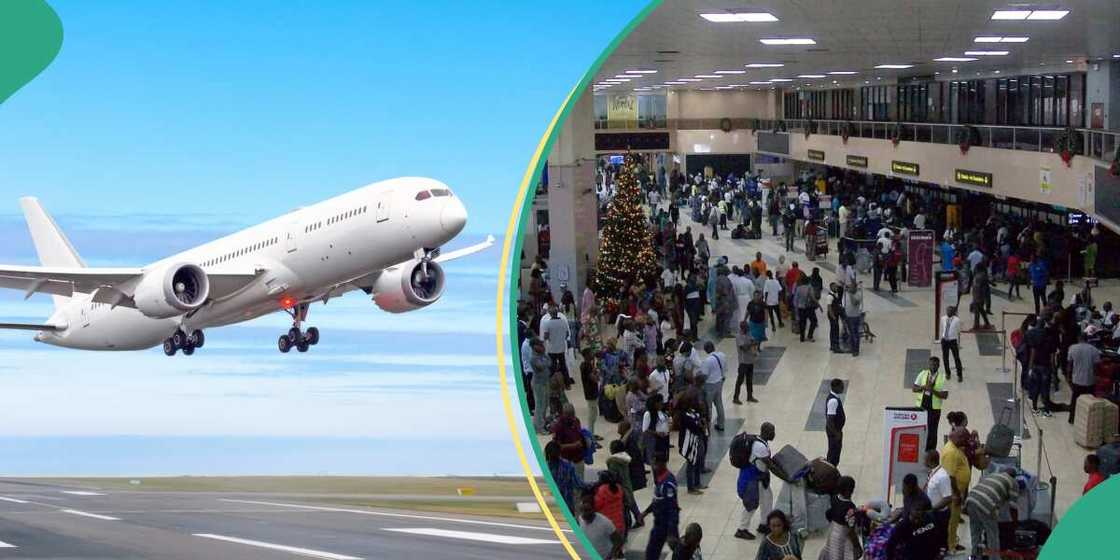
The answer, for most Nigerians, is yes, but that is for you to answer personally. But the more uncomfortable truth is that many Nigerians were never truly in it.
Air travel in Nigeria has always been expensive relative to incomes. The idea of a broad flying public, the commuter culture that took hold in countries with functioning aviation sectors, never fully materialised here.
What existed, at ₦45,000 to ₦55,000 per ticket in 2023, was a fragile middle ground: expensive, but reachable on a stretch. The professional class could manage it occasionally. The senior civil servant could fly to leave. The parent could, once a year, bring the children home without taking out a loan.
That fragile middle ground is gone. What has replaced it is a system that functions as aviation for the wealthy, and roads, dangerous, exhausting, twelve-hour roads — for everyone else.
RECOMMENDED READ:The Nigerian Middle Class Is Silently Disappearing. Maybe We Need To Start Talking About It
Emeka will take the bus next month for his family meeting. He will leave before dawn, the way you do on the Enugu road, to beat traffic. He will arrive stiff, tired, and grateful to have arrived at all. He will sit at that meeting and listen to his family talk about things that have been accumulating for fourteen months. At some point, someone will ask why he has not visited. He will say it is work. It is easier than the truth, which is that the sky has a price he cannot pay.
The question in the headline is not rhetorical. It is a policy question, an infrastructure question, a governance question. Has Nigeria priced its citizens out of the sky? Again that is for you to answer, but not after reading through the 54 taxes on airlines, the dollar-denominated fees, a staggering naira, and the compounding indifference of a government that seems to treat aviation as a cash point rather than a connector of people and commerce.
The sky is not closing. It is simply, quietly, no longer for everyone.