Ecobank and BII Just Invested $30M in SMEs, But the Real Value Is What They Built
BII and Ecobank DRC's $30M risk-sharing facility is dismantling the collateral wall that has kept Congolese SMEs locked out of formal finance for decades.
If you run a business in the DRC, you already know the drill. You walk into a bank, you have a viable idea, maybe even some revenue, and the loan officer asks for collateral.
It could be a land, a property or a guarantor with assets, basically, things that most small business owners in Central Africa simply don't have.
So you leave empty-handed, your business stagnates, and the cycle continues.
This is the wall that British International Investment (BII) and Ecobank DRC just decided to demolish and how they are doing it is very interesting.
What Actually Happened
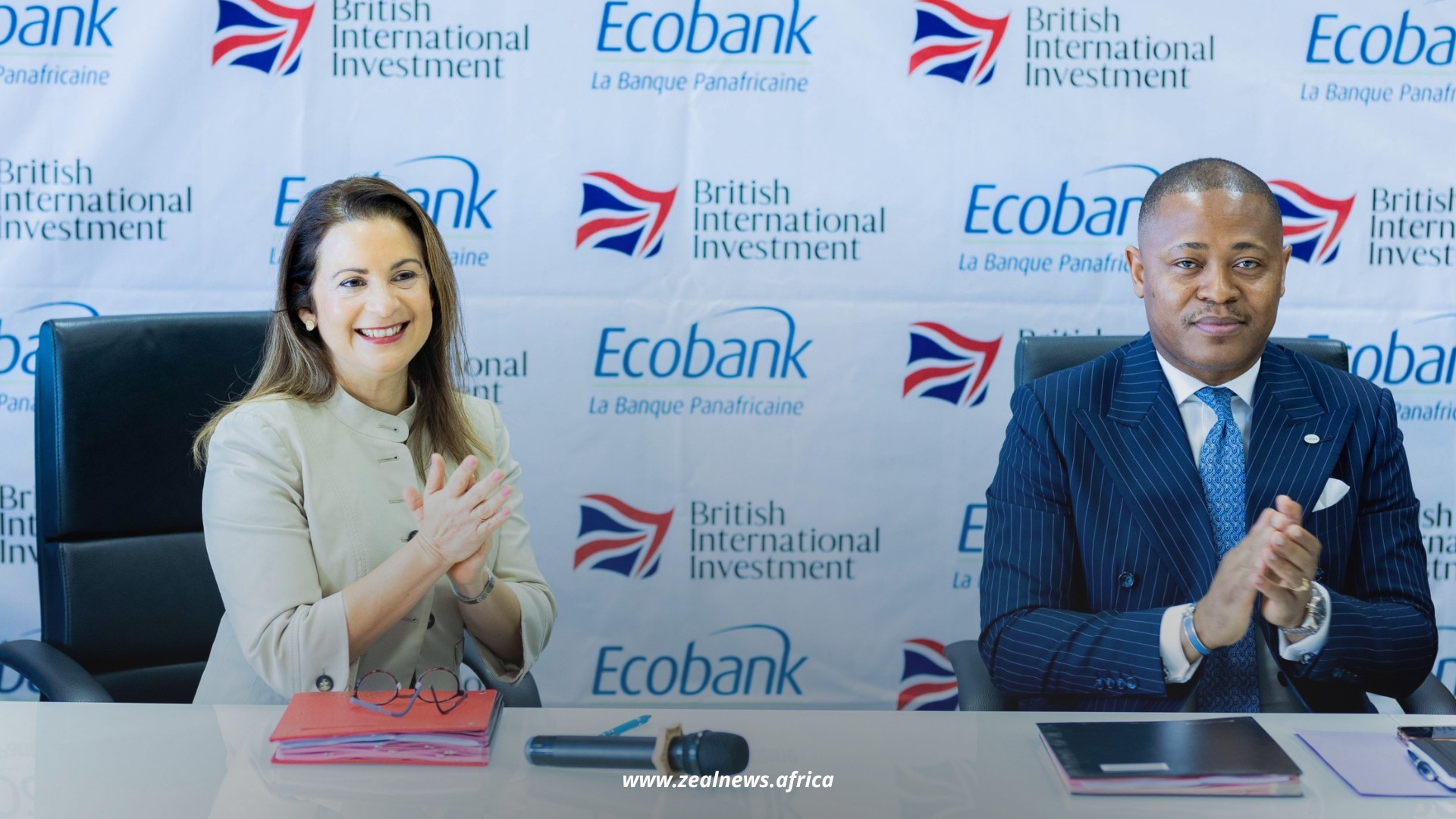
On 12 May 2026, BII, the UK's development finance institution, and Ecobank DRC announced a $30 million risk-sharing facilityspecifically designed to push more capital toward small and medium-sized enterprises across the Democratic Republic of Congo.
The sectors in focus include agriculture, agro-processing, infrastructure, renewable energy and local entrepreneurship.
It is, however, important to note that this is not a donation, nor is it a grant. Rather, it is a structural arrangement that fundamentally changes how Ecobank DRC calculates risk when lending to small businesses.
The Collateral Problem Has a Name Now
The DRC's SME financing crisis isn't a secret. Over 70% of Congolese adults remain outside the formal financial system.
The country has no functioning credit bureau, which means banks can't assess a borrower's history, so they fall back on collateral as their only safety net.
For women-owned businesses, the gap is even more brutal. Estimates put the women's SME financing gap in the DRC at $2.8 billion.
What that means practically is that banks in the DRC are not necessarily bad actors. They are operating in a system with almost no risk-mitigation infrastructure, so they protect themselves by demanding guarantees that shut most people out.
The BII-Ecobank facility disrupts this logic. Instead of asking Ecobank to simply trust more and lend more, BII sits on the other side of each new loan and says: if this goes wrong, we carry half the loss.
The Math Behind the Model
This risk-sharing structure isn't new. BII piloteda version of it with Ecobank Sierra Leone in October 2024, with a $25 million facility under its Africa Resilience Investment Accelerator (ARIA) programme. The results of that model showed what the DRC deal is actually capable of.
In Sierra Leone, the managing director of Ecobank's local subsidiary explained that because BII absorbs half the risk, a $25 million facility translates into $50 million worth of actual lending. The bank can offer larger loan sizes, longer repayment periods, up to five years, and reduced collateral requirements.
Businesses that would have been turned away before now qualify. The money didn't double. The infrastructure around it did.
The DRC deal operates the same way. BII co-signs the downside. Ecobank gets the room to say yes more often. SMEs get access to capital on terms that don't require them to own property they'll never own.
BII Is Not Playing a Charity Game
BII has committed that at least 25% of new investments by value will go to frontier markets — countries classified by the UN as Least Developed Countries.
The DRC qualifies. So does Sierra Leone and four other ARIA pilot countries: Liberia, Benin, and Ethiopia.
BII puts close to $2 billion annually into frontier markets, with roughly 40% of its total investments directed to these regions.

Chris Chijiutomi, BII's Managing Director and Head of Africa, emphasised that small businesses are at the heart of economic development in the DRC, and too many of them are being blocked from the capital they need to grow.
The DRC also becomes more interesting when you understand its recent trajectory. Bank account ownership has jumped from 17% in 2014 to 39% in 2024. The economy grew at 6.5% in 2024. This is not a country sitting still.
What This Deal Is Actually Building
Beyond the $30 million, what BII and Ecobank have constructed in the DRC is a proof of concept, evidence that lending to SMEs in a fragile market is doable, measurable and investable.
Every loan that performs under this facility becomes data. That data makes the next investor more comfortable.
The ARIA programme exists precisely to manufacture that evidence in places that have historically been locked out of international capital flows because they were perceived as too risky, not because they actually were.
For African entrepreneurs watching this, the immediate takeaway is that the barrier between your business and capital isn't only about money.
It is about the systems that determine who gets to access it. When those systems change — when risk is shared, when collateral requirements are reduced, when longer lending tenors become possible — the entire landscape shifts.
A $30 million facility in a country of 109 million people is not enough on its own.
But the infrastructure it is building, the template it is setting, and the signal it sends to other investors? That might be worth considerably more.