Chimerism: The Woman Whose DNA Said Her Children Were Not Hers
Chimerism is the rare condition where one person carries two distinct DNA profiles. From a mother whose DNA denied her own children to the science behind what causes it, a breakdown of one of biology's strangest realities.
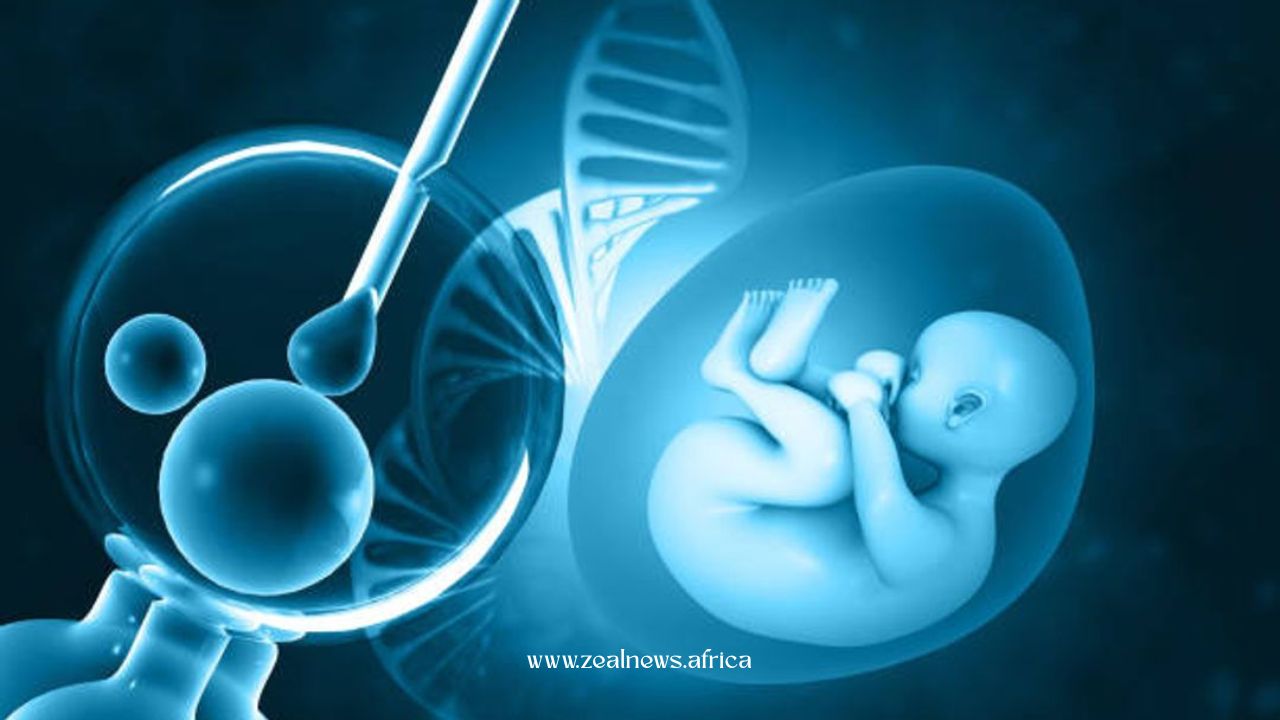
DNA testing is supposed to be the end of the argument when it comes to cases that question a child's lineage and identity.
It is the part where science walks into the room and everyone else sits down waiting for answers. Courts use it, immigration systems rely on it and paternity cases hinge on it.
The assumption is that your DNA is yours alone, a fixed, singular biological signature that identifies you with a precision no eyewitness or document can match and typically have a 99% accuracy result.
But there is a condition, rare, poorly understood, and quietly more common than most people realise, that breaks that assumption completely and the consequences, when it surfaces in the wrong context, can be devastating.
The Mother the DNA Test Said Did Not Exist

In 2002, a Washington State woman named Lydia Fairchild applied for government assistance. As part of the process, DNA tests were conducted to verify that she was the biological mother of her children. The results came back and said she was not.
The state launched a fraud investigation on her and at the time of the proceedings, she was pregnant with her third child, a court-appointed witness observed the birth till delivery and took a DNA test immediately, the results still showed no biological relationship between mother and newborn child she had just delivered.
Around the same time, a separate case in Boston involved a woman named Karen Keegan, who needed a kidney transplant. When her children were tested as potential donors, the results suggested they could not be her biological children.
When further investigations were done, it was found that Keegan's blood cells and her other tissue cells contained different DNA profiles. She was not one person in a genetic sense, she was actually two.
Both women were chimeras. Their bodies contained two distinct sets of DNA, a condition that standard testing had no framework to account for. In Fairchild's case, the DNA that matched her children existed in her cervical cells, not in her blood. The test sampled the wrong tissue. By the time the investigation concluded, the science had caught up with her, but she had spent months under legal suspicion for the biological fact of giving birth to her own children.
What Chimerism Actually Is
Chimerism, in biology, refers to an organism that contains two or more genetically distinct cell populations, all originating from different fertilised eggs or embryos but existing within a single body.
The name comes from the Chimera of Greek mythology, the fire-breathing creature assembled from parts of a lion, a goat, and a serpent. The biological reality is less dramatic but arguably stranger.
The most common form is tetragametic chimerism, which occurs when two separately fertilised eggs fuse early in development, before the embryo has differentiated into distinct cell lines. Instead of producing twins, the two embryos merge into one person, a single individual carrying the genetic material of what would have been two separate siblings. The result is a body where different organs, tissues, and systems may carry entirely different DNA profiles.
There are other forms. Microchimerism occurs when small numbers of cells from one individual persist in another, most commonly when fetal cells cross the placental barrier into a mother's bloodstream during pregnancy, or vice versa. Research has found maternal cells in the brains and organs of adult children, and fetal cells in mothers decades after pregnancy.
Twin chimerism, where one twin absorbs the other's cells in the womb, is another documented variant. Bone marrow transplants also produce a form of chimerism, intentionally, a patient's blood cells are replaced with those of a donor, creating a body where the DNA in blood differs from the DNA in every other tissue.
Chimerism can affect skin pigmentation, some chimeras display two distinct skin tones, sometimes following the lines of Blaschko, a pattern mapped along the developmental migration of skin cells, and in rarer cases it can affect eye colour, organ function, and reproductive genetics. Most chimeras show no visible signs at all.
Rarer Than You Think, More Common Than It Appears
The honest answer to how common chimerism is: nobody knows. Full tetragametic chimerism of the Lydia Fairchild variety is considered rare. Fewer than 100 confirmed cases appear in published medical literature, though that number almost certainly understates the true figure.
The condition is only identified when something goes wrong, when a DNA test produces an inexplicable result, when an organ donor's blood type does not match their tissue type, when a paternity or maternity case collapses under testing that was assumed to be definitive.
Microchimerism, the milder form in which cells from another person persist in your body, is considerably less rare. Studies have found that the majority of women who have been pregnant carry fetal cells for years, sometimes decades, after birth. Some research suggests those cells may integrate into maternal tissue, appearing in the thyroid, liver, heart, and brain. What function, if any, they serve is still being investigated. The field is young and the data is incomplete.
Awareness is growing, partly because DNA testing has become more accessible and more routine. More tests mean more anomalous results, and more anomalous results eventually produce more diagnoses.

Forensic science has already begun accounting for the possibility, crime scene DNA from a chimera could theoretically implicate their non-existent genetic twin, or exonerate someone whose sampled tissue does not match the tissue that committed the act. The implications for legal, medical, and identity verification systems are not hypothetical. They are already surfacing.
What It Means to Be Genetically Two People in One Body
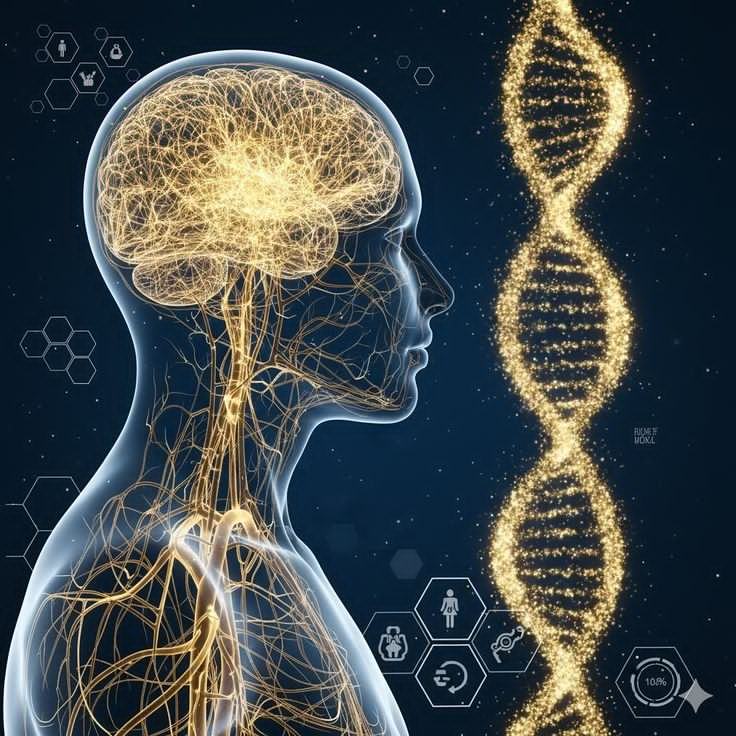
Chimerism does not fit cleanly into how we have built systems of identity. The assumption underlying DNA databases, paternity courts, immigration verification, and forensic investigation is that each person has one genome, stable, consistent, and universal across every cell in their body. Chimerism breaks that assumption without announcing itself.
Most chimeras live their entire lives without knowing. They have no symptoms, no visible markers, no reason to suspect that the cells in their liver operate under a different genetic instruction set than the cells in their blood.
The condition does not announce itself. It surfaces when something external, a test, a transplant, a legal proceeding, applies the assumption of genetic singularity to a body that does not have it.
What the documented cases collectively suggest is something the sciences of genetics and identity are still working out: that biological individuality is more complicated than it appears.
A person can be, at the cellular level, more than one organism and still be, by every other measure, one person. The law, medicine, and forensic science built their tools for a simpler version of human biology. Chimerism is a reminder that biology did not consult those tools before deciding how to operate.