Why Your Brain Might Prefer EPUBs to Paperbacks Now
Your brain didn't abandon books, it was trained away from them. Here is the science behind why physical reading feels harder now, why your phone keeps you up at night, and what it actually takes to get your focus back.
You were the kid who read the dictionary for fun. Not because anyone asked you to, but because you had already finished the storybook that had been passing around class since Monday, and your sister's novel collection was calling your name from the shelf.
Holidays meant comprehension passages in your English textbook. Waiting rooms meant reading the fine print on a medicine pack. Words, any words, were enough. You were a reader in the truest sense.
Then something shifted. Somewhere between secondary school and adulthood, you sat down with a book, a real one, with paper and spine, and fell asleep by page three.
But your phone? You were wide awake at 2am, scrolling, reading tweets, finishing a 700-page ebook without even blinking. It feels like betrayal. What happened to the kid who read the dictionary?
Know that nothing went wrong with you. Your brain just got rewired.
Your Brain Learned a New Language
The science behind this is called the shallowing hypothesis, and it is exactly as unsettling as it sounds.
The theory suggests that typical interactions with digital devices involve rapid engagement with short texts, endless short episodes that train a mindset oriented toward browsing as much information as possible, rather than deep focus.
Over time, the brain becomes less efficient at allocating cognitive resources for sustained reading. The expectations we have for printed material, however, are different. We approach a book with the anticipation of concentration.
In other words, your brain has not forgotten how to read deeply. It has simply stopped expecting to.
Every time you picked up your phone and got a quick hit of information, you were teaching your brain that reading equals speed, brevity, and instant payoff.
A 300-page hard-copy novel has no interest in playing that game.
Dopamine Did This to You
The villain here is dopamine, your brain's favourite reward molecule. All notifications we get on our phones activate dopamine in our brains, making us feel aroused, motivated and happy.
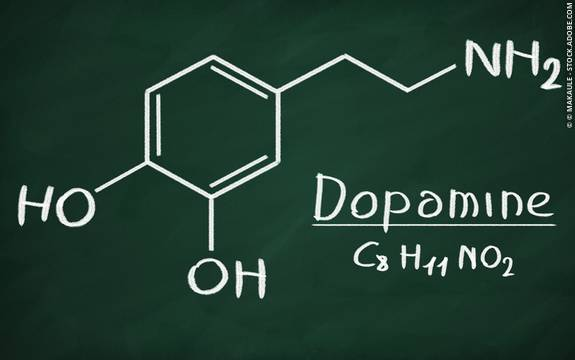
Your brain has been conditioned to associate your phone with pleasure. The book, static and silent, simply cannot compete on those terms.
Books are static. There is nothing moving or flashing, so it has become harder for them to hold hits of dopamine. our attention.
The content we encounter on screens is very short. It is engaging, and we have learned that it can give us frequent
When you try to read a physical book now, your brain is essentially waiting for a notification that will never come. It interprets that absence not as peace, but as boredom. So it checks out.
Reading on Your Phone Isn't the Same Either
Before you feel vindicated enough to put down your paperback for good, know that reading on screens is giving you the sensation of reading without many of its benefits.
A study by Mangen et al. (2013) found that students who read texts in print scored significantly better on reading comprehension tests than students who read the same texts digitally.
Another study by Altamura, Vargas, and Salmerón (2023) found that comprehension is six to eight times better with physical books than e-readers.

Part of the reason is sensory. When holding a book, we receive reminders of how many pages we have read and how many remain. We can flip pages to reread text as needed.
Print provides sensorimotor cues that enhance cognitive processing.
Research using fMRI scans found that print materials were more likely to activate the medial prefrontal cortex and cingulate cortex, both involved in processing emotions, as well as the parietal cortex, which processes visual and spatial cues.
Your phone, for all its convenience, strips that experience down to just the words. And even those words are competing with everything else on the device.
The Distraction You Don't Even Notice
Another thing with reading with a phone is that even if your notifications are off, your brain hasn't forgotten what that device is for.
Screens invite interruptions because they carry many jobs at once. Even with notifications off, the device itself can trigger a notification reflex — your brain has learnt that this object often brings social news, alerts, and novelty.
This is why you can read 3,000 words of celebrity gossip on your phone without breaking a sweat, but struggle through five pages of the book on your shelf.
The gossip lives in a familiar environment. The novel is fighting for space in a device your brain has categorised as a social, multi-purpose portal.
Then Why Are You Still Awake at 2am?
This is usually due to the reading-at-night paradox. You fall asleep with the book, but stay up all night on your phone. Some of this is dopamine, but some of it is also biological.
Blue light, encompassing wavelengths between 400–500nm on the visible spectrum, disrupts circadian rhythms and suppresses production of the sleep hormone melatonin.
Meanwhile, Harvard researchers found that exposure to blue light suppressed melatonin for about twice as long as green light and shifted circadian rhythms by twice as much.
So what is actually happening when you read your phone in bed is that the blue light is signalling to your brain that it is still daytime, your melatonin drops, and you do not feel sleepy, which you mistake for being engrossed.
You are not necessarily more interested in what is on your screen. You are chemically prevented from feeling tired. The book, which emits no light of its own, does not intervene in your sleep hormones at all.
When the book puts you to sleep, that is your body doing what it's supposed to do at night. It is not a failure of the book. It might actually be a win.
What Does This All Mean?
Your brain did not abandon books. It was gradually, methodically trained away from them by the speed of social media, the architecture of smartphone design, the dopamine feedback loops built into every platform you use.
EPUBs feel easier not because they are better for reading, but because they live in an environment your brain already knows how to move through quickly.
When surveyed on which medium they felt they concentrated best, 92% of university students across five countries chose print.
The preference for deep reading never fully disappeared. What changed was the ability to access it without friction.
The good news is that the brain is plastic. The only way to get used to focusing on books again is to spend more time reading them.
You will not reclaim your childhood reading stamina by switching to a better app. You will reclaim it by sitting with the discomfort of a quiet page long enough for your brain to remember that this, too, is a place worth being.
The dictionary kid is still in there. She just needs a little coaxing.