Life in Units of N50: What the Sachet Economy Reveals About How Nigerians Actually Live
Nigeria consumes 60 million sachets of water daily. Diapers sold in twos. Toothpaste by the single squeeze. The sachet economy did not create Nigerian poverty. It just adapted to it quietly, one tiny plastic packet at a time.
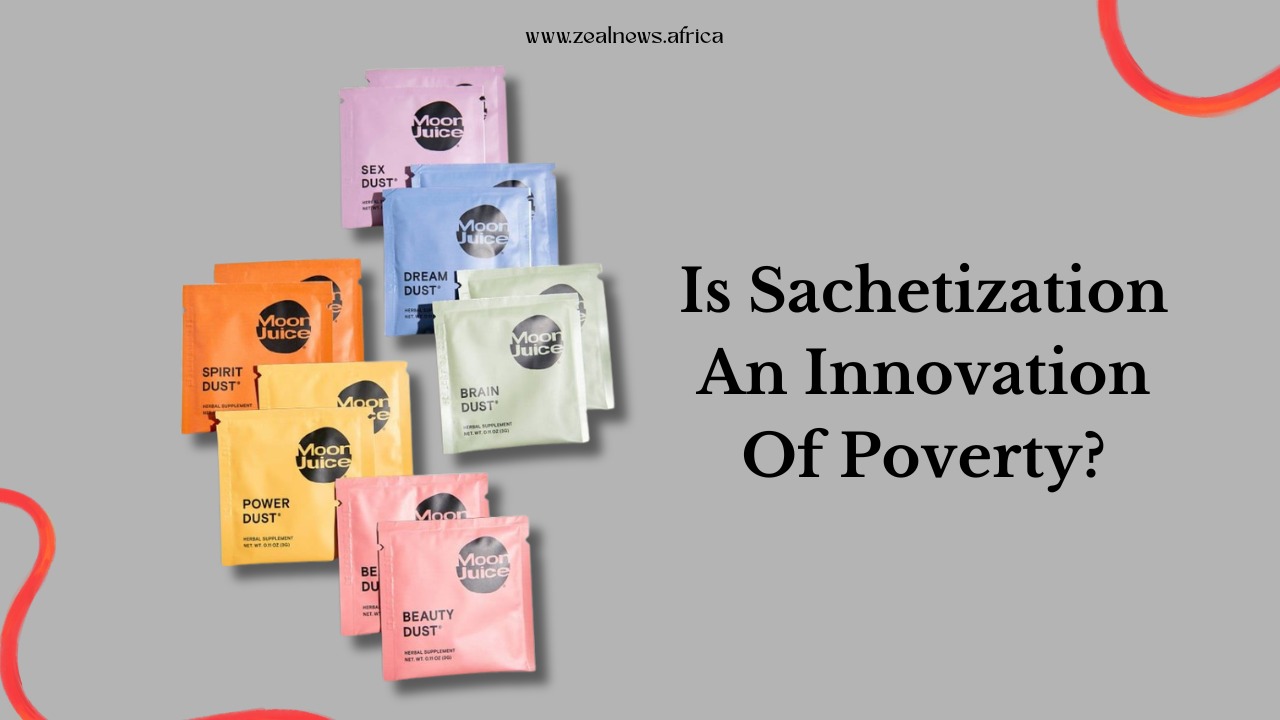
Chidinma buys her groundnut oil in sachets.
Not because she prefers it that way. Not because the sachet is more convenient than a bottle. She buys it that way because a full bottle of groundnut oil costs more money than she has at the moment she needs it. So she buys one sachet for the stew she is making now. Tomorrow, when she needs oil again, she will buy another one. And the day after.
Every single day, one sachet at a time, she pays more per millilitre than the woman who can afford to buy the full bottle, because the only thing harder than being poor in Nigeria is being poor and needing things today.
This is the sachet economy. And once you understand what it actually is, you cannot look at a Nigerian market stall the same way again.
What the Sachet Economy Actually Is
The sachet economy is what happens when a country's purchasing power collapses slowly enough that nobody declares an emergency, but fast enough that the market has to restructure itself around what people can actually afford to spend at any given moment.
It is not unique to Nigeria. But Nigeria has taken it further than almost anywhere else. The practice of sachetisation is thought to have begun in Nigeria in the 1990s with the production of smaller sachets of drinking water and Cowbell powdered milk by Promasidor. At the time, it was described as an innovation. A clever way to reach low-income consumers. A market penetration strategy.
That framing was always only half the truth. A brand manager at one of the international Fast Moving Consumer Goods companies operating in Nigeria explained the actual business logic plainly: "Sachet wins in Nigeria because 80 percent of Nigerians are in the tier 3 category of shoppers."
Tier 3 means people who buy based on what they have right now, not what they earn per month. Daily earners. Casual workers. Market traders whose capital turns over before evening. People for whom a monthly salary is not a concept that applies to their lives.
For these Nigerians, bulk buying is not a lifestyle choice they opted out of. It was never financially possible. The sachet filled the gap.
Everything Comes in a Sachet Now
The sachet started with water and milk. Then the economy kept tightening and the sachet kept expanding to cover more ground.
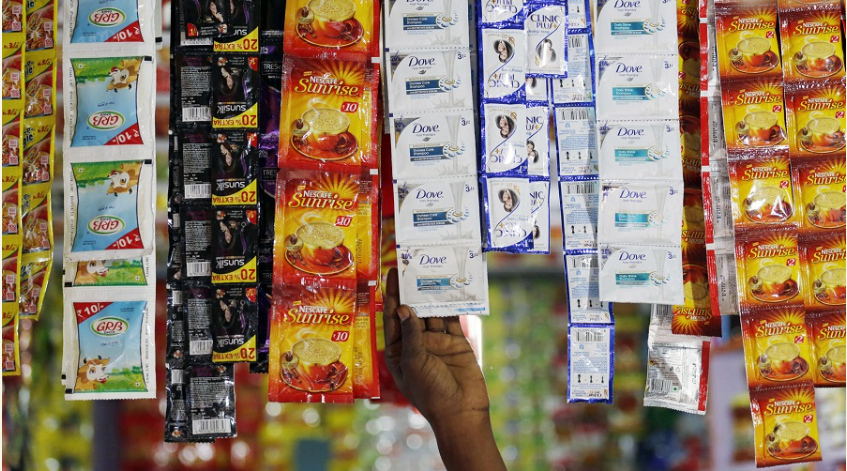
Today the list of products available in sachet form in Nigeria includes milk, detergent, cooking oil, cereal, margarine, pepper mix, toothpaste, sugar, tomato sauce, shampoo, cornflakes, seasoning, biscuits, dishwashing liquid, shaving sticks, bleach, Lipton tea with just two bags per pack, diapers in two-unit packs, disinfectant, and energy drinks.
Read that list again. Diapers. Two per pack. Because a parent who needs to change their baby today cannot afford to buy a full pack of 20. Toothpaste. Because a family cannot buy a full tube this week. Shaving sticks. Because one is all the budget allows right now.
Dettol now comes in sachets. The pharmaceutical industry sells drug supplements in cards at chemist shops, priced for people who cannot afford the full course.
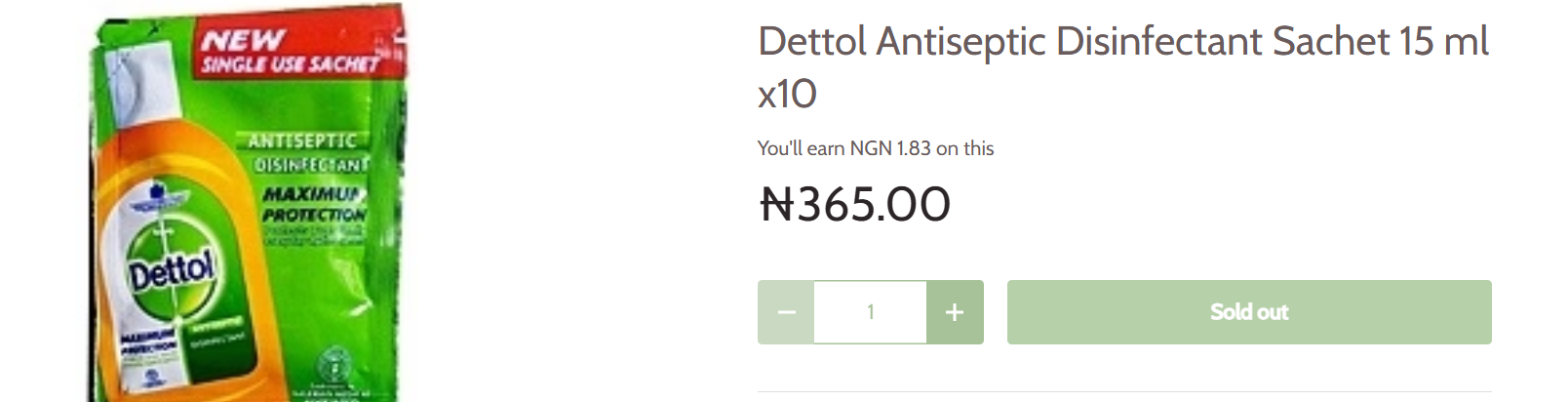
From premium spirits and cooking oil to toothpaste, detergent, and powdered milk, everyday essentials now overwhelmingly appear in tiny, single-use packets on market shelves. This is not adaptation. It is the physical shape of a country where the gap between income and the cost of living has grown wide enough that the market had to shrink every product down to meet people where they are.
The Trap Inside the Convenience
Here is the part nobody talks about when they describe the sachet economy as clever or resilient or innovative.
Buying in small units is always more expensive per gram or per millilitre than buying in bulk. Always. The woman who buys groundnut oil one sachet at a time pays a higher effective price for oil than the woman who can afford a full bottle.
The family that buys two diapers at a time pays more per diaper than the family that buys a pack of 20. The person who buys one sachet of pure water pays more per litre of water than the person who buys a full bottle.
The people with the least money consistently pay the highest price for the same product. The sachet does not solve poverty. It makes poverty slightly more survivable while quietly extracting a premium for that service.
Over 60 million units of pure water are consumed per day in Nigeria.At N50 per sachet, that is N3 billion spent on water every single day. Not on tap water, which should be free or close to it and largely isn't. Not on filtered water from home systems most people cannot afford.

On small plastic bags of water bitten open at bus stops and market stalls because the infrastructure that should make clean water accessible never arrived, and the sachet filled the gap it left.
An average person needs about 2.6 litres of water per day, roughly five sachets. Five sachets is N250. Per person. Every day. In a country where many households earn under N1,000 daily total.
When the Cheapest Option Becomes Unaffordable
The sachet was supposed to be the floor. The thing below which there was nothing cheaper. Then inflation went to work on the floor.
A sachet of pure water cost N5 in the early 2000s. It rose to N10, then N20, then N30, then N50. The Association of Table Waters Producers of Nigeria has warned publicly that it could hit N100. The cost of the nylon used for packaging jumped from N1,100 per kilogram to N3,600. Diesel costs climbed. Power supply remained unreliable. Producers say they are barely covering costs at N50.
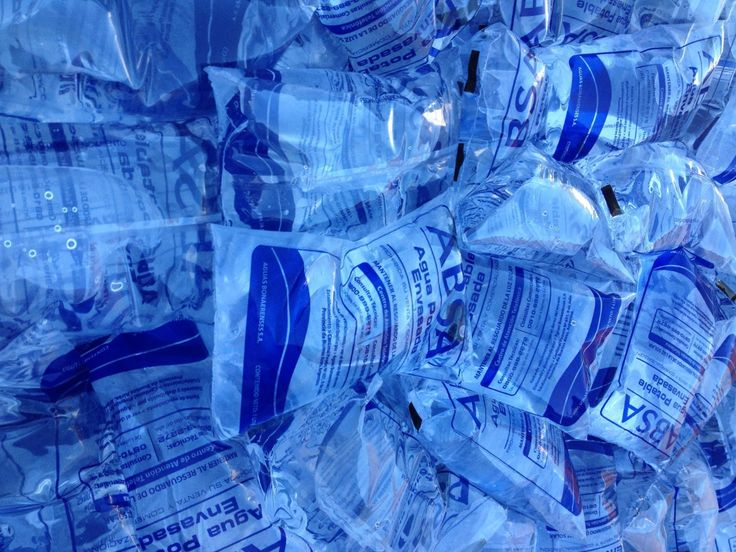
When the cheapest version of a product doubles in price, people do not just switch brands. They switch categories entirely. Ice water, water poured into nylon bags and frozen, the exact product Nigerians were buying in the 1990s before sachets arrived, has returned to Lagos, Abuja, and other cities.
Hawkers who abandoned it decades ago brought it back because a bag of sachet water at N500 is more than their customers can bear. Three pieces of ice water for N20 is what the market can support now.
Nigeria went from ice water to sachet water to bottled water and then, under the weight of three years of inflation, reversed the journey. People in 2025 are buying the same product their parents bought in 1995 and calling it managing.
What the Sachet Leaves Behind
The environmental damage from single-use sachets is overwhelming. Nigeria's waste management infrastructure cannot handle 60 million daily plastic units. Lagos State announced plans to ban sachet water to address the plastic waste crisis.
The announcement immediately ran into the only argument that matters: for millions of Lagosians, sachet water is the only affordable source of clean drinking water available.
Banning it without replacing what it provides is not environmental policy. It is removing the last option from people who have already run out of options.
That is the trap the sachet economy builds and cannot escape by itself. It fills gaps that should not exist. It provides water because the tap infrastructure failed. It provides cooking oil in daily units because incomes cannot support weekly shopping.
It keeps people fed and clean and medicated in a system that was never built to do those things for them.
Then the plastic piles up on every street and in every gutter and the same government that failed to build the infrastructure looks at the nylon bags and calls them the problem.
The sachet is not the problem. The sachet is the answer to a problem the government created and has not solved.