Uganda's Barkcloth: The Ancient Fabric Made From Tree Bark, Not Cotton or Wool
Ugandan barkcloth is a UNESCO-listed Baganda fabric made from Mutuba tree bark, no weaving needed. Explore how it's made and its place in modern fashion.
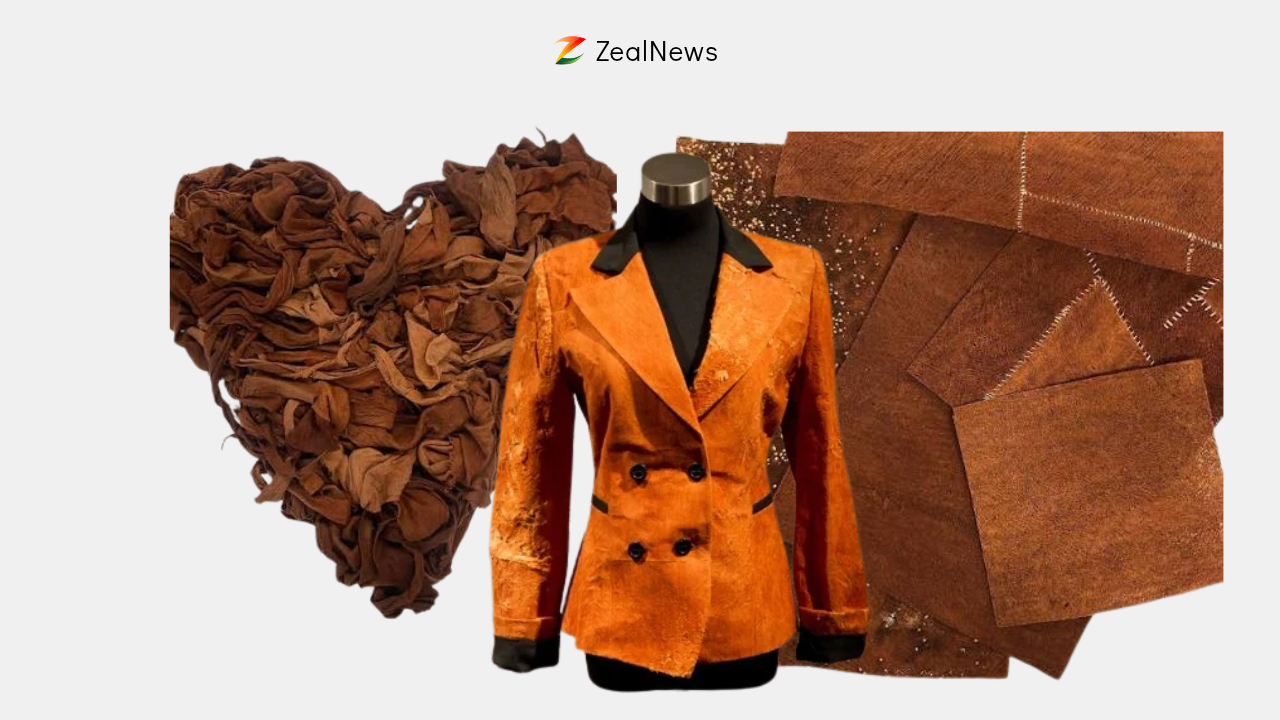
Imagine wearing a piece of clothing made from a tree. Not cotton grown in a field, wool obtained from an animal, or synthetic fibres manufactured in a factory, but the inner bark of a living tree, carefully harvested and transformed into a wearable material.
This is the story of Uganda's barkcloth, an extraordinary textile tradition preserved by the Baganda people of the Buganda Kingdom in southern Uganda.
Inscribed on UNESCO's Representative List of the Intangible Cultural Heritage of Humanity in 2008, the craft is notable because its production uses a prehistoric technique that predates the invention of weaving.
A Fabric Rooted in the Buganda Kingdom
Known locally as olubugo, Ugandan barkcloth is traditionally made from the inner bark of the Mutuba tree (Ficus natalensis), a species of fig tree cultivated across parts of central and southern Uganda.
Its production has historically been associated with the Baganda, particularly craftsmen from the Ngonge clan, whose hereditary chief artisan, known as the Kaboggoza, traditionally oversaw the craft.
For generations, barkcloth was produced for the Buganda royal family and the wider community. Its significance extended beyond clothing: it represented social standing, cultural identity and ceremonial importance.
Ordinary barkcloth typically has a distinctive terracotta colour, while cloth worn by kings and chiefs could be dyed black or white to distinguish their status.
Men and women traditionally wore it wrapped around the body, while it also served as bedding, curtains and burial coverings.
How Do You Turn Tree Bark Into Fabric?
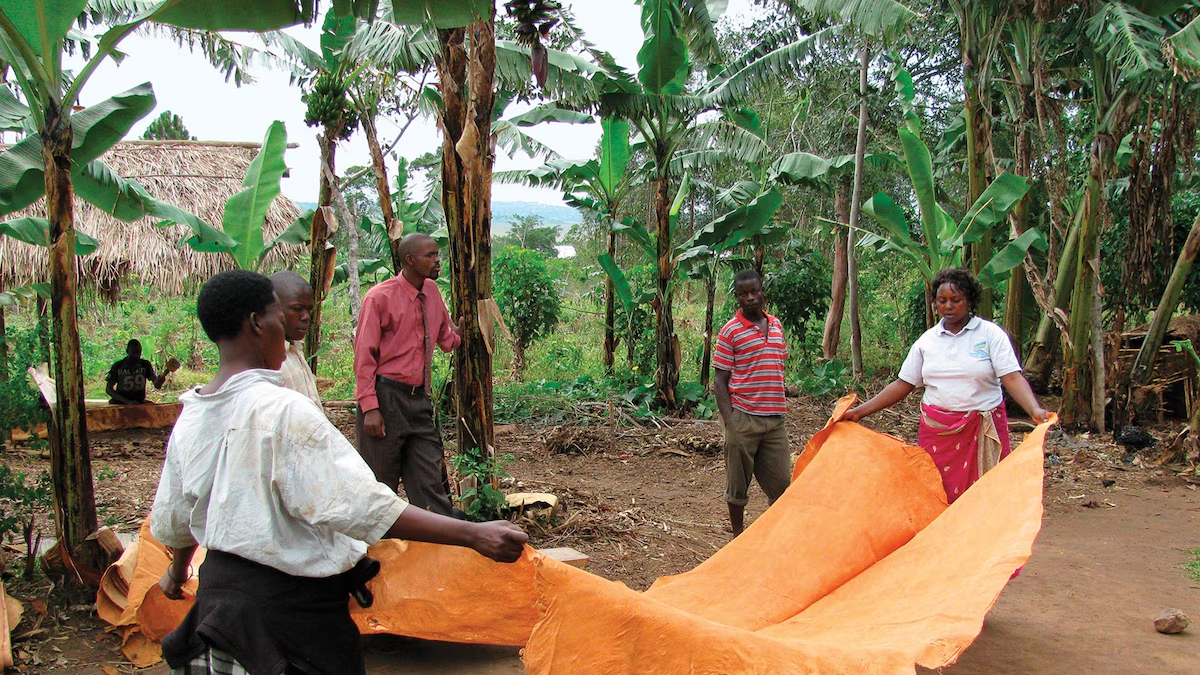
The process begins during the rainy season, when the Mutuba tree's inner bark can be harvested more easily. Craftsmen carefully remove the outer layer before peeling away the inner bark in a broad sheet.
The exposed section of the tree is then protected with banana leaves to encourage its recovery, allowing the bark to grow again for future harvesting.
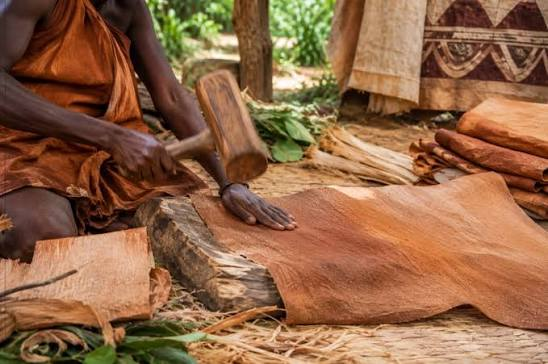
The harvested bark is softened before the most distinctive stage begins: okukomaga, the traditional process of beating it with wooden mallets.
Craftsmen repeatedly strike and stretch the material using different mallets until its fibres become softer, finer and more evenly spread. This gradually transforms the initially narrow piece of bark into a broad, flexible sheet resembling fabric.
The material is then dried, often in sunlight, developing its characteristic reddish-brown or terracotta appearance. Unlike woven textiles, which are created by interlacing threads, barkcloth becomes a continuous sheet through the physical treatment of the tree's inner bark.
That is what makes the technique so fascinating: it produces cloth without spinning yarn or operating a loom.
From Royal Ceremonies to Modern Fashion
Barkcloth once had a much wider place in Buganda society, appearing at coronations, healing ceremonies, funerals and community gatherings. Its use in burials was especially significant, with several sheets traditionally wrapped around the body before burial.
However, the introduction of cotton textiles by Arab caravan traders in the nineteenth century contributed to its decline as everyday clothing, gradually restricting its use largely to cultural and spiritual occasions.
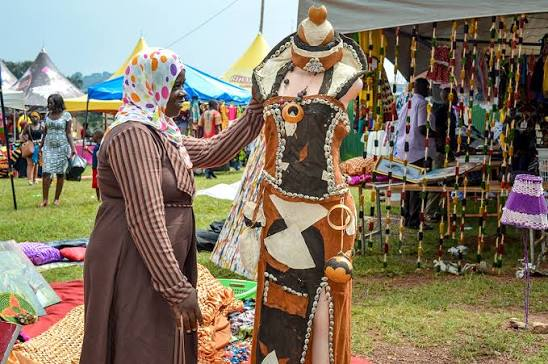
Today, efforts are being made to preserve the craft while exploring new applications. Ugandan artisans and designers are transforming barkcloth into bags, accessories, decorative pieces, and contemporary garments.
A 2024 study by Emmanuelle Richely and colleagues, published in Industrial Crops and Products, also examined its structural and mechanical properties, highlighting potential applications in textiles, footwear and natural-fibre composite materials.
Uganda's barkcloth demonstrates that African textile innovation did not begin with modern factories or imported fabrics. It also shows how knowledge passed between generations can produce materials with possibilities beyond their original cultural uses.

What begins as the inner bark of a tree becomes a piece of history that people can wear, preserve, and reinvent.