The Nilotes: Africa’s Tallest and Darkest-Skinned People
This deep-dive unpacks their striking physiques, ancient migrations, and enduring cultural traditions. From cattle pastoralism to world-class athleticism, discover how biology, resilience, and identity intersect in one of Africa’s most distinct ethnolinguistic groups.
Who Are the Nilotic Peoples?
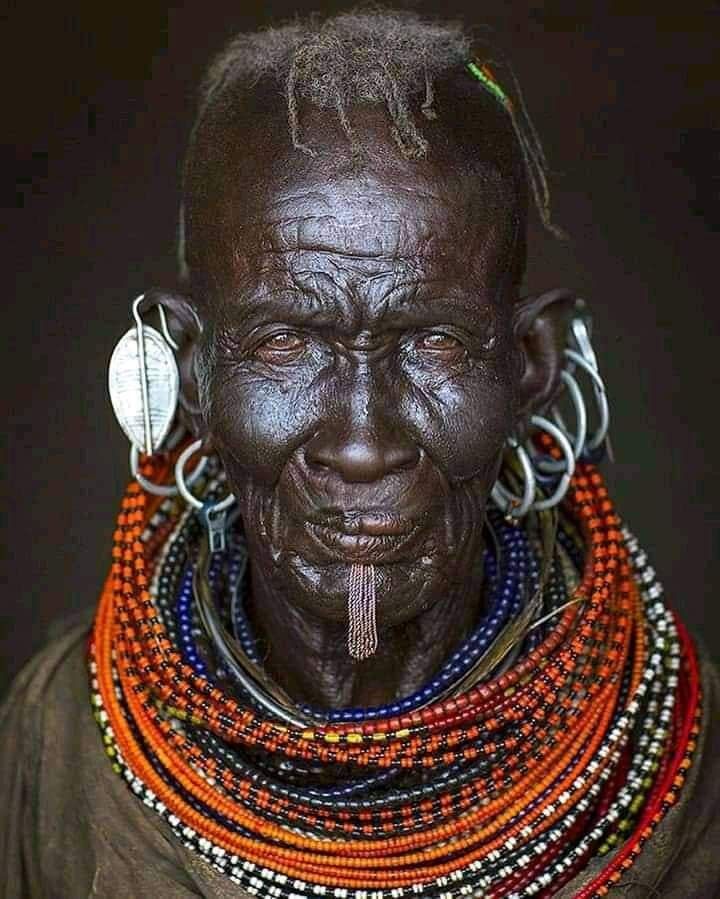
The Nilotes are a diverse group of ethnolinguistic communities living predominantly across South Sudan, northern Uganda, and western Kenya. Encompassing groups like the Dinka, Shilluk, Nuer, Luo, Kalenjin, and Maasai, these peoples share a deep-rooted history tied to the Upper Nile Valley and Great Lakes region. Their cultural identity is anchored in cattle pastoralism, traditional rituals, and distinct languages grouped into Western, Eastern, and Southern Nilotic branches.
The Nilotic people are great migrants who have lived around the Nile River for thousands of years. The settles of the Nile regions are mostly traced back to the NIlotic people, with their interests ranging from culture to traditional practices, which has left the world curious on how these tribal groups lived.
Collectively, they share a common cultural heritage deeply rooted in cattle pastoralism, with livestock often forming the backbone of social status, wealth, and ritual life.
Linguistically, they speak languages grouped in the Nilotic branch of the Nilo‑Saharan family, typically categorized into Western, Eastern, and Southern Nilotic groups.
Pysical Distinction: Height and Skin Tone
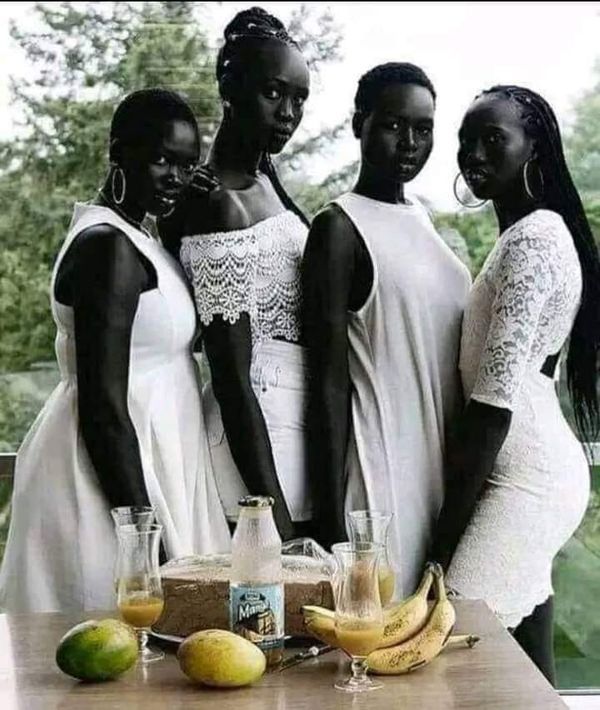
image credit: pinterest
What sets the Nilotes apart, beyond their pastoral heritage, is their physical presence. Among other human populations, Nilotic men often average around 182 cm (6 ft 0⁵⁄₈ inches) and in optimal conditions reach heights over 190 cm (6 ft 3 inches). Women measure correspondingly tall—with many reaching 185 cm (6 ft 1 inches).
Their unmatched lean bodies, long limbs, and dark skin are adaptations to life in the hot, sun-drenched climates of Central and East Africa. A high surface area-to-mass ratio allows efficient heat dissipation, while deep pigmentation protects from ultraviolet radiation—a classic example of human environmental adaptation.
Evolutionary Significance of Skin Color
Africans evolved dark skin over millennia to protect against folate depletion caused by intense UV exposure. Melanin-rich skin shields the body, preserving reproductive health. As humanity migrated north, lighter skin emerged to optimize vitamin D synthesis in lower UV conditions. Dark skin, for much of human history, was the default condition, not the deviation.
In Nilotes, this ancestral trait is amplified—making them among the darkest-skinned human groups alive today, with their phenotypes still closely tied to equatorial sunlight conditions.
Cultural and Sporting Influence
Beyond their striking appearance and rich traditions, the Nilotic peoples have left an indelible mark on global athletics, particularly in long- and middle-distance running. Their unique physiology, shaped by centuries of environmental adaptation, contributes significantly to their dominance on international tracks.
Nilotic groups are noted for their extremely lean and tall body types, often with exceptionally long limbs—especially in the lower legs and forearms. This ectomorphic build, combined with high stature-to-weight ratios, gives them a remarkable biomechanical advantage. For instance, studies show that Sudanese Nilotes such as the Shilluk average 188.6 cm (6 ft 2.3 in) in height and 56.8 kg (125 lb) in weight, while Dinka individuals reflect similar proportions with an extreme ectomorphic somatotype. These characteristics are particularly conducive to running efficiency, minimizing energy loss during motion.
Such body mechanics are evident in the Kalenjin people of Kenya—often referred to as the “running tribe.” Among 404 elite Kenyan distance runners, an overwhelming 76% identified as Kalenjin, and 79% spoke a Nilotic language. This is not a coincidence. Their long, slender legs, including notably slim calves and ankles, contribute to a superior running economy, giving them an edge in endurance events from 800m races to marathons.
History
Rewind the Stories that Made Africa, Africa
A Journey Through Time, Narrated with Insight.
Even among Nilotic communities in the Great Lakes region, such as the Maasai and Turkana, the legacy of physical excellence remains strong. While these groups tend to have slightly lower average statures—with Maasai males averaging around 172.7 cm (5 ft 8 in)—they exhibit an extreme trunk-to-leg ratio, particularly long lower limbs, and similarly lightweight builds. These attributes maintain the biomechanical advantages seen in their northern counterparts.
Outside the realm of sports, Nilotes have begun to influence global fashion and culture. Figures like South Sudanese model Nykhor Paul have brought visibility and pride to Nilotic features—redefining beauty standards and advocating for African representation. Former NBA star Manute Bol, a Dinka man who stood at 7′7″, remains a symbol of how cultural identity and global achievement can intersect powerfully.
Together, these cultural and athletic contributions affirm that the Nilotes are not simply admired for their unique appearance, but for how their heritage, biology, and resilience continue to impact the world.
Adaptation, Resilience, and Biology
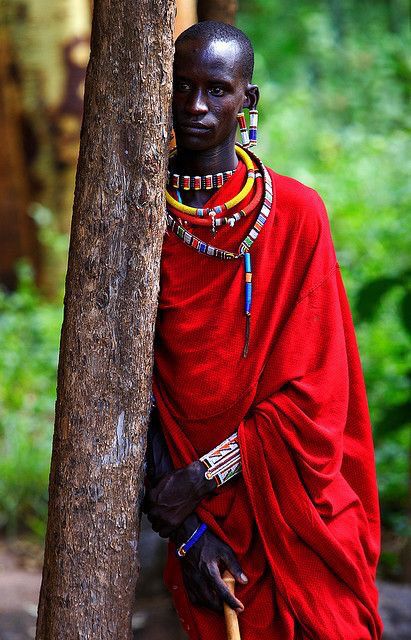
image credit: pinterest
The Nilotic peoples stand as a testament to how human biology and genetic lineage reflect centuries of environmental adaptation, migratory history, and resilience. Their tall, lean physique is not merely a regional curiosity—it is the product of both natural selection and ancestral inheritance.

From a biological standpoint, Nilotic bodies are particularly suited to life in hot, arid climates. Their long limbs and slender builds conform to Allen’s Rule—a biological principle stating that populations in hotter regions evolve bodies that maximize heat dissipation. This not only explains their height and lean frame, but also the exceptionally long lower limbs observed among groups like the Dinka and Shilluk of South Sudan.
Yet the Nilotes' uniqueness also runs deep at the genetic level. Autosomal DNAstudies reveal that Nilotic peoples form a distinct African genetic cluster, closely related to other Nilo-Saharan populations, and more distantly to Afro-Asiatic and Niger-Congo speaking groups. This highlights their long-standing and relatively isolated lineage, with shared ancestry tracing back to 16,000 years ago for Afro-Asiatic relatives and around 28,000 years ago for connections with West and Central African Niger-Congo speakers—possibly originating somewhere around the Sahel.
Interestingly, some Nilotic groups—especially those in the eastern Great Lakes region such as the Maasai—exhibit minor Afro-Asiatic genetic affinities, likely due to centuries of intermarriage and assimilation with Cushitic-speaking pastoralists from the Horn of Africa. This reflects a historical openness to cultural exchange and ecological cooperation in shared grazing regions.
Despite these interactions, most Nilotic populations retain predominantly West and East African ancestry, with only limited traces of West Eurasian admixture, which likely came indirectly through pastoralist migration routes rather than direct contact. Their genetic profile, therefore, tells a story not only of deep African roots but of adaptability across time, terrain, and contact zones.
This synthesis of physical, genetic, and environmental adaptation reinforces why Nilotic peoples are not just culturally distinct but biologically emblematic of Africa’s evolutionary diversity. Their resilience—evident in their survival of colonial disruption, displacement, and civil conflict—continues to echo in their bodies, languages, and enduring presence across the continent.
Modern Misrepresentations and Fascination
On platforms like Quora or TikTok, Nilotes are often sensationalized as the "tallest and darkest people alive." While these claims offer surface intrigue, they frequently lack nuance. Understanding the Nilotic heritage means appreciating centuries of adaptation, pastoral tradition, ecological necessity, and biological resilience—not treating them as spectacle.
Yet the fascination serves a purpose: it invites curiosity. And curiosity, wisely handled, can become respect.
Conclusion: More Than Phenotypes
The Nilotes offer a powerful example of human diversity shaped by environment, culture, and biology. Their exceptional height and rich pigmentation reflect deep evolutionary histories. But behind the numbers and measurements lies a living culture: one deeply tied to land, cattle, mobility, and social structure.
To study the Nilotes is to recognize how geography shapes identity, how heritage survives adversity, and how biology complements cultural resilience. And beyond that, it's to acknowledge that true humanity celebrates difference—not exoticizes it.