Seven Nigerian Businesses That Started With One Product but Are Now Conglomerates
Behind some of Nigeria's biggest conglomerates are surprisingly modest beginnings. These seven show how a single product or line of trade can become the foundation of a much larger business empire.
If you spend any time navigating the chaos of Nigerian business, you quickly learn one survival rule:don't put all your eggs in one basket.
Between unpredictable policy shifts, currency swings and sudden market changes, relying on a single product or line of business can be a risky bet.
But look at the massive corporate giants dominating our business landscape today. They didn't start out as sprawling empires, some of their founders were busy building businesses around one product or a particular line of trade.
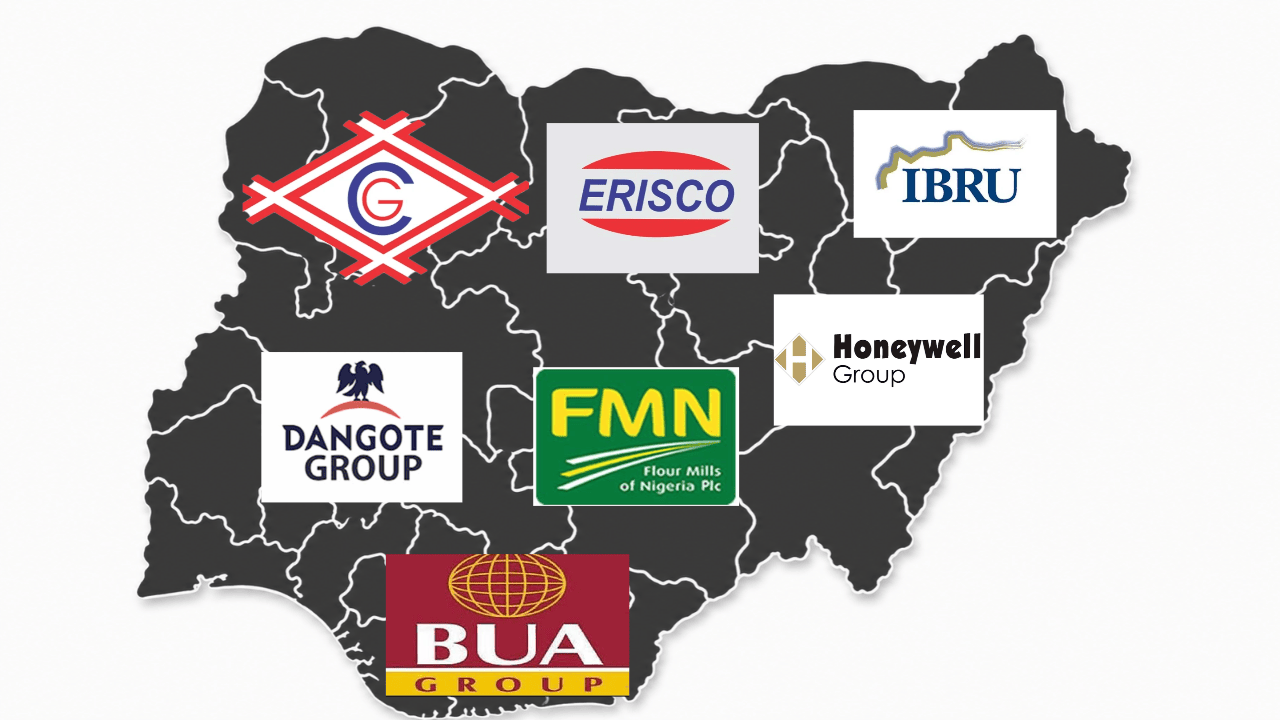
Here are the stories of seven Nigerian business groups whose beginnings were far more focused than the empires they have become.
IBRU ORGANISATION
Picture trying to convince people to buy fish that had already been frozen.
That was the market Michael Ibru walked into when he began importing frozen fish into Nigeria in the 1950s.
In 1957, Ibru started building a business around the product and he pioneered the introduction of frozen fish to Nigeria.
It was not an easy sell. Frozen fish was unfamiliar to many consumers, and some reportedly called it “mortuary fish”. But he kept at it, building the infrastructure needed to preserve the fish and distribute it across the country.
By 1978, Ibru Seafoods had cold-storage facilities in Lagos, Sapele and Port Harcourt.
Over the years, the Ibru family's interests spread into shipping, oil and gas, agriculture, real estate, hospitality and media.
Its associated businesses include Emsee Shipping Line, Ibafon Oil and Federal Palace Hotel, with the Ibru family also having significant ownership interests in The Guardian newspaper.
Today, the Ibru Organisation is a diversified conglomerate with interests in industries that have little to do with frozen fish, spanning several sectors of the Nigerian economy.
ERISCO BONPET GROUP
Nagiko tomato paste, the Erisco brand many of us may recognise from our kitchens, is part of a business group whose founder's first ventures had little to do with food.
Eric Umeofia started out in the textile trade before moving north to learn the automobile spare-parts business.
He eventually set up his own spare-parts shop in Sokoto around 1982/83. The business did well, and he later returned to Lagos to establish Erisco Bonpet, which dealt in automatic fire extinguishers and fire-prevention equipment.

Umeofia also took the business beyond Nigeria, establishing operations in Angola and the United Arab Emirates.
His move into food manufacturing came much later. In an interview with The PUNCH, he recalled meeting the late Dora Akunyili, then a former Director-General of NAFDAC, who encouraged him to invest in Nigeria's food industry. He eventually established Erisco Foods, which began production in 2009 with Nagiko tomato paste.
The food business has since expanded beyond tomato paste. Its brands include Erisco, Ric-Giko and Nagiko, with products ranging from seasoning and spices to garri mix, milk products and other food items.
The wider group also has interests in fire-prevention services and hospitality, including Meena Hotels.
COSCHARIS GROUP
You know BMW, MINI, Rolls-Royce or Jaguar Land Rover cars being sold in Nigeria.
The group is now closely associated with some of the world's most recognised automobile brands, but its founder, Cosmas Maduka, started out selling spare parts.
Maduka's entry into business came after more than six years as an apprentice under his uncle, an automobile spare-parts dealer in Lagos. In 1976, when their working relationship ended, his uncle gave him ₦200.
Maduka later recalled that the money could not even buy a carton of spark plugs. He teamed up with his elder brother to establish Maduka Brothers, a spare-parts business in Nnewi. When that partnership ended, he received another ₦300 from his brother and went on to build his own business.
Coscharis traces its beginnings to 1977, when it started importing and distributing genuine automobile spare parts, Japanese vehicle accessories and other car-related products. The business gradually moved into automobile sales and secured franchises for international brands, including BMW, MINI, Ford, Jaguar Land Rover and Rolls-Royce.
Today, Coscharis Group has interests far beyond automobiles. Through Coscharis Farms, it produces and markets its own brands of rice, including Coscharis Premium and Gold.
Its beverage business makes bottled and sachet water as well as yoghurt, while Coscharis Technologies distributes IT products from brands such as HP, ASUS and Microsoft.
The group also supplies medical equipment, including MRI and CT scanners, through Coscharis Medicals.
DANGOTE GROUP
Everyone knows Dangote cement, but the business group behind it began with a much smaller operation.
After completing his studies in Egypt, Aliko Dangote returned to Nigeria and started trading cement in Lagos in 1978. His uncle, who was in the cement business, supplied him with an allocation of about four truckloads daily, which he sold to customers.
In an interview with the International Finance Corporation, Dangote recalled that his grandfather gave him ₦500,000 to support the business, but he returned the money after three months.
He later moved into importing other commodities. In 1981, he obtained his first licence to import sugar, bringing in 5,000 tonnes. Rice, flour and salt also became part of the trading business.
The major shift came when Dangote moved beyond importing and selling goods to manufacturing them. The group invested in cement production, acquiring and developing plants in Nigeria before expanding into other industries. Dangote Cement eventually became one of Africa's largest cement producers.
Today, the group has interests in cement, sugar, salt, flour, fertiliser, energy and infrastructure. Its products include Dangote Cement, Dangote Sugar, Dangote Salt and Dangote Flour, while its industrial operations now extend to fertiliser production and the Dangote Petroleum Refinery.
BUA GROUP
Before BUA became a major name in Nigeria's cement and food industries, its founder, Abdul Samad Rabiu, was importing and trading iron, steel and rice.
He established BUA International Limited in 1988, starting with the importation of iron and steel, as well as rice. The business later moved into supplying industrial materials, including steel billets and iron ore, to manufacturing companies and rolling mills in Nigeria.
Its expansion into food processing began with acquisitions. In 2000, BUA acquired Golden Oil Limited, which became BUA Oil Mills.
The following year, it acquired Nigeria Oil Mills, then one of West Africa's major vegetable oil processors. These acquisitions gave the group a foothold in the edible oils business.
BUA subsequently moved into sugar refining, flour milling, pasta production and rice processing. It also entered cement manufacturing in 2008, later acquiring stakes in Sokoto Cement and Edo Cement. These investments helped establish the cement business that now operates as BUA Cement.
Today, BUA Group has interests across food manufacturing, cement, infrastructure and real estate. Through BUA Foods, it produces sugar, flour, pasta, rice and edible oils, with brands such as BUA Sugar and IRS Pasta. BUA Cement operates major cement production plants in Nigeria, while the group's wider investments also cover logistics, agriculture and property.
HONEYWELL GROUP
Honeywell flour, noodles and pasta are very familiar products in our homes, but the business group behind the name did not begin with flour milling. It started out trading food commodities across West Africa.
In 1972, Oba Otudeko established Honeywell Enterprises to formalise his trading activities. The business dealt in commodities such as baking yeast, milk and stockfish, which it traded across the region.
It later expanded into importing other goods, including glass and steel rods, for the Nigerian market.
The move into manufacturing and other industries came gradually. In 1980, the group established Poly Ventures, which produced polypropylene sacks and bags, and Coral Products, a crockery manufacturer.
It also ventured into flour milling through Gateway Honeywell Flour Mills, established in partnership with the Ogun State Government in 1985. The company later became Honeywell Flour Mills and commenced full operations in 1998.
The group continued to diversify, entering oil and gas in 1995 through Honeywell Oil and Gas Limited, now known as HOGL Energy. It also developed interests in engineering, technology, real estate, logistics and hospitality.
Today, its portfolio includes HOGL Energy, engineering and infrastructure businesses, Uraga Real Estate, Anchorage Leisures and Itanna, its investment platform.
One important change in the story is that Honeywell Group sold its stake in Honeywell Flour Mills in 2022 to Flour Mills of Nigeria. The flour company and its products remain in the market, but it is no longer part of the group's current portfolio.
FLOUR MILLS OF NIGERIA
Golden Penny flour, pasta, noodles and cooking oil are products we all recognise. They all come from a company that began with one main business: milling wheat into flour.
Founded by Greek businessman George Coumantaros, Flour Mills of Nigeria began operations on 29 September 1960 at its Apapa facility in Lagos. It was one of the pioneers of industrial wheat milling in the country, supplying flour to bakeries and other food businesses.
The company gradually expanded its product range under the Golden Penny brand. It moved into pasta, noodles, edible oils, sugar and margarine, giving it a presence in more parts of the Nigerian food market.
Its expansion also went beyond finished food products. It invested in livestock feeds, farming, fertiliser distribution and the production of packaging materials.
Over time, Flour Mills built businesses across the food supply chain, from sourcing and processing agricultural produce to manufacturing, storage and distribution.
Its operations also extended into logistics, shipping and port services, including the operation of terminals at Apapa Port.
Today, the group has interests in grains, sugar, edible oils and fats, feeds and proteins, cassava starch, packaging, farming and logistics. Its portfolio includes Golden Penny Foods, Premier Feeds and Nigerian Bag Manufacturing Company (BAGCO), among other businesses.
In Nigeria's business landscape, some of the biggest names today started with a much narrower focus.